









How to Track Brand Mentions in AI Search: Step-by-Step Guide
How to Track Brand Mentions in AI Search: Step-by-Step Guide



Charlie Klein
How to Track Brand Mentions in AI Search: Step-by-Step Guide
How to Track Brand Mentions in AI Search: Step-by-Step Guide
Charlie Klein


Most popular articles


Get structured, reliable data for your stack.
How to Track Brand Mentions in AI Search: Step-by-Step Guide
What does tracking brand mentions in AI search mean?
Tracking brand mentions in AI search means monitoring where your brand appears in AI-generated answers, which competitors appear alongside it, and how those answers frame your company. Then, you measure how your brand visibility changes across prompts, platforms, and time periods, and use those insights to adjust your strategies.
Eight steps to building a repeatable workflow for tracking brand mentions in AI search with Nimble:
- Define your scope: the brands, competitors, and category terms you want to track
- Build AI search prompt sets around real buyer questions
- Select or configure Nimble Web Search Agents
- Collect live AI search results
- Extract brand, competitor, and source mentions
- Receive structured outputs for analysis
- Analyze visibility gaps and opportunities
- Monitor changes over time
More buyers are using AI search for the questions they once typed into traditional search engines. They now ask AI models to compare options and explain categories. If your brand is missing from the answer, a buyer’s shortlist can form without you.
Organic search traffic is projected to decline by 50% or more by 2028 as generative AI-powered search changes how people find information. That makes AI-generated answers a visibility channel brands need to measure directly. Traditional SEO tools still show rankings and traffic, but they do not show how often AI-generated answers include your brand compared to competitors. They also miss the cited sources shaping those recommendations, which can leave teams with less direction on what content or PR work could improve visibility.
The solution is tracking brand mentions through a consistent workflow: collecting AI-generated answers, identifying how your brand and competitors appear, reviewing cited sources, and measuring how visibility changes across prompts, platforms, and time periods.
What are brand mentions in AI search?
A brand mention in AI search is any instance where an AI-generated answer references a company, product, service, website, or competitor in response to a user query. These mentions can appear in ChatGPT, Perplexity, Gemini, Google AI Overviews, Bing Copilot, and other AI-powered search experiences.
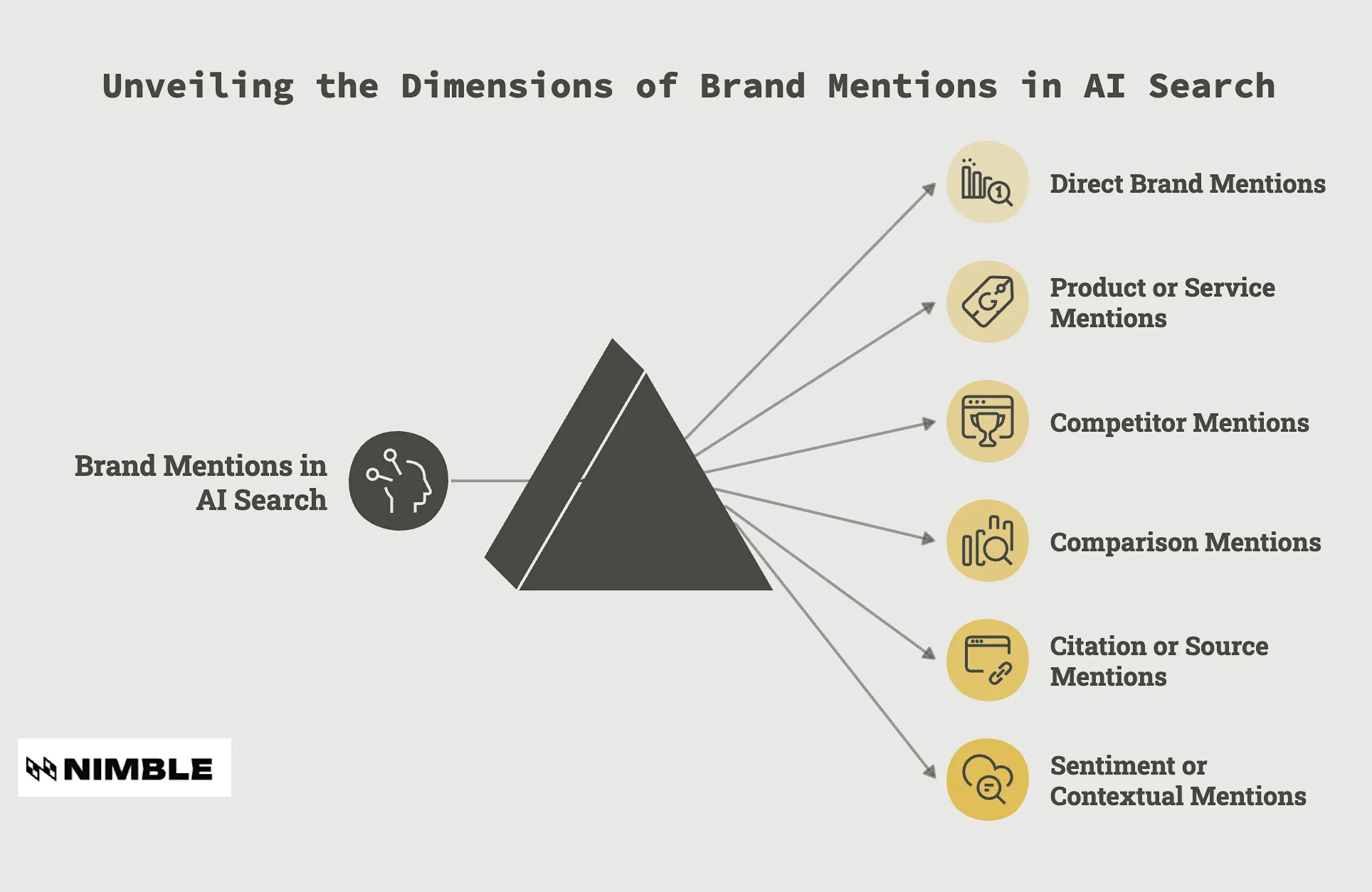
Organizations should monitor several types of mentions:
- Direct brand mentions: The company is named in the answer, either as a recommendation or as part of a category explanation.
- Product or service mentions: The answer references a specific offering, feature, or service area tied to the brand.
- Competitor mentions: Competing vendors appear in the same answer, even when your brand is absent.
- Comparison mentions: The response weighs brands against each other, often by strengths, use cases, pricing, or fit.
- Citation or source mentions: The AI system points to pages that support or shape the answer.
- Sentiment or contextual mentions: The wording around the mention affects perception, especially when the description is outdated, incomplete, or inaccurate.
A mention is not just a name drop. It can shape how a buyer understands a category, which brands they compare, and which sources they trust.
For example, if a user asks, “What are the best platforms for real-time web data?”, the answer may mention several vendors, compare their strengths, and cite third-party sources. If your brand appears in that response, it becomes part of the buyer’s consideration set. If competitors appear instead, the gap becomes a measurable visibility problem.
Citation and source mentions are often as important as direct brand mentions because they show which pages AI systems surface or reference when generating recommendations. When your pages are cited, they can support stronger visibility and positioning. However, when competitor or third-party sources are cited instead, they can point to gaps in your own content or source coverage.
Why Tracking Brand Mentions in AI Search Matters
How AI Search Influences Brand Discovery and Decision-Making
AI search changes brand discovery because it chooses which brands to include, summarizes the category, and presents the user with a smaller set of options.
Users can get a direct answer with recommendations already built in, instead of moving through websites, reviews, or comparison pages themselves. That makes inclusion in the answer a measurable part of brand visibility.
Tracking brand mentions helps teams see which buyer questions include the brand and which ones leave it out. Once those patterns are visible, teams can use them to guide SEO, PR, content planning, competitive intelligence, demand generation, and positioning work.
What makes AI search visibility different from traditional SEO?
Traditional SEO measures rankings, traffic, and conversions. AI-generated answers are assembled in a different way. Each platform decides what to surface using its own mix of retrieval, ranking, citations, model behavior, and response generation, which makes the results harder to observe from the outside.
A few differences between traditional SEO and AI search are especially important:
- AI search gives brands another place to appear, but that visibility is harder to control.
- Your brand and competitors can appear in the same response, which makes placement and framing of critical importance.
- Sources can affect which brands appear and how they are described. Owned content gives brands some room to influence the source layer.
- Prompt wording, user intent, platform, geography, and timing can all change the response.
- Traditional SEO tools measure rankings and traffic, while AI search visibility requires tracking mentions, citations, competitive presence, and positioning within generated answers.
How to Measure Brand Mentions in AI Search
Measuring brand mentions in AI search involves tracking both the frequency and quality of your brand’s visibility across AI-generated responses. This table explains the key metrics to monitor and why each one matters.
How to Track Brand Mentions in AI Search
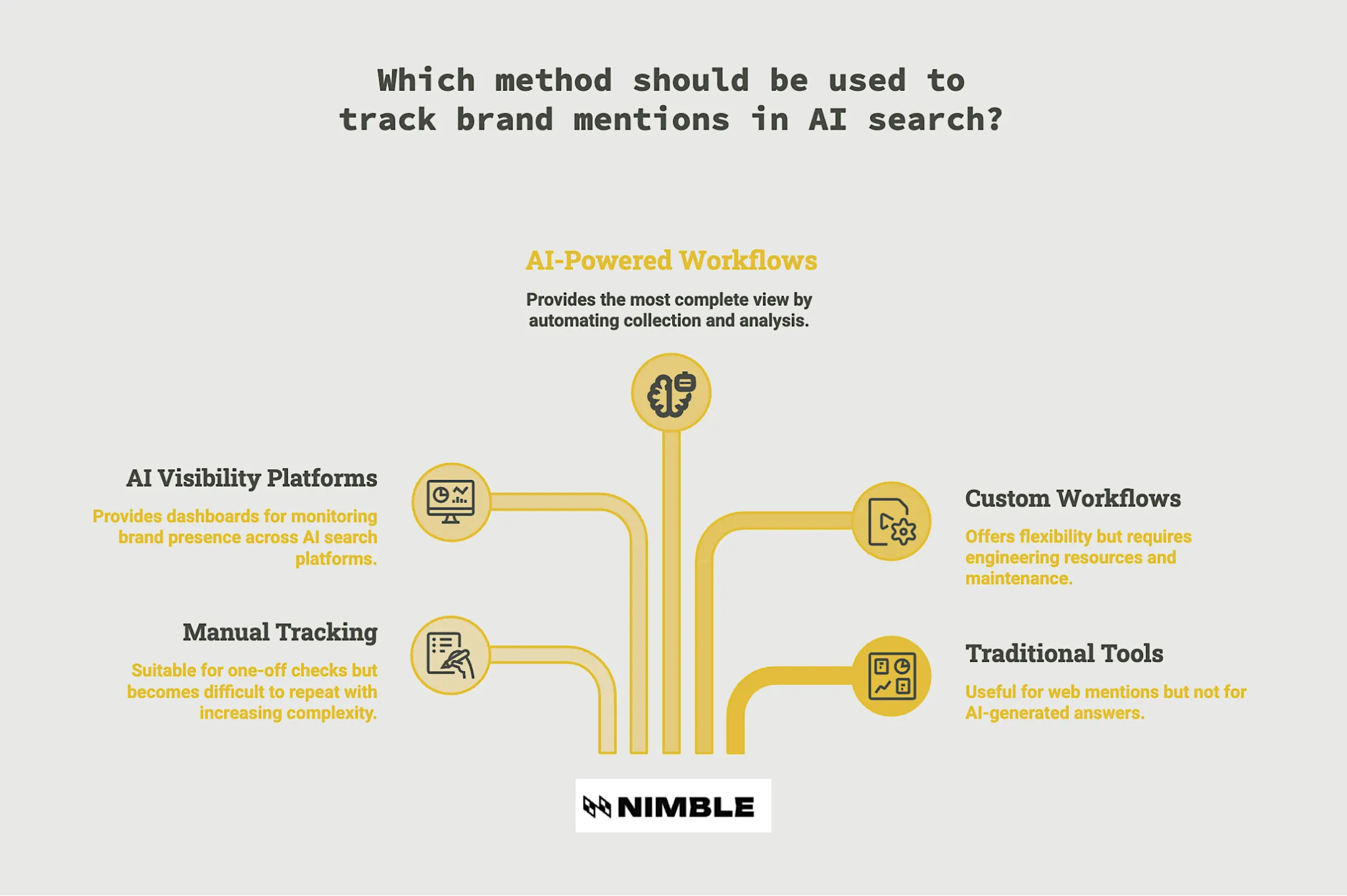
AI brand mention tracking can be manual, dashboard-based, or automated. Common approaches include:
- Manual tracking: Teams enter prompts into AI search platforms and record brand mentions by hand. This works for one-off checks, but it becomes hard to repeat as prompts, platforms, and competitors increase.
- AI visibility and GEO platforms: These platforms provide dashboards for monitoring brand presence across AI search platforms.
- Traditional brand monitoring tools: This software is useful for tracking web mentions, but it was not built to capture AI-generated answers.
- Custom scraping, browser automation, and API-based workflows: These bespoke technical workflows offer flexibility, but require engineering resources and ongoing maintenance.
- AI-powered collection workflows: Using AI, visibility monitoring is automated by executing prompt sets, gathering AI-generated responses or supporting search results, extracting brand and competitor mentions, identifying cited sources, and transforming findings into structured datasets for analysis.
AI-powered collection workflows provide the most complete view of how specific buyer queries are being answered across platforms and over time.
8 Steps to Tracking Brand Mentions in AI Search With Nimble
Step 1: Define Your Tracking Scope
Before you collect a single data point, you need to define the scope of your brand mentions monitoring program. Teams that skip this step end up with fragmented data that's hard to compare or act on. Teams that get it right build a foundation for consistent, meaningful intelligence.
Your tracking scope should cover everything that matters to your business, including:
- Your brand name
- Product names
- Key competitors
- Category terms that buyers use when searching for solutions like yours
Think beyond the obvious. Include alternate spellings, branded terminology, product abbreviations, and common variations, because AI systems surface results based on how people actually phrase questions, not how your marketing team writes about you.
For example, a web data company might track its primary brand name alongside product names, competitor names, and category phrases like "SEO Analysis APIs," "real-time web data," or "Web Search Agents." The broader your initial scope, the more visibility gaps you'll be equipped to find.
You'll also want to identify the source URLs that matter most to your business. Include the publications, industry sites, and third-party resources that may influence AI-generated responses in your category. These become important inputs as your monitoring program matures.
Step 2: Build a List of AI Search Prompts
Your tracking scope tells you what to monitor. Your prompt library determines where your visibility shows up, or doesn't.
Prompt selection is one of the most consequential decisions in any AI visibility program. The prompts you run determine which gaps you can find, which competitor advantages you'll detect, and which opportunities you might miss entirely. The goal is to build a set of prompts that reflects how real buyers research, compare, and evaluate solutions, and not how your team talks about your product internally.
A strong prompt library combines several types of queries, each revealing a different layer of your AI visibility landscape:
- Category prompts capture broad discovery intent from buyers who are still mapping the landscape, such as "Best AI search APIs" or "Best platforms for real-time web data."
- Comparison prompts show how AI systems rank and describe you relative to competitors when buyers are weighing their options, such as "Nimble vs. Bright Data" or "best web scraping APIs compared."
- Alternative prompts capture responses to queries like "alternatives to Bright Data" or "alternatives to Oxylabs," showing whether your brand appears when buyers are actively looking to switch.
- Problem-based prompts reflect how buyers describe their needs before they know a solution exists, such as "How can AI agents access live web data?"
- Use-case prompts target buyers with a specific problem to solve, such as "Best tools for competitive pricing intelligence" or "How do I monitor competitor pricing in real-time?"
Running all types together gives you a broader picture of where you have a foothold, where competitors have the advantage, and where you're missing from the conversation entirely.
Step 3: Select or Configure Nimble Web Search Agents
This step is where your AI visibility program shifts from planning to execution, and where Nimble becomes the engine driving the entire workflow.
Manually entering prompts, collecting answers, copying results, and preparing datasets is slow, inconsistent, and impossible to scale. It also produces data that's difficult to compare across time periods, platforms, or prompt sets.
Nimble Web Search Agents replace the manual collection and preparation process by creating a repeatable, automated data collection workflow that can run across hundreds of prompts, competitors, categories, regions, and time periods. Unlike traditional monitoring approaches that rely on manual intervention, screenshots, or spreadsheets, Agents turn AI visibility tracking into a structured, scalable data operation.
Nimble offers two paths, depending on your needs:
- Teams can select from Nimble's pre-built agent gallery for ChatGPT, Claude, Grok, Gemini, and other LLMs.
- Or build custom agents through Nimble Studio for specific websites and use cases.
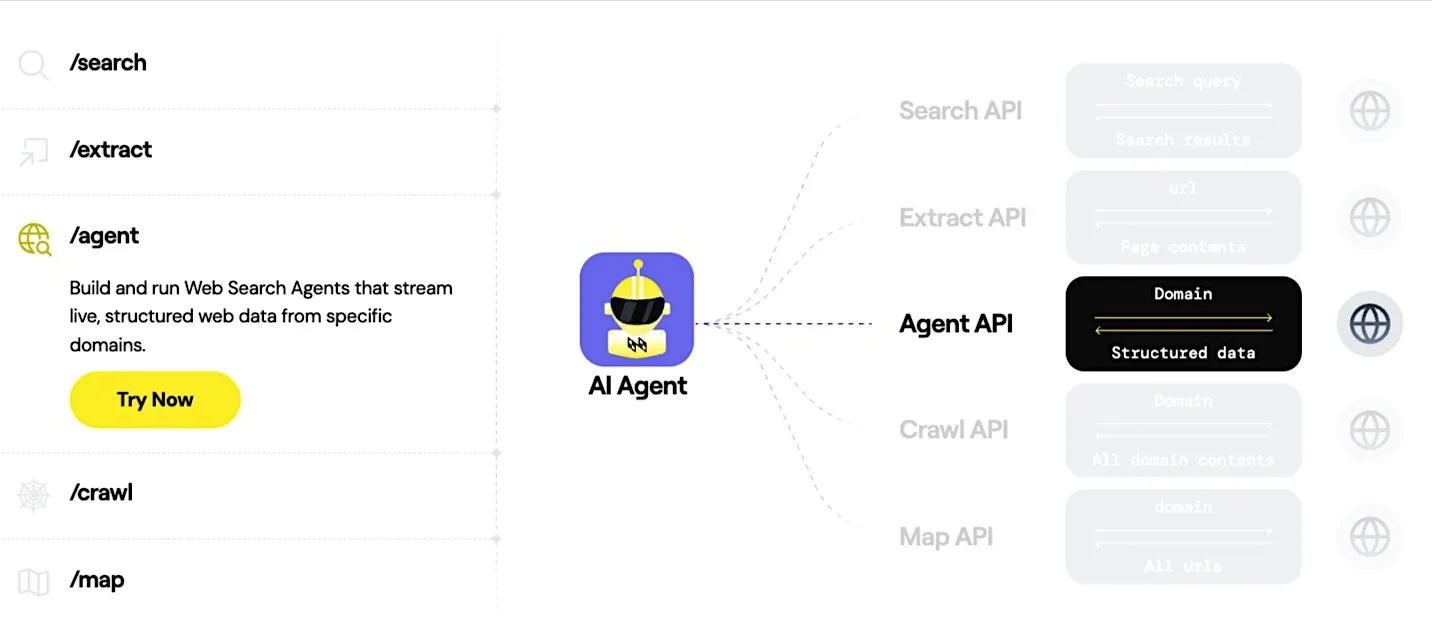
What sets Nimble's Web Search Agents apart is the combination of capabilities they bring to this workflow:
- Live web access ensures you're collecting from the current state of AI search results, not cached snapshots.
- Structured extraction pulls clean, usable data from AI-generated responses, supporting search results, and cited source pages captured in the monitoring workflow.
- Validation layers confirm data quality before it moves downstream.
- Enterprise-grade collection infrastructure supports reliable monitoring at scale, across as many prompts, platforms, and time periods as your program requires.
Step 4: Collect Live AI Search Results
With your agents configured and your prompt sets ready, the next step is collecting the raw visibility signals that will form the foundation of your analysis.
For each prompt, Nimble can collect the key brand visibility signals available from the monitored AI search experience:
- AI-generated responses
- Supporting search results
- Cited sources
- Referenced domains
- Timestamps
- Regions
- Other contextual metadata
One of the biggest challenges in AI visibility monitoring is distinguishing between one-off observations and repeatable trends. A single manual check might show your brand appearing in a response, but without consistent, structured collection, there is no way to know whether that is the norm or an exception.
Nimble solves this by running the same prompt sets repeatedly across platforms and time periods, giving teams a reliable dataset rather than scattered screenshots or manual notes. Because AI search experiences vary across platforms and change frequently, that consistency is also what makes datasets comparable across reporting periods.
Step 5: Extract Brand, Competitor, and Source Mentions
Collected AI search responses are only useful once they've been turned into measurable visibility signals. This extraction step is where raw AI-generated answers become structured data that teams can analyze, benchmark, and act on.
Using extraction rules, CSS selectors, and parsing schemas, Nimble’s Extract API can pull the specific signals that matter out of each collected response, such as:
- Whether your brand appeared
- Which competitors appeared alongside it or instead of it
- Which sources were cited or referenced
- How brands were positioned within recommendations]
- How often key entities appeared across the full prompt set
Take a query like "best AI search APIs." Rather than leaving teams with a block of AI-generated text to read manually, extraction produces structured output showing whether your brand was included, which competitors were named, and which third-party publications or review sites shaped the response. That level of detail across dozens or hundreds of prompts is what makes visibility analysis possible.
The extraction layer is the bridge between collection and analysis. It converts unstructured AI-generated text into fields that can be measured, filtered, compared, and tracked across prompts, platforms, and time periods.
Step 6: Receive Structured, Analysis-Ready Outputs
Raw data collected at scale is only as valuable as the structure applied to it. Nimble doesn't leave teams with unprocessed outputs that require manual cleanup. It delivers structured, analysis-ready data that moves directly into the tools where decisions get made.
Nimble can deliver structured fields covering the key AI visibility signals available in the monitored results:
- Date
- Prompt
- Platform
- Brand mentioned
- Competitors mentioned
- Cited URLs
- Mention context
- Recommendation framing
- Comparative positioning
- Citation patterns
- Mention prominence
- Region
Together, these fields give teams everything they need to calculate the metrics that matter: inclusion rate, share of voice, competitor gaps, citation patterns, and visibility trends over time.
This is one of Nimble's core advantages. Instead of manually reviewing AI responses and trying to extract patterns by hand, teams receive data that can be aggregated, benchmarked, filtered, and analyzed at enterprise scale. Structured outputs can move directly into dashboards, BI workflows, data warehouses, AI systems, or internal reporting pipelines.
Step 7: Analyze Your Brand’s AI Search Visibility & Identify Opportunities
Once structured AI search visibility data has been delivered to your business systems, the next step is analysis. Teams can use the results to identify where the brand appears, where it is missing, how it is described, and which sources are shaping AI-generated answers.
Start With Prompt-Level Analysis
Review results at the prompt level to understand how AI search responds to specific buyer questions. This includes whether your brand appears, whether competitors appear, how the answer frames each company, and which sources are cited.
For example:
- Which prompts consistently include your brand?
- Which prompts favor competitors?
- Which prompts show no relevant mentions at all?
These patterns reveal where your brand has visibility in AI-generated conversations and where it is being left out.
Analyze the Source Layer
Equally important is source analysis. AI-generated responses can be shaped by the web sources that AI systems retrieve, cite, or surface. By reviewing those sources across prompts, teams can see which sites repeatedly appear in the category and whether those sources mention the brand, competitors, or both. If competitors appear in cited or referenced sources where your brand is absent, that points to a source coverage gap.
Identify Visibility Opportunities
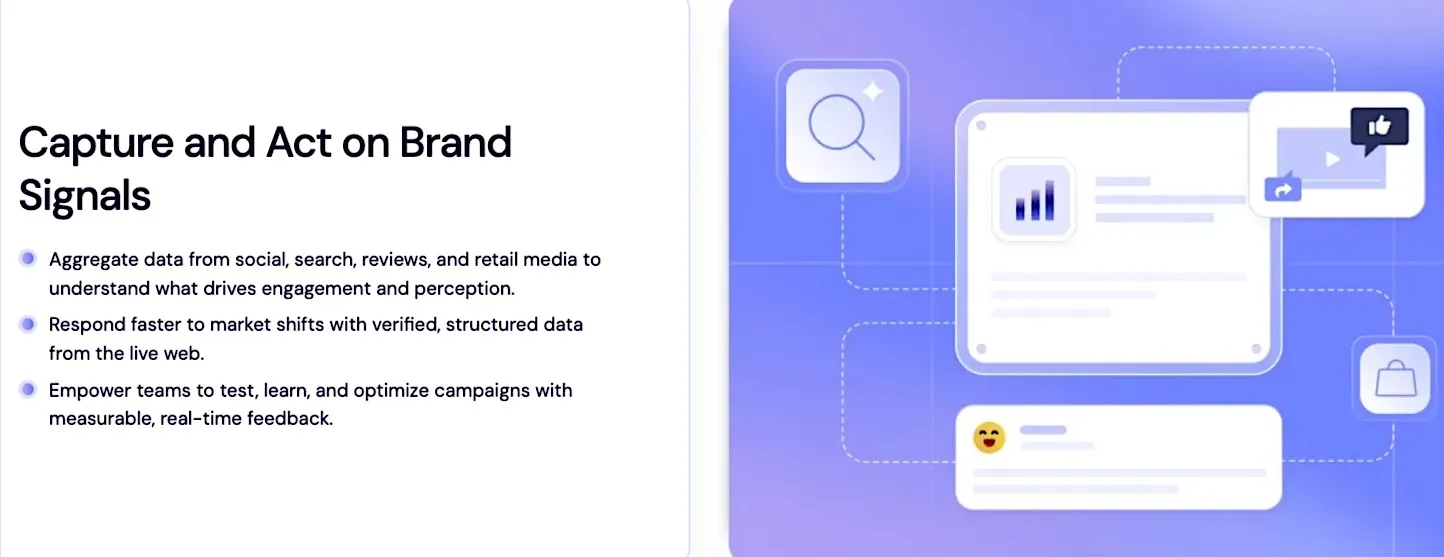
Beyond brand mentions, visibility data can also surface category gaps, inaccurate brand positioning, weak source coverage, and competitor advantages that would not be visible through traditional SEO or brand monitoring tools.
These insights can inform new opportunities in content strategy, PR campaigns, SEO initiatives, brand positioning, competitive intelligence programs, and dedicated generative engine optimization efforts.
Step 8: Monitor Changes Over Time
A single visibility check tells you where you stand today. Continuous monitoring shows how AI search visibility changes after content, PR, SEO, or positioning updates, and how the broader AI search landscape shifts over time.
The real value of AI search tracking comes from repeated, consistent measurement over time. Running the same prompt sets across regular intervals produces the longitudinal data teams need to spot meaningful trends in:
- How brand mention frequency changes
- How competitor visibility shifts
- How your brand’s share of voice evolves
- How citation patterns change alongside shifts in source coverage, online authority, or AI platform behavior
Ongoing monitoring also makes it possible to connect visibility changes to specific actions. Teams can compare AI visibility reports from before and after the actions taken in the previous step, and begin to build a clearer picture of which efforts actually move the needle in AI-generated responses.
Continuous monitoring surfaces factors outside your control. AI platform updates, changes in the sources AI systems retrieve, cite, or surface, and broader shifts in online authority all affect visibility in ways that only become visible through consistent tracking over time. Without ongoing monitoring, those shifts are invisible until they've already had an impact.
Nimble’s data delivery workflows support continuous monitoring by delivering updated AI search visibility data on a recurring basis. Over time, repeated measurements provide the historical context needed to identify meaningful trends in brand visibility, competitor presence, and source coverage.
Turn Brand Mention Tracking Into an Ongoing Process
AI search is changing how buyers discover, evaluate, and compare brands. Tracking brand mentions helps organizations understand where they appear in AI-generated answers, how they are represented, which competitors are recommended, and how visibility changes over time.
Nimble Web Search Agents give teams the infrastructure to turn brand mention tracking into a scalable AI search monitoring program. They collect AI-generated answers and related search signals, extract brand mentions, competitor mentions, and cited sources, validate the results, and deliver structured, analysis-ready data that teams can use in reporting, analytics, and AI workflows.
Book a Nimble demo to explore how you can build a scalable brand mention tracking program for AI search on top of live, structured web data.
FAQ
Answers to frequently asked questions

.webp)

.webp)
.webp)
.avif)