









Top 10 Digital Shelf Analytics Software Solutions


.avif)
Ilan Chemla
.webp)
Top 10 Digital Shelf Analytics Software Solutions
Ilan Chemla


Most popular articles


Get structured, reliable data for your stack.
Top 10 Digital Shelf Analytics Software Solutions
Digital shelf conditions on retailer sites and marketplaces change continuously as search algorithms, automated merchandising, and availability systems fluctuate by the hour. Unfortunately, performance drops often occur without clear visibility into which specific shelf condition changed or where the issue originated, leaving brands to guess why sales have suddenly stalled.
Fortunately, Digital Shelf Analytics (DSA) software provides a robust solution to these issues. It measures exactly how products appear and perform across retailers’ digital shelves to make these conditions comparable over time, and provides insights that let you make better decisions.
The market for DSA software is growing rapidly, driven by the need for retailers to optimize their online presence due to increased competition. Adoption of AI and machine learning is responsible for 50% of the shift to DSA software, while 30% is attributable to the integration of omnichannel strategies.
But DSA software tools can’t operate in a vacuum. Real-time, structured web data is the engine that keeps digital shelf analytics accurate by capturing rapid changes in pricing, availability, and search placements across retailers as they happen. Here are the top Digital Shelf Analytics (DSA) software that are defining the market in 2026.
What is Digital Shelf Analytics software?
Digital shelf analytics leverages real-time data to enable e-commerce teams to act and make rapid, fact-based decisions by helping brands evaluate how products are presented and discovered across channels. It is a strategic necessity for teams by bridging siloed departments with a “single source of truth” data source.
Digital shelf analytics (DSA) software is a specialized e-commerce tool that systematically monitors product listings and shelf signals across retailer and marketplace sites, such as price, rank, content, availability, and reviews. It monitors anyplace that your product is discoverable online to ensure consistent pricing, content, and availability. These locations include marketplaces like Amazon, Walmart, and eBay; DTC sites; and specialty and niche retailers.
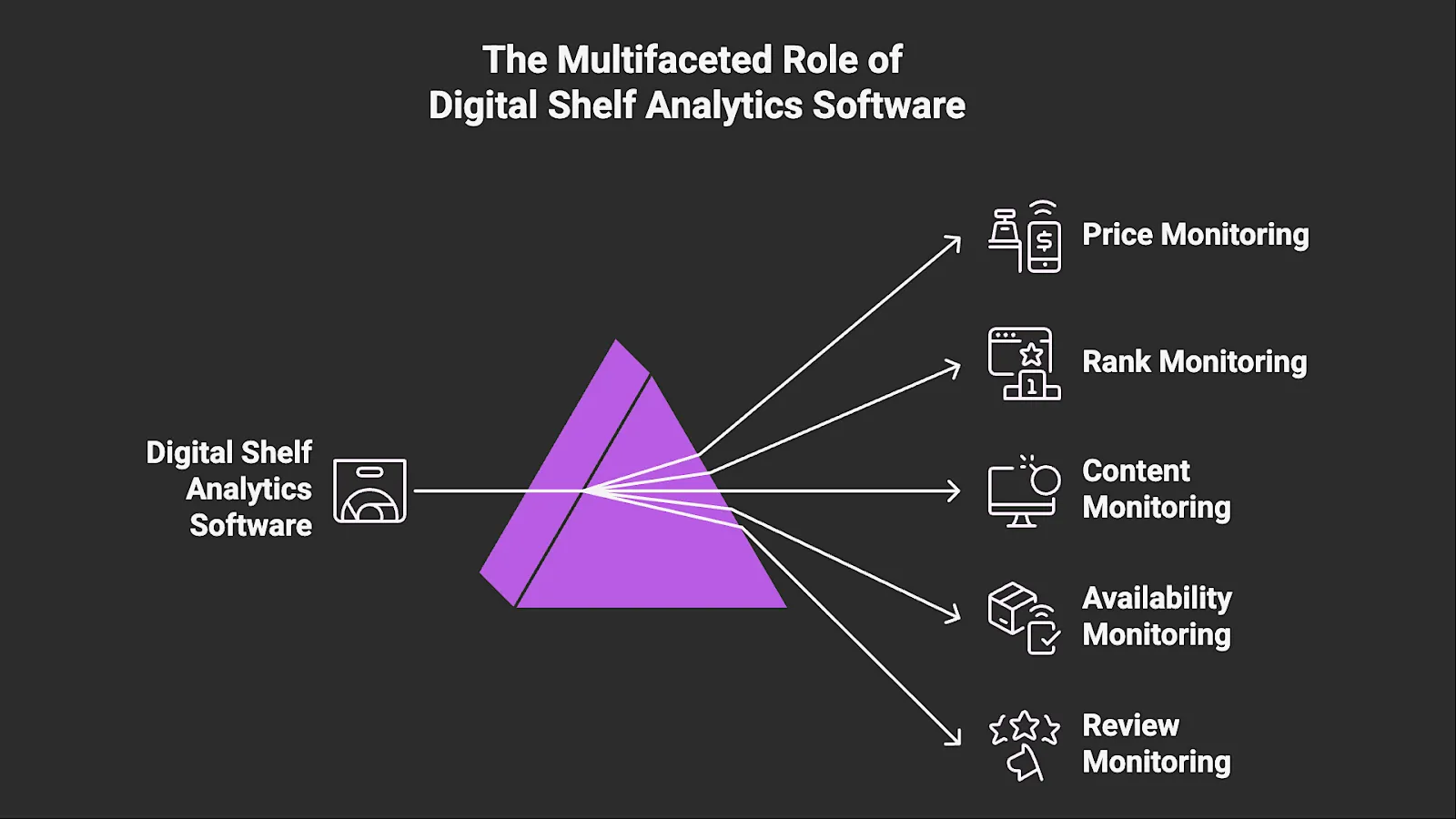
Here’s how different departments use digital shelf analytics data:
- Sales & Supply Chain – When a product is low or out of stock, alerts can be triggered for supply chain managers to restock the proper channels. It can also inform sales when to pause advertising spend to prevent wasted budget on out-of-stock items.
- Marketing & Product Development – Ratings and reviews can be analyzed to provide real-time market fit indicators for the product. It becomes another layer to the “consumer voice” and real-time digests of consumer sentiment towards a product.
- Legal, Compliance & Brand Integrity – DSA software can monitor retailer compliance for brand guidelines, pricing, and image accuracy. This visibility protects the brand’s reputation and prevents potential legal issues due to inaccurate or off-brand listings.
Types of Digital Shelf Analytics Software
There are two main types of digital shelf analytics software:
Stand-alone DSA Software
Stand-alone DSA tools track performance across multiple channels with high-frequency collection. The primary focus is on monitoring only, with deep, specialized features like sentiment analysis.
This type of DSA software best fits targeted use cases, such as guarding price integrity or tracking particular product launches, and can scale to enterprise programs when paired with robust data pipelines.
Integrated DSA Software
Integrated systems, in contrast, are built into other enterprise platforms such as Product Information Management (PIM) or Retail Media systems, which creates a continuous loop of commercialization. The primary focus for integrated digital shelf analytics is to link analytics to execution. Enterprises prefer this approach to help manage large product portfolios and potentially complex omnichannel operations.
Benefits of Digital Shelf Analytics Software
DSA software offers many benefits, including:
1. Comprehensive Digital Shelf Visibility
DSA software provides a “birds-eye view” of your entire retail ecosystem and replaces guesswork with data. It also ensures omnichannel consistency by ensuring your brand story is identical across Amazon, Walmart, Target, and niche sites to prevent consumer confusion. Doing so also provides early detection of issues like unauthorized third-party sellers hijacking your listings.
2. Search and Category Placement Insights
First-page visibility drives Share of Voice (SoV), your visibility share for priority keywords and categories versus competitors. Digital shelf analytics software lets you track how retailer algorithm changes affect your tracking, monitors your position within specific taxonomy trees, and ensures you are appearing in the right virtual aisles for high-intent shoppers.
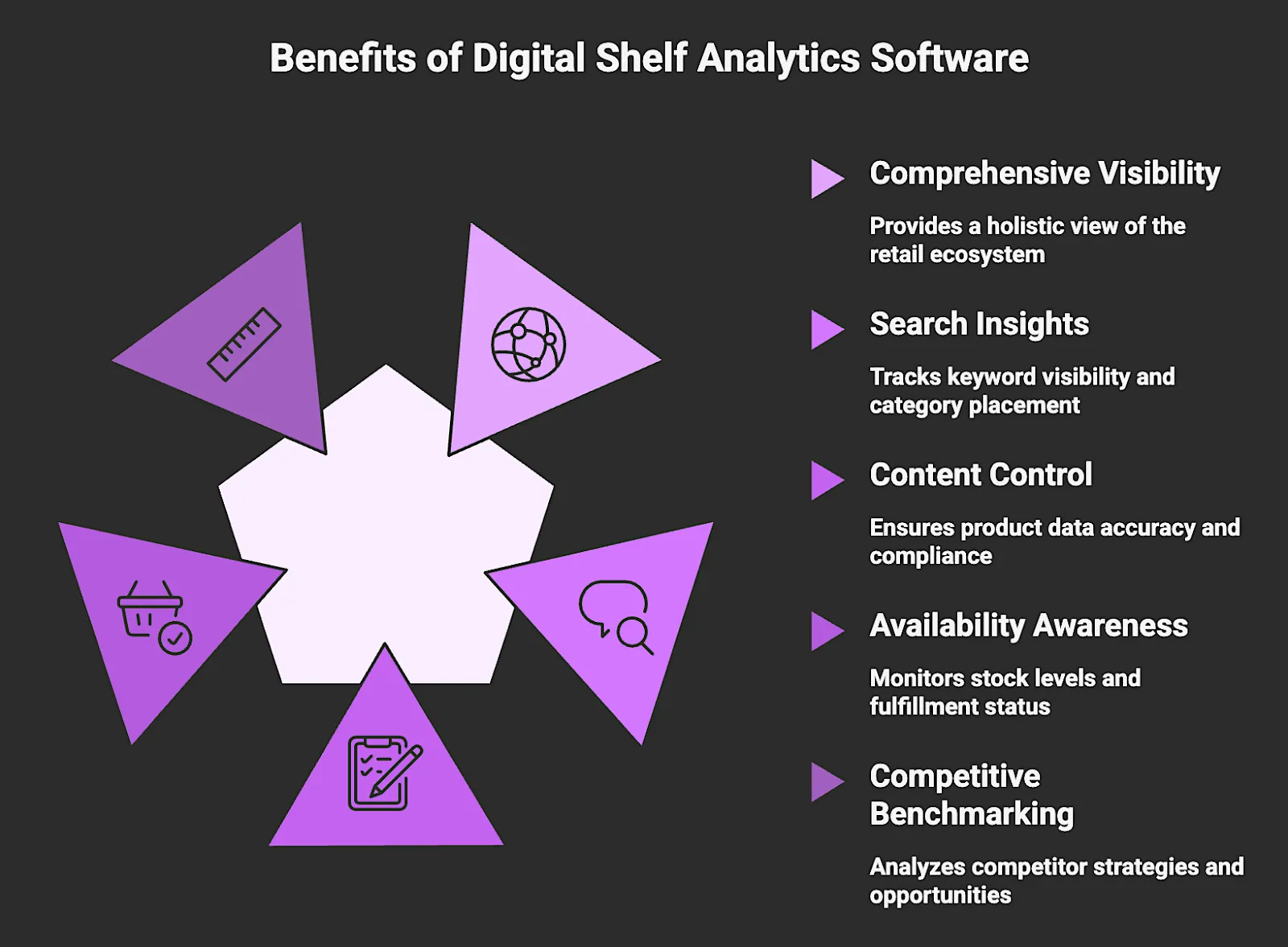
3. Content Execution Control
The software ensures that product data is correct, and automatically checks to ensure compliance across thousands of product pages with specific retailer guidelines, such as image resolution, character limits, and required keywords, preventing listings from being suppressed or penalized by algorithms. It also ensures that your brand voice, claims, and visual identity are uniform across decentralized marketplaces and third-party sellers.
4. Availability and Fulfillment Awareness
For omnichannel programs, DSA tools can track store-level availability where retailers expose those signals. The software prevents you from wasting ad spend on regions where products are physically out of stock. It also provides continuous monitoring alerts for situations such as when a stockout occurs, or if your listing loses the “Buy Box” to a third-party seller.
5. Competitive Benchmarking
With digital shelf analytics software, you can analyze competitor catalogs and assist in identifying ‘white space’ opportunities, such as product sizes, bundles, or variants that your competitors are selling but you are not. This data can help in product development and bundling strategies.
Key Features to Look for in Digital Shelf Analytics Software
When looking for the right DSA software for your organization, keep an eye out for these features:
- Retailer and Marketplace Coverage: Ensures that your chosen DSA software can monitor all specific e-commerce platforms and regional retailers.
- Data Freshness and Update Frequency: Provides high-frequency updates for pricing and stock levels to support agile decision-making.
- Product Matching and Normalization: Enables the AI model to accurately match your product to the correct competitor across multiple sites, regardless of naming differences, for reliable comparative analysis.
- Easy Data Integration: Delivers clean, exportable data that plugs into your existing stack using structured, Analysis-ready outputs (e.g., parquet dataframes) and direct integration into BI/data lakes/AI pipelines.
- Search and Category Placement Tracking: Measures rank by keyword, confirms placement in the correct category, and highlights movement that affects visibility.
- Content Execution Measurement: Verifies Product Detail Page (PDP) content against retailer rules and brand standards, and flags issues that can suppress listings or reduce conversion.
- Competitive Benchmarking: Compares competitor pricing and assortment across the same categories to highlight gaps you can pursue.
Top 10 Digital Shelf Analytics Software Solutions
1. Nimble
Nimble takes a fundamentally different approach to digital shelf analytics. Instead of selling a fixed set of shelf metrics and dashboards, Nimble gives enterprises direct access to the underlying, real-time digital shelf data, straight from the retailer source. This allows retail and CPG teams to define exactly what they want to monitor, how frequently, and how it should be analyzed, without being constrained by a vendor’s data model or reporting layer.
Nimble’s platform serves as the real-time data layer powering both internal analytics and next-generation DSA tools. By separating data collection from visualization, Nimble becomes a forward-looking alternative to traditional thinking. It’s built for teams that want flexibility, scale, and control as digital shelf conditions evolve.
Main Features:
- Uses advanced AI Web Search Agents to extract public retailer data at a massive scale continuously.
- Delivers fully structured, analysis-ready outputs (e.g., Parquet dataframes) for direct integration into BI tools, data lakes, or AI pipelines.
- Supports high-frequency updates throughout the day, avoiding the delays caused by static snapshots.
- Features self-healing mechanisms that automatically adapt to retailer site layout changes.
- Enables the separation of data collection from visualization, reducing vendor platform lock-in.
Best for: Large enterprises and data engineering teams who need raw, high-frequency digital shelf data to fuel their own custom internal dashboards and AI models.
Review: “Reliable, developer-friendly platform for web data collection.”
2. Brandquad
Brandquad provides a collaborative environment that combines PIM capabilities with automated content auditing and compliance reporting. It helps global brands optimize conversions by managing complex product catalogs and ensuring listing accuracy in multiple regions.
Main Features:
- Digital Shelf Analytics combined with a collaborative PIM.
- Automated reports sent directly to retailers.
- Real-time price and availability tracking across multiple regions.
Best for: Mid-to-large global brands that need a streamlined way to collaborate on and audit product listings.
Review: “We have seen revenue growth and decreased costs with Brandquad modules.”
3. DataWeave
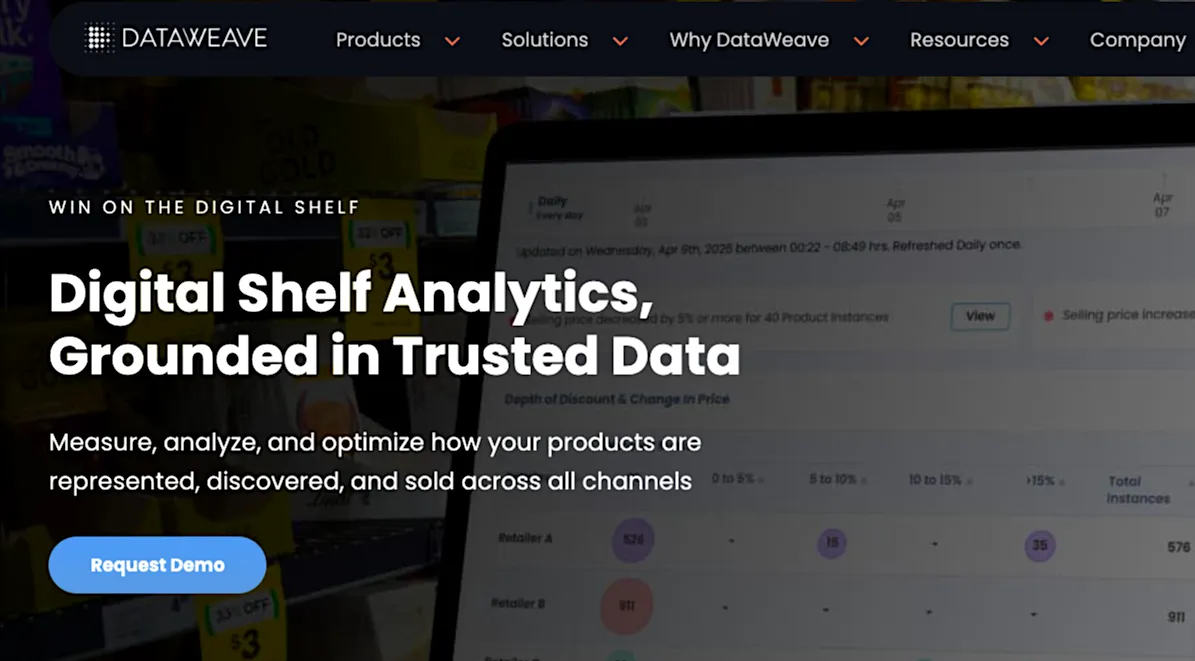
DataWeave provides deep intelligence on competitor assortments, pricing, and stock levels to help brands identify market gaps. It models Share of Search/Share of Media by keyword and category, and captures local availability to optimize product discoverability.
Main Features:
- Specializes in competitive assortment analysis to identify “white space” opportunities.
- Granular tracking of stock availability and fulfillment times.
- Measures search visibility with keyword/category rank to understand how often your products appear versus competitors.
Best for: E-commerce managers who need to optimize their product mix and pricing strategy based on rival activity.
Review: “The platform is very user-friendly, but the matching system needs some improvement.”
4. Inriver Evaluate
Inriver Evaluate extends the power of the Inriver PIM by monitoring how product stories are presented at the actual point of sale. It identifies content gaps and data inaccuracies, allowing teams to maintain a high-quality “digital twin” of their products across all channels.
Main Features:
- Directly monitors how product stories are being told at the point of sale.
- Identifies missing or incorrect information and maps it back to the PIM.
- Focuses on “Customer Effort Score” and measuring how easy it is for a customer to find the info they need.
Best for: Organizations already utilizing inriver PIM who want to extend their data governance to the digital shelf.
Review: “Best-in-class SaaS solution for PIM.”
5. Intelligence Node
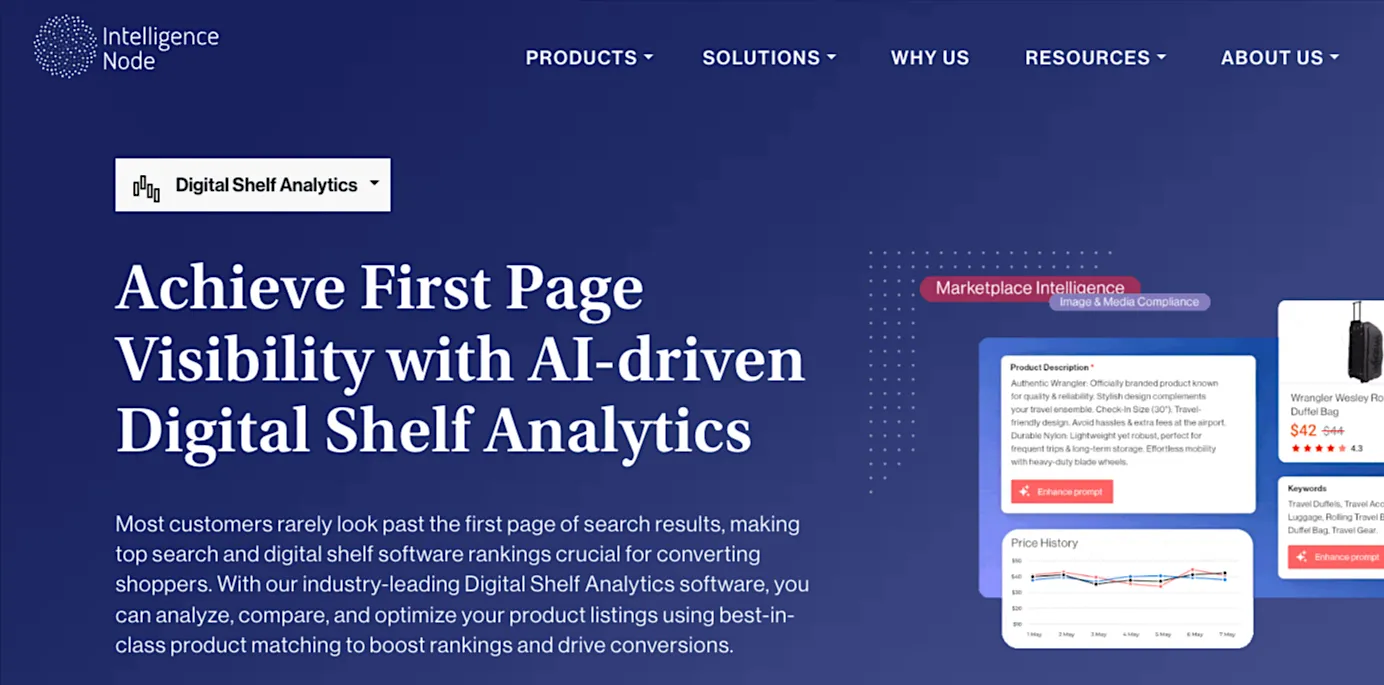
Intelligence Node specializes in real-time pricing and competitive benchmarking. This tool uses advanced AI to track global market movements with high accuracy. It is ideal for brands in price-sensitive categories that need to automate their MAP monitoring and price adjustments.
Main Features:
- AI-driven price optimization and MAP (Minimum Advertised Price) monitoring.
- High-accuracy product matching using computer vision and NLP.
- Real-time competitive tracking across thousands of global retailers.
Best for: Retailers and brands in highly price-sensitive categories like electronics, fashion, and beauty.
Review: “Smart tool for pricing & retail insights.”
6. Profitero
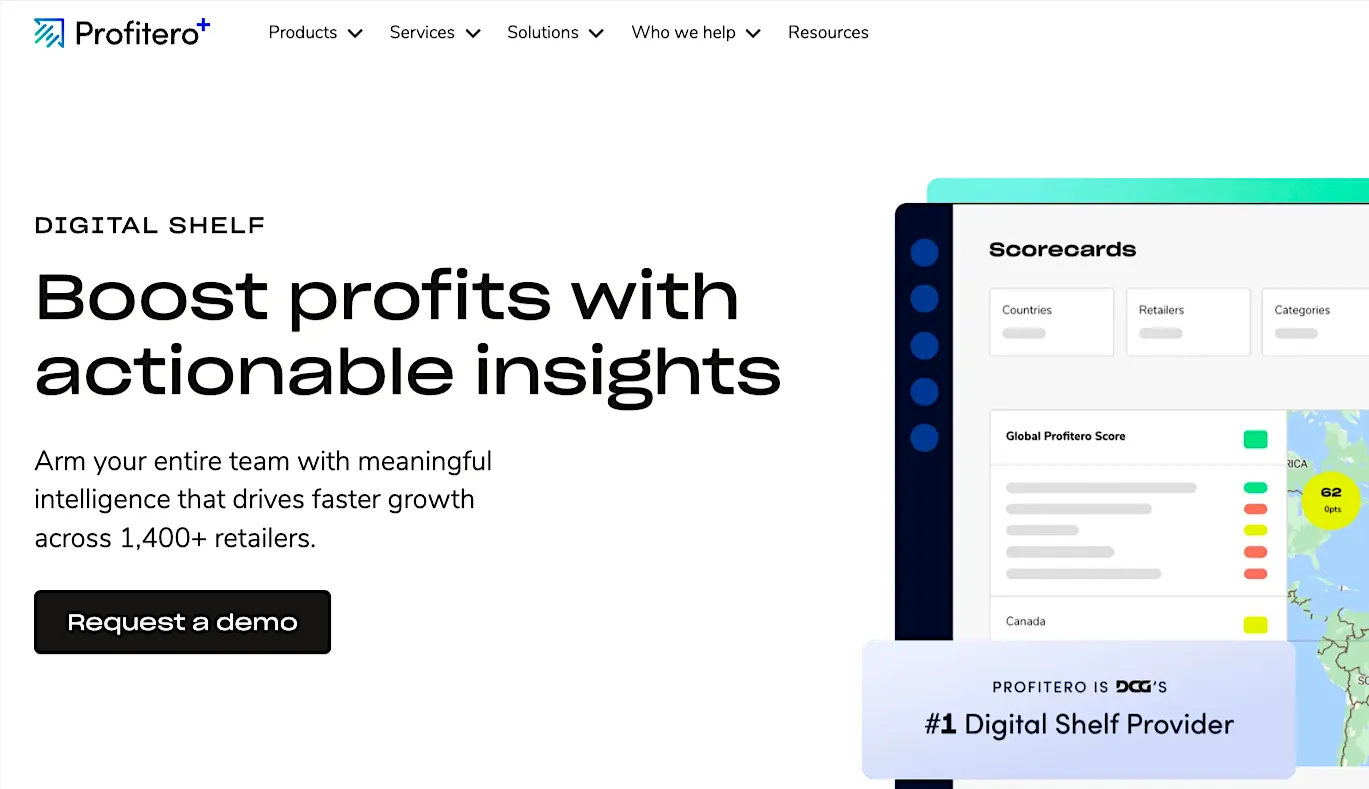
An enterprise solution that provides comprehensive analytics and automated reporting, Profitero correlates digital shelf performance with actual sales and market share data. It helps global CPG brands identify precisely where they are losing revenue and how to fix it.
Main Features:
- Daily monitoring of over 700 million products across 700+ retailers.
- Predictive analytics that correlate shelf performance (ratings, availability) with actual sales impact.
- Proprietary “Amazon Sales & Share” estimates.
Best for: Global consumer brand manufacturers (CPG) who need comprehensive, executive-ready reporting on market share and shelf performance.
Review: “Profitero is a tool with a quick learning curve, good rollout support, and expected data accuracy.”
7. Rapid Delivery Analytics (RDA)
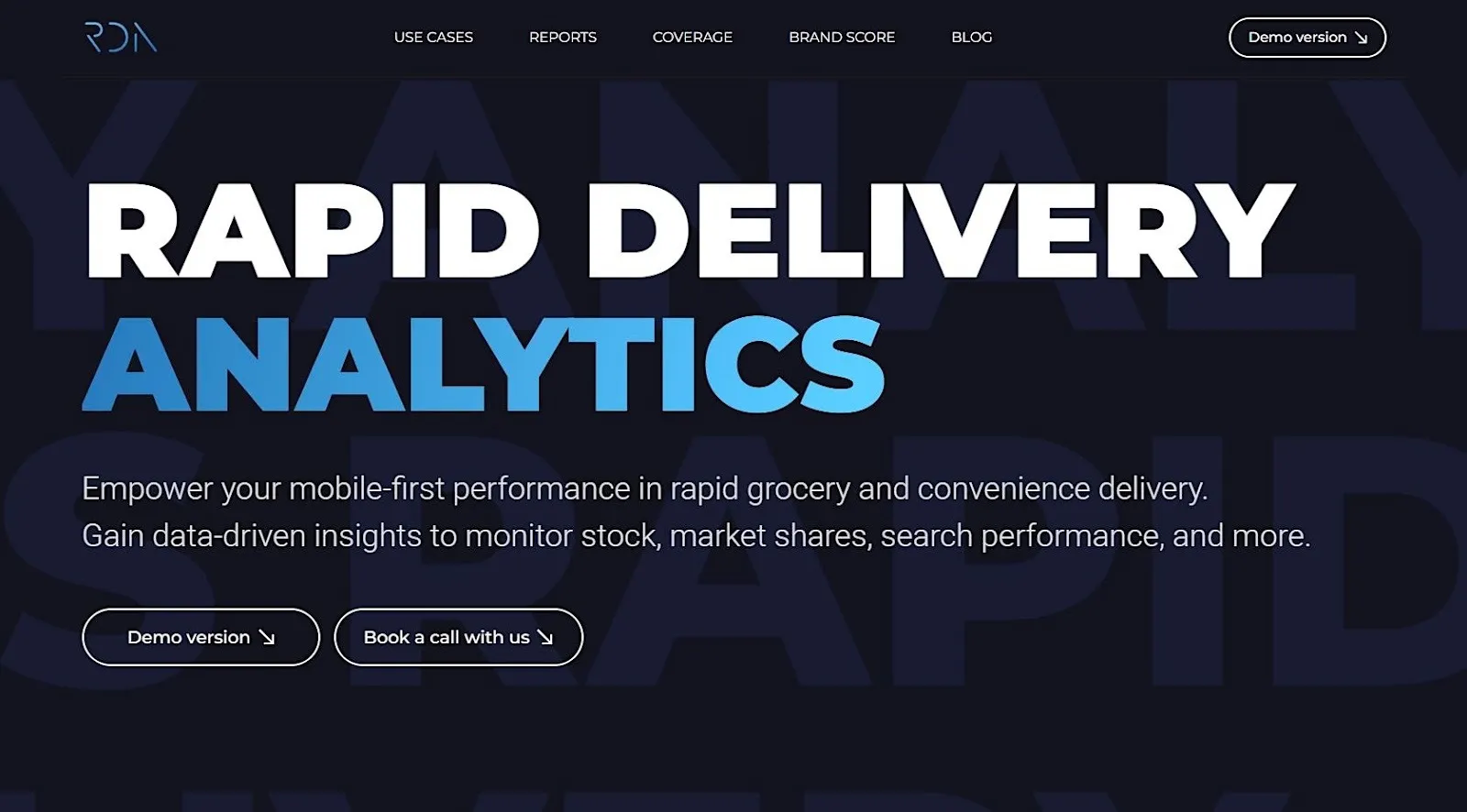
Rapid Delivery Analytics (RDA) specializes in “last mile” monitoring of product performance on delivery apps like Instacart and Uber Eats. It provides hyperlocal visibility into pricing and availability within the rapidly growing grocery and convenience delivery sectors.
Main Features:
- Tracks stock availability, search rankings, pricing, and promotions on rapid-delivery apps in near real-time.
- Tracks “Shelf Health” specifically for the grocery and convenience sectors.
- Supports low-latency analytics and alerting so teams can trigger workflows when key metrics move.
Best for: CPG food and beverage brands that rely heavily on quick-commerce and delivery aggregators.
Review: “Its super-fast processing, same-day delivery, and analytics make the process cost-effective and helps make the customer satisfied with the services.”
8. Salsify
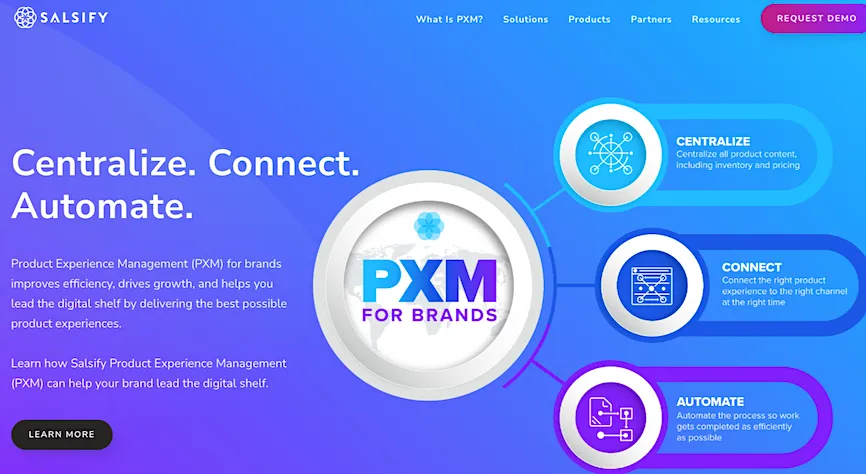
Salsify combines Product Experience Management (PXM) with digital shelf insights to create a “closed-loop” system for managing product data. It allows brands to monitor live listings and immediately push content updates to retailers from a single source.
Main Features:
- Combines PIM, DAM, and Digital Shelf Analytics in one platform.
- The “Insights” module provides direct feedback on how live content is performing.
- Workflow automation to push content updates to retailers based on performance data.
Best for: Brands that want a “closed-loop” system where content creation and shelf monitoring live in the same ecosystem.
Review: “Their integration with other retailers and marketplaces while storing all product data and imagery in one location is the best part.”
9. Syndigo
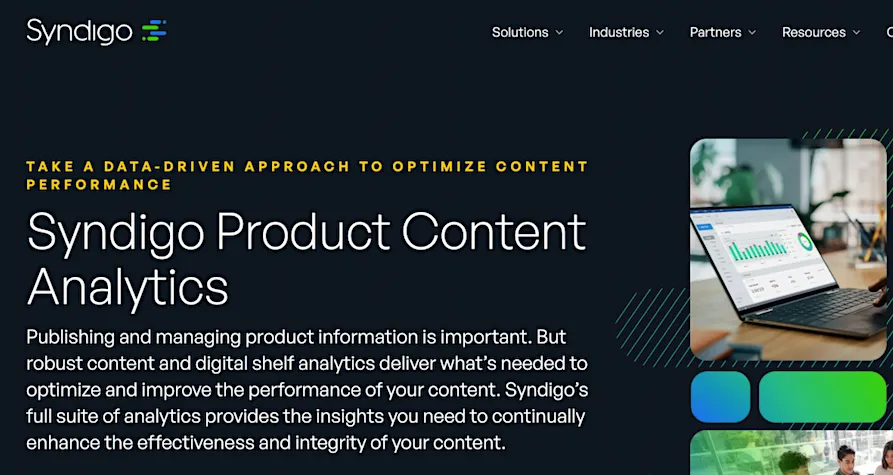
Syndigo focuses on large-scale content syndication and ensuring that product listings meet the strict compliance standards of retailers across its massive network. The software helps to ensure brand consistency and high-quality rich media across thousands of global sites.
Main Features:
- Unparalleled network of retail connections for direct content syndication.
- Deep “Content Health” reporting to ensure compliance with retailer-specific requirements.
- Enhanced rich media monitoring.
Best for: Large manufacturers who must manage and audit complex product content across a vast network of global retailers.
Review: “We can depend on Syndigo as another set of eyes to our data to make sure that we are sending the correct thing to these retailers.”
10. Mindsite
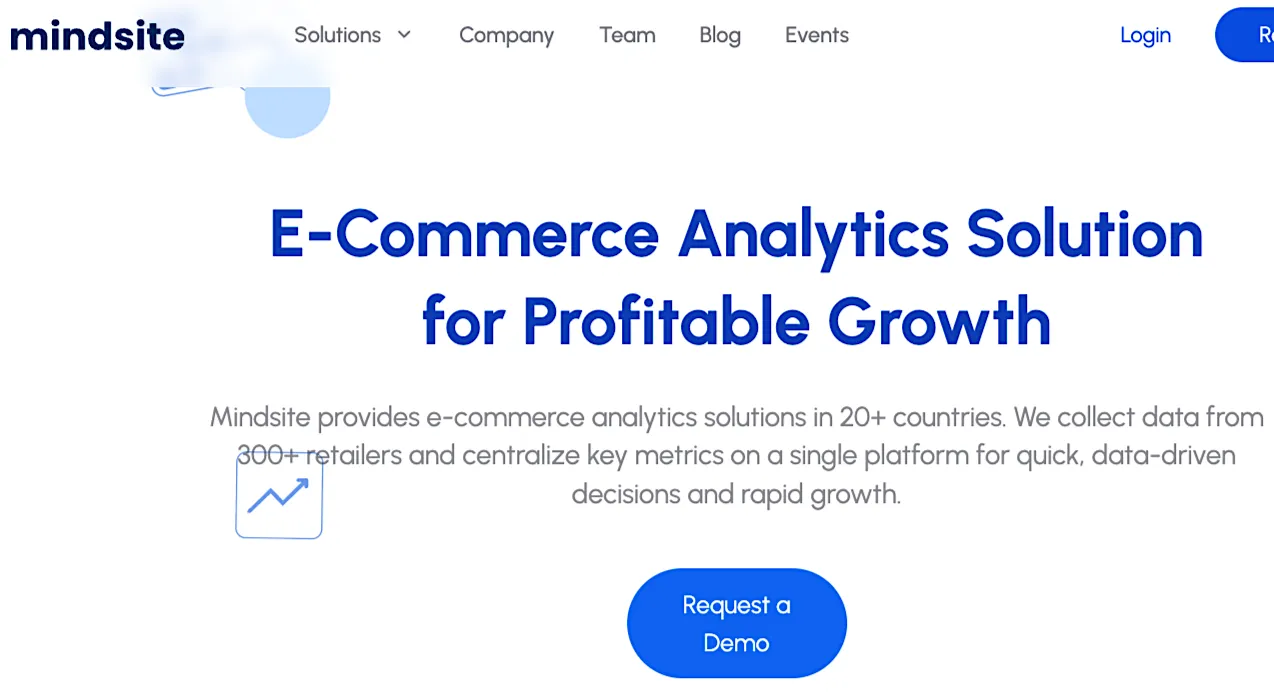
An e-commerce analytics platform that centralizes retailer signals into one workspace, Mindsite helps brands to see performance across marketplaces and act faster. It collects data from 300+ retailers across 20+ countries and organizes them into configurable dashboards and panels that identify digital-shelf signals in near real-time.
Main Features:
- Audits PDP content accuracy to keep listings compliant and trustworthy. 
- Aggregates and analyzes ratings and reviews from multiple retailers, including review comments, to surface customer sentiment and improvement opportunities. 
- Provides location-based analytics that aid in inventory management, tracking warehouse/location availability, and supply & demand decisions.
Best for: E-commerce managers, online brand teams, and retail analysts.
Review: “The combined visibility into pricing, stock levels, and Buy Box performance has been particularly useful across the EMEA markets we cover.”
Digital Shelf Analytics Software Depends on Real-time Data
DSA software has become the essential bridge between retail data and revenue protection, making complex shelf conditions both measurable and actionable. Selecting the right solution for your organization depends on your specific needs for retailer coverage, data freshness, and whether the platform’s outputs are structured to support real-time operating decisions.
While analytics platforms provide the visualization, the quality of your insights is only as good as the underlying data. Nimble provides the critical real-time web data extraction infrastructure that supplies these platforms with structured, analysis-ready shelf signals. By enabling high-frequency monitoring across diverse retailers and global markets, Nimble allows brands to maintain a constant pulse on the shelf without the burden of managing complex in-house data collection.
Book a Nimble demo today to discover how real-time pricing and availability data support digital shelf analytics that drive better decision-making.
FAQ
Answers to frequently asked questions
.webp)
.webp)
