









Top 14 AI Lead Enrichment Tools for 2026
How web research agents, waterfall platforms, sales intelligence products, and developer APIs enrich prospect records.



Nimble's Expert
Top 14 AI Lead Enrichment Tools for 2026
How web research agents, waterfall platforms, sales intelligence products, and developer APIs enrich prospect records.
Nimble's Expert


Most popular articles

Get structured, reliable data for your stack.
Abstract
AI lead enrichment tools add company, contact, behavioral, or web-derived context to prospect records, but they use different methods to produce that data.
Lead enrichment tools differ mainly in how they source and produce prospect data. Some rely on large databases for standardized fields, while others waterfall across providers or research the web for custom signals.
46% of sales professionals using AI agents say data quality issues are hurting their sales. Enrichment quality therefore depends on where data comes from, how fresh and structured it is, and whether it supports downstream qualification, routing, personalization, and agent workflows.
We compare 14 tools across four approaches: web-research agents, waterfall enrichment platforms, sales intelligence products, and developer-focused APIs. The right choice depends on the data you need and how much research or workflow automation the tool must handle.
Top Recommendations
- Nimble Web Search Agents: custom lead and account research with multi-step web retrieval, reasoning, citations, and structured outputs.
- Clay: multi-provider enrichment combined with AI research and GTM workflow orchestration.
- FullEnrich: waterfall contact enrichment across numerous data providers.
- Common Room Person360: enrichment combined with identity resolution and first-party buyer signals.
- People Data Labs: API-first person and company enrichment for developer-built applications.
Top 14 AI Lead Enrichment Tools
1. Nimble Web Search Agents: Recommended for Custom Web-Derived Enrichment
Recommended for: AI and GTM engineering teams that need enrichment fields conventional B2B databases don't provide.
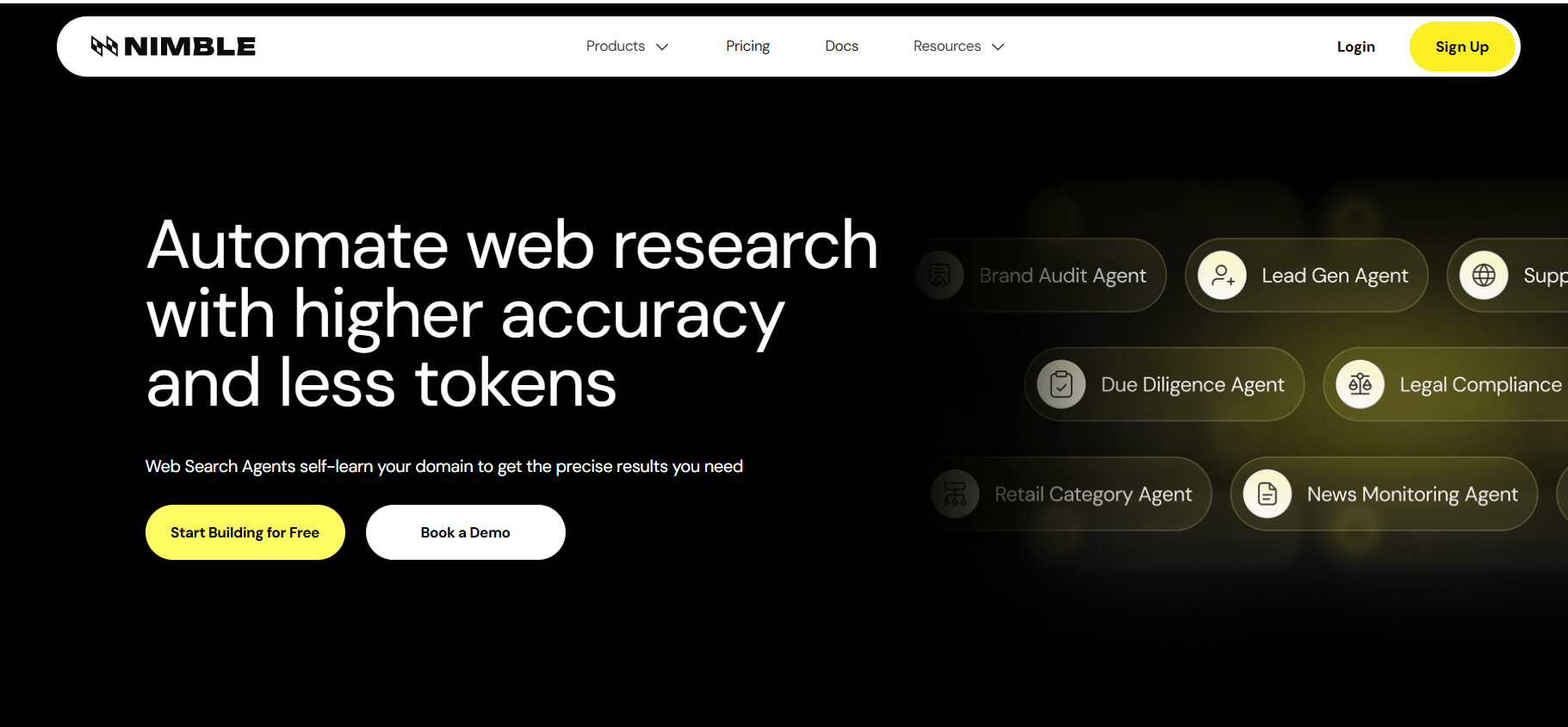
Nimble Web Search Agents handle enrichment tasks that require multi-step research across web sources. Teams can define the objective and output schema, then use an agent to search, browse, extract, cross-check, reason, and return cited prose or schema-constrained structured output.
They work well for firmographic, technographic, intent, company-research, and custom qualification fields that require research across web sources.
For simpler retrieval, Nimble’s Search + Extract APIs provide web data to applications that handle their own reasoning and orchestration.
For repeat workflows, Nimble can specialize retrieval around the task’s sources, vocabulary, success criteria, and output requirements. Memory records effective retrieval paths, while a private index stores prior outputs, sources, and search history so repeat workflows do not start from zero.
Considerations: Nimble provides web retrieval and research infrastructure rather than a conventional database of prebuilt B2B contacts. Teams that only need standard fields such as verified emails or phone numbers may find a dedicated contact-enrichment or waterfall platform more appropriate.
Pricing: By inquiry.
2. Clay: Recommended for Multi-Provider GTM Enrichment
Recommended for: GTM and RevOps teams building enrichment, scoring, routing, and research workflows in one platform.
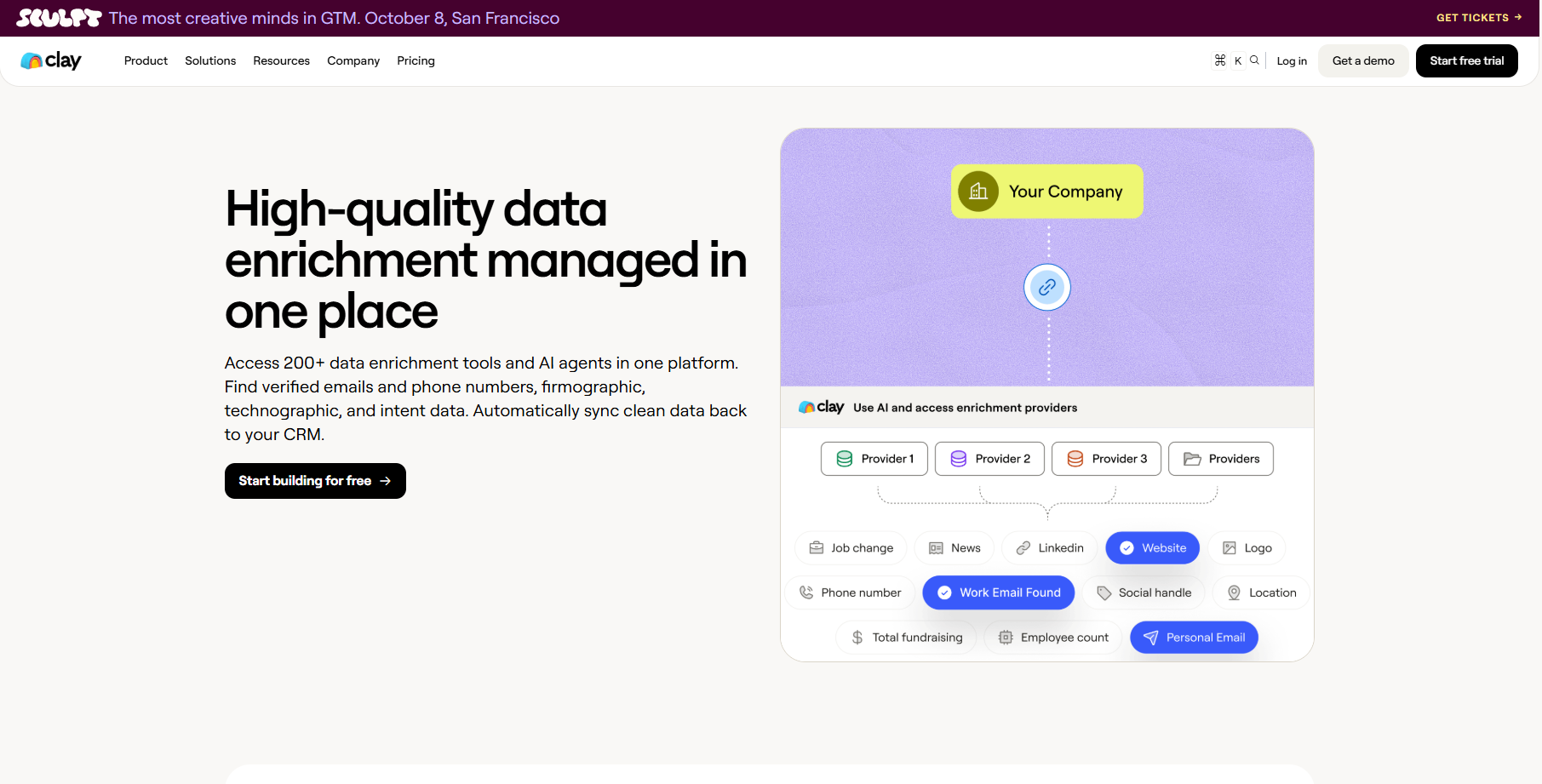
Clay combines data from more than 150 providers with waterfall enrichment and Claygent, its AI web-research agent. Teams can use conventional sources for contacts, firmographics, and technographics, then use AI research when the required field does not exist in those datasets. It can also sync enriched records into systems such as Salesforce, HubSpot, and Snowflake.
Considerations: The trade-off is that Clay’s pricing can get harder to track once you are paying for both platform usage and data credits.
Pricing: Free tier available. Paid plans start from $167 per month on annual billing at the time of review.
3. Rox: Recommended for Account Research Inside Revenue Workflows

Recommended for: Revenue teams that want account enrichment to feed broader sales execution.
Rox combines enrichment with broader revenue workflows. Its agents can research accounts and contacts, find new pipeline opportunities, and pull together context for upcoming meetings, so enrichment sits inside a much broader sales workflow.
Considerations: Teams looking only for an enrichment API may find the platform broader than required.
Pricing: Individual plans start at $100 per month for 10,000 agent actions. Team plans start at $255 per month.
4. Unify AI Agents: Recommended for AI-Led Prospecting and Qualification
Recommended for: Sales teams that want enrichment, prospect research, qualification, and outbound execution together.
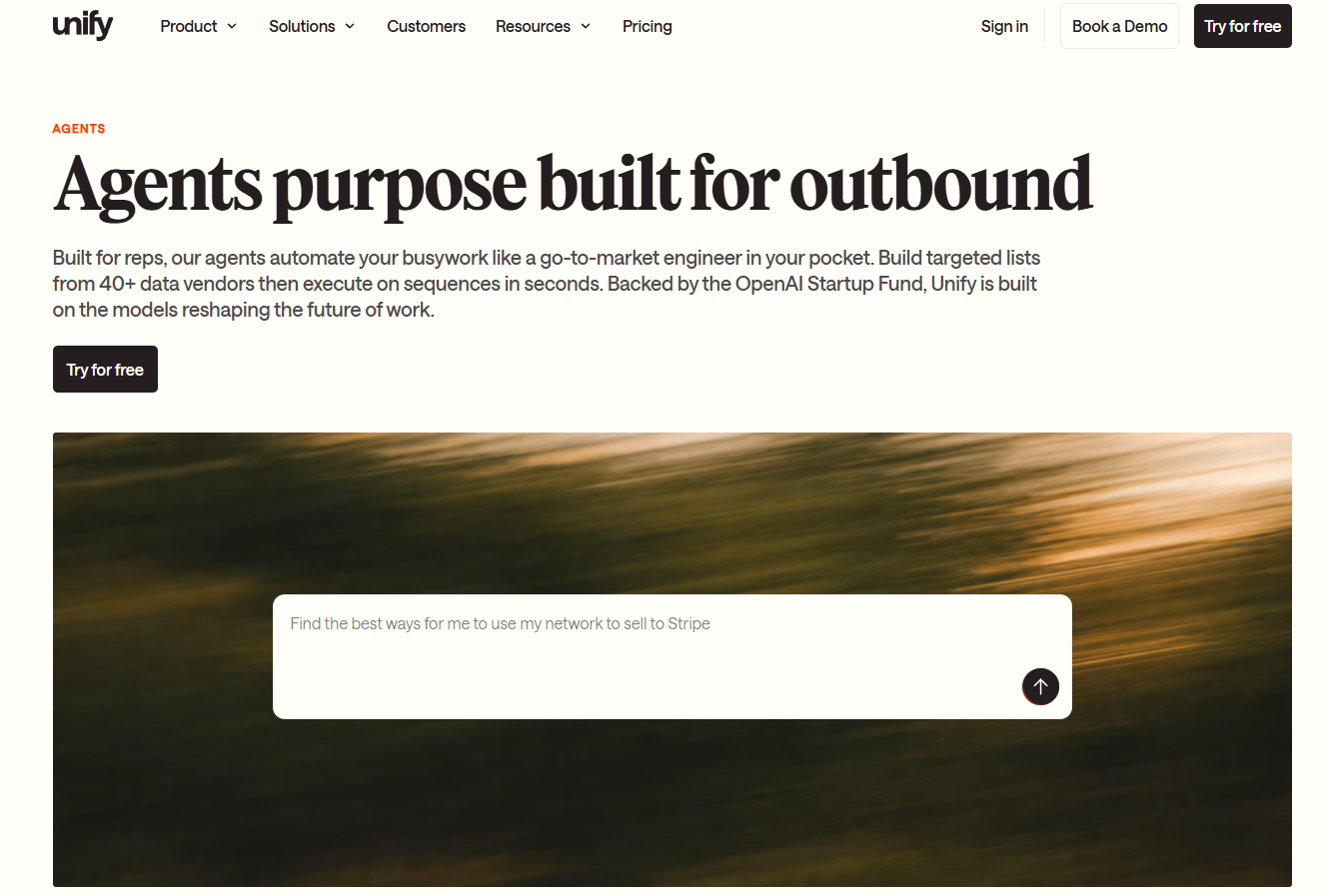
Unify's agents can search more than 40 data sources for information such as headcount, funding, technology stack, engagement history, contacts, and other prospect context. Users can describe an ideal prospect in natural language and have the agents research and qualify accounts before generating outreach.
Considerations: Unify is built for teams that want enrichment to feed directly into outbound sales work, rather than using it as a separate data step.
Pricing: Free tier available. Base costs $20 per seat per month and Pro $60 per seat per month.
5. Common Room Person360: Recommended for Identity and Signal Enrichment
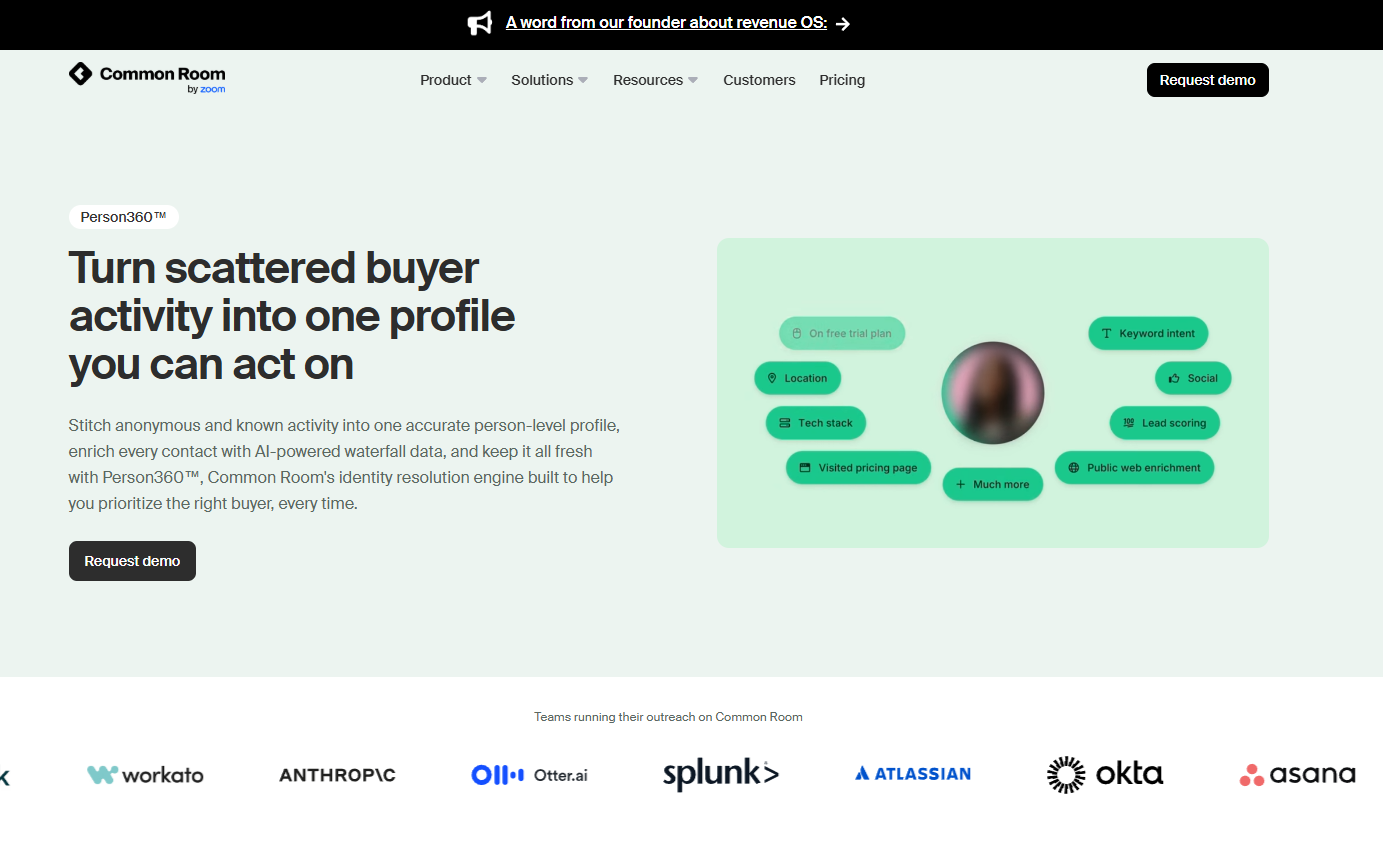
Recommended for: RevOps teams combining CRM data with product, website, community, and other buyer activity.
Person360 stitches together known and anonymous activity into unified person profiles, then performs AI-powered waterfall enrichment to fill in missing information. Person360 combines contact enrichment with identity resolution and behavioural context.
Considerations: This is a better fit for teams that need to connect their own customer activity with third-party enrichment, rather than treating those data sources separately.
Pricing: Essential starts at $2,500 per month billed annually. Higher tiers use custom pricing.
6. FullEnrich: Recommended for Waterfall Contact Enrichment
Recommended for: Teams primarily trying to improve email and mobile-number coverage.
FullEnrich doesn't use a single contact database for enrichment requests; instead, it sends requests through 25+ data providers. You provide a name, company info, and a professional profile URL, and it consumes credits when it finds verified data.
Considerations: Its specialization is contact enrichment. It is less suited to arbitrary company-research questions requiring broad web investigation.
Pricing: A free trial is available. Current paid plans use credit-based pricing.
7. BetterContact: Recommended for Verified Contact Waterfalls
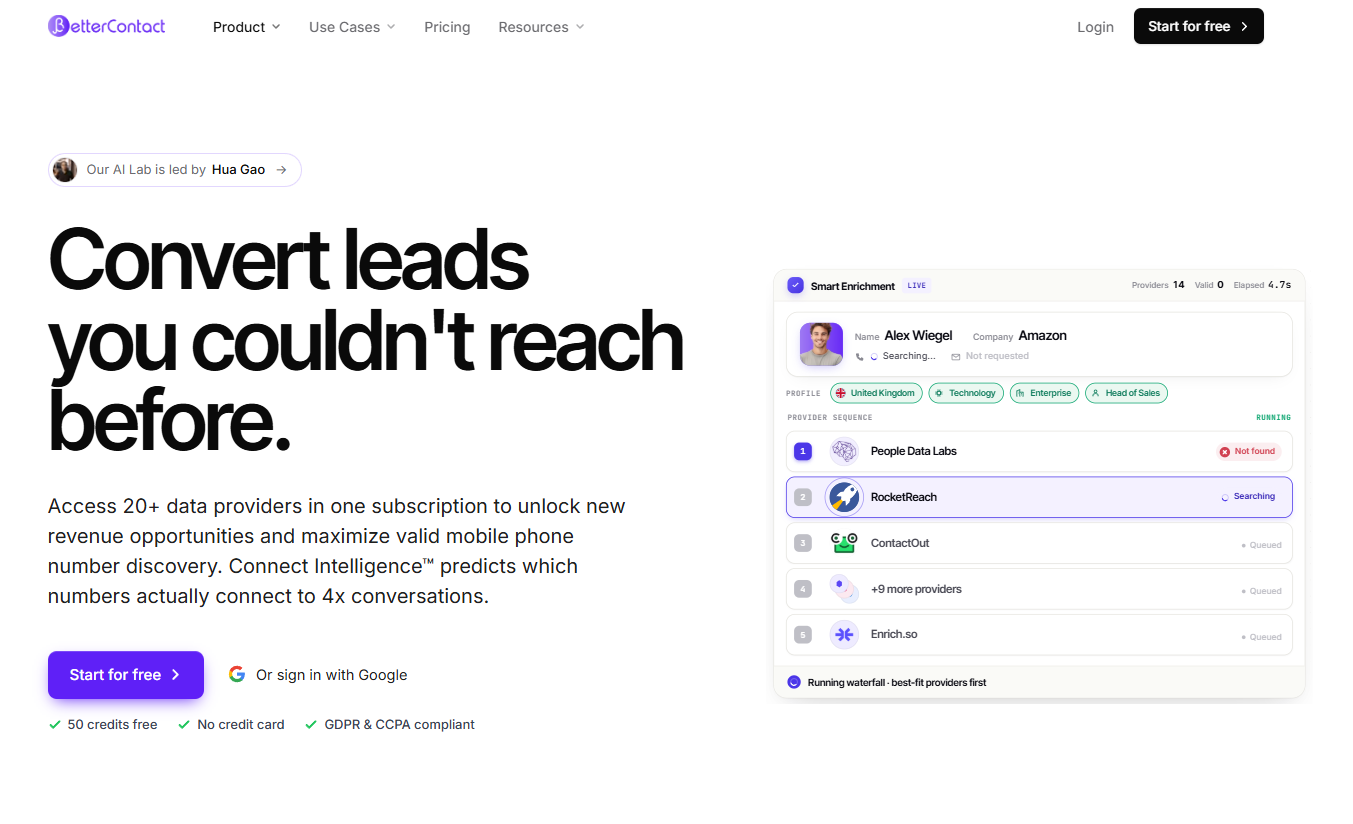
Recommended for: Sales and outbound teams that want several contact-data vendors behind one enrichment layer.
BetterContact doesn’t rely on a single source. It checks more than 20 providers for emails and mobile numbers, moving through them until it finds something usable. It also verifies the result before charging a credit.
Considerations: Its main focus remains contactability rather than deeper account intelligence or custom research.
Pricing: Starter costs $15 per month, Pro starts at $49 per month, and Enterprise pricing is custom.
8. Surfe: Recommended for Rep-Led Contact Enrichment
Recommended for: Sales teams that want contact enrichment closely connected to day-to-day prospecting and CRM activity.
Surfe integrates company and contact data into a single workflow, with tools to find and verify emails and phone numbers before syncing that data into a CRM. Surfe provides larger teams with API access for search and waterfall enrichment. It also supports MCP, meaning that data can be pulled into compatible AI-agent workflows.
Considerations: Many features are designed around seller workflows, so developer teams should check API access requirements.
Pricing: Free plan available. Essential starts at $49 per user per month, and Pro is $89 when billed monthly.
9. Wiza: Recommended for Real-Time Person Enrichment
Recommended for: Workflows centered on professional profiles and verified contact information.
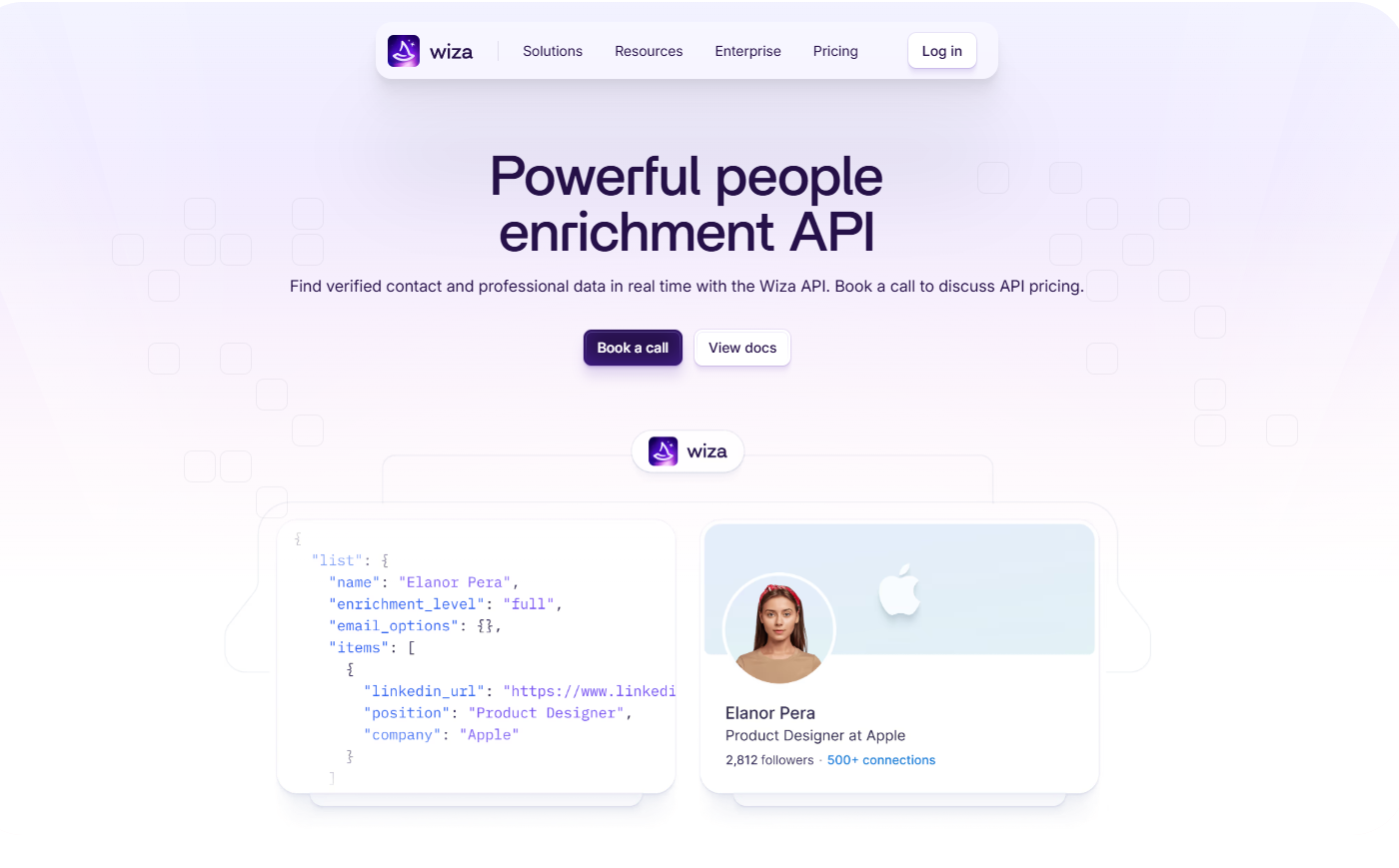
Wiza can enrich a prospect from something as simple as a name and company, or a professional profile URL. It returns more than 50 data points, including verified email addresses, phone numbers, job details and company information. You can also use the API to search for prospects directly, filtering by job title, location, and company size.
Considerations: Wiza is strongest for person and contact enrichment rather than open-ended company research.
Pricing: Free tier available. Monthly paid plans start at $49 per user. API pricing is available through Wiza’s sales team.
10. Ocean.io: Recommended for Company Enrichment and Lookalike Discovery
Recommended for: Teams that need structured company intelligence alongside prospect similarity models.
Ocean.io can take a company domain or email address and fill in the rest of the picture. That can include details such as industry, headcount, location and the technologies a company uses. Its API also supports company search, contact data and lookalike scoring for teams that want to find businesses similar to their existing customers.
Considerations: Ocean.io is strongest in company intelligence and lookalike discovery.
Pricing: Credit-based subscriptions start at an equivalent of $47.25 per month, with a minimum annual commitment shown at the time of review.
11. People Data Labs: Recommended for Developer-First Enrichment
Recommended for: Engineering teams embedding structured person or company enrichment directly into products and data pipelines.
People Data Labs gives developers APIs to enrich person, company, and IP records. You only pay when a match is returned, making it easier to decide when enrichment should run and where that data goes next.
Considerations: Teams must build more of the surrounding workflow themselves compared with turnkey GTM platforms.
Pricing: Person enrichment self-serve plans start from a $98 monthly minimum. Company enrichment starts from a $100 monthly minimum.
12. Apollo Data Enrichment: Recommended for CRM-Centric Sales Data
Recommended for: Sales organizations already using Apollo for prospecting and CRM workflows.
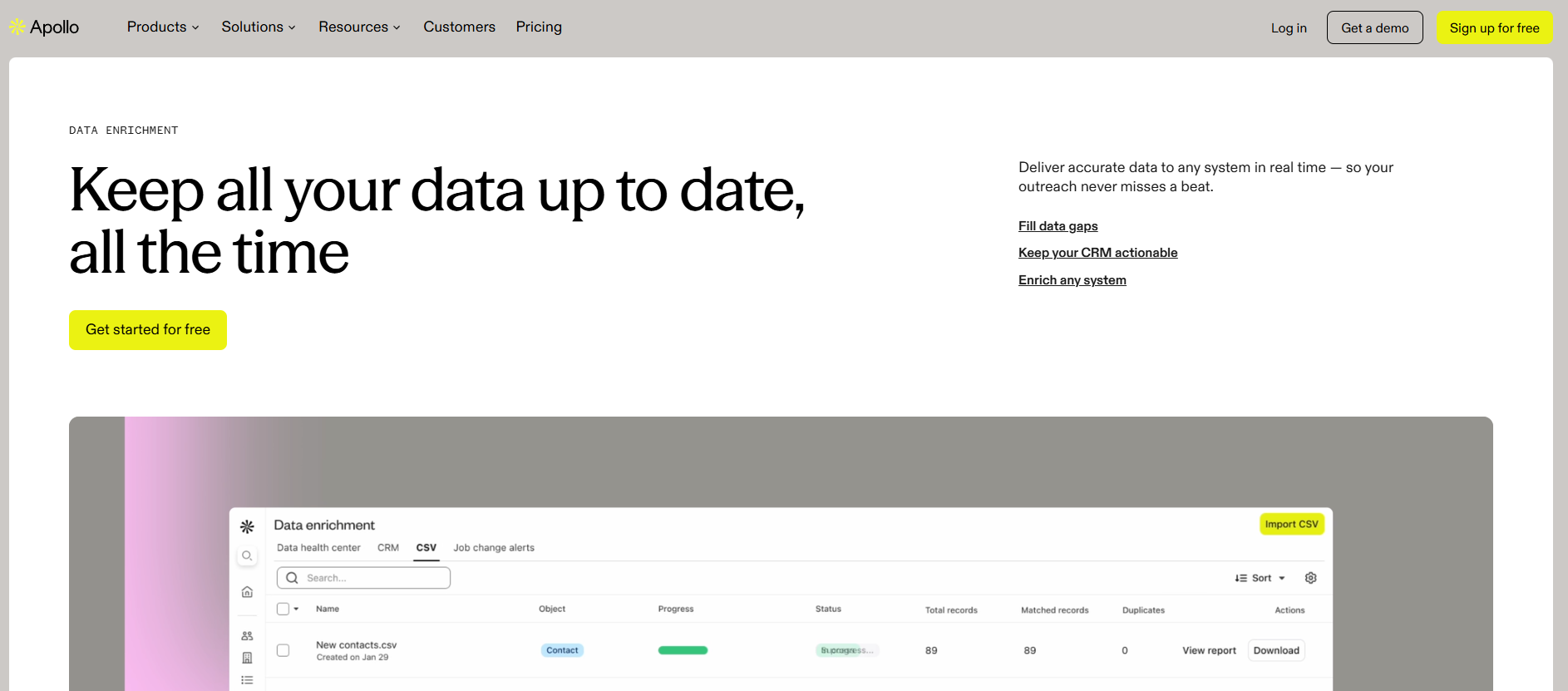
Apollo enriches people and company records using its data network, third-party sources, and real-time web data. It supports CRM enrichment, CSV uploads, APIs, scheduled updates, job-change monitoring, waterfall contact enrichment, and more than 30 enrichment data points.
Considerations: Apollo is most useful when enrichment sits inside the wider Apollo sales workflow.
Pricing: Pricing varies by plan, team size, usage, and add-ons. Apollo currently directs buyers to its pricing calculator for estimates.
13. 6sense: Recommended for Enrichment With Buying Signals
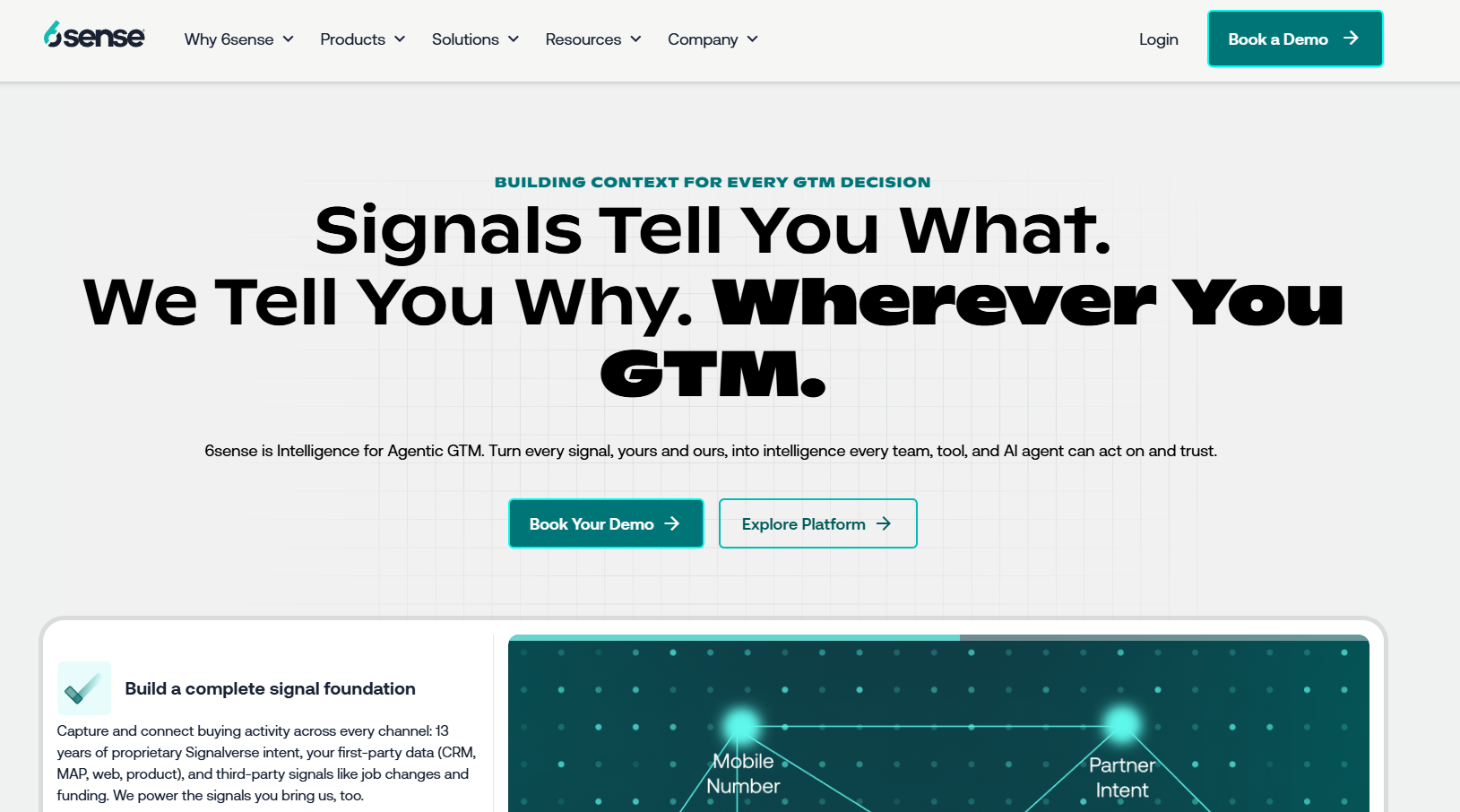
Recommended for: B2B teams that want contact and account enrichment connected to prioritization and intent.
6sense can enrich a person record from details such as an email address or professional profile URL, returning information like job title, company, contact details, social profiles and location. 6sense also combines enriched data with account scores, buying-stage signals, and intent data to help teams prioritize accounts.
Considerations: It is broader revenue intelligence infrastructure rather than a lightweight enrichment utility.
Pricing: Not publicly disclosed for the relevant platform deployment.
14. Trigify: Recommended for Social-Signal Enrichment
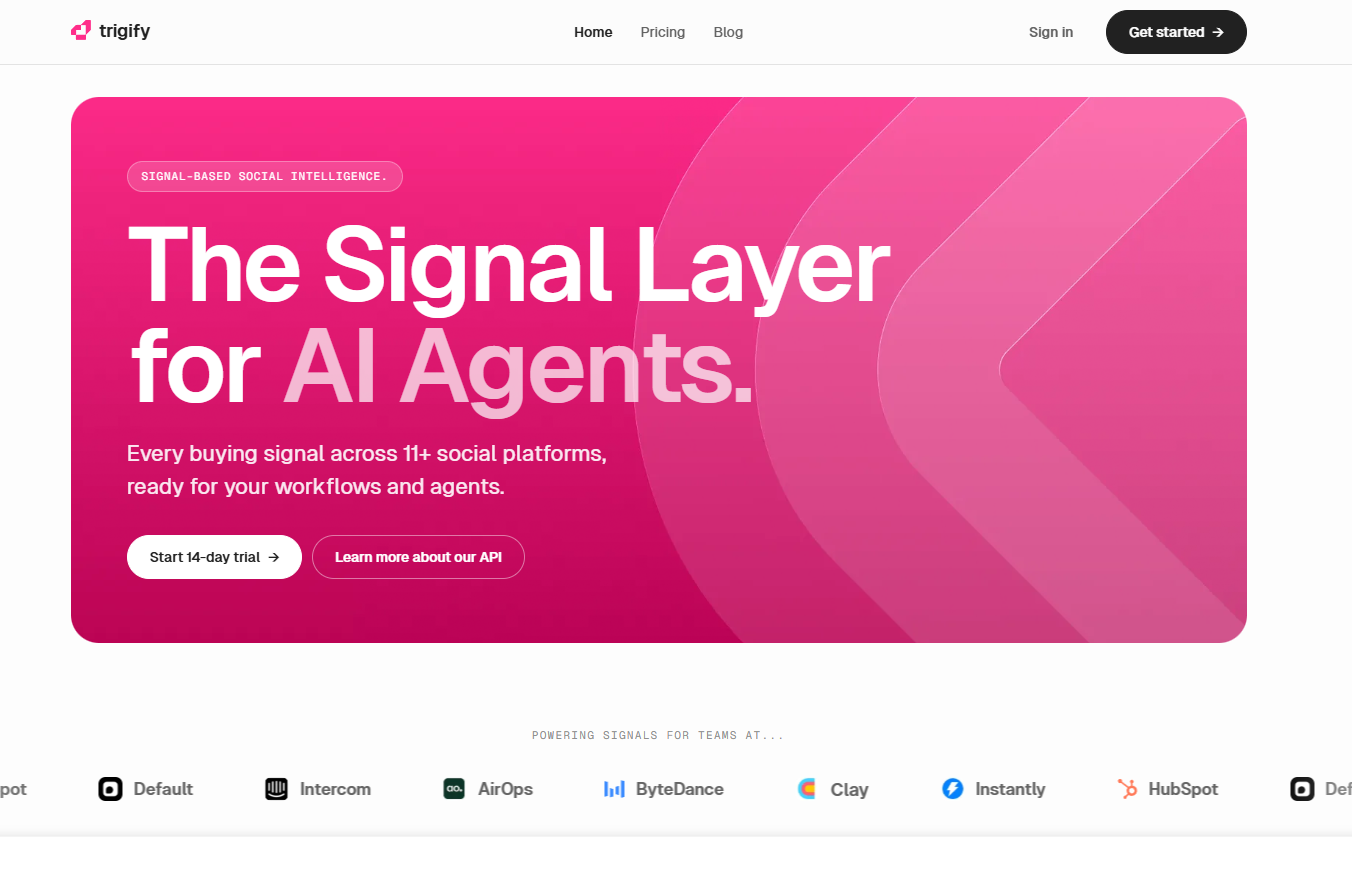
Recommended for: GTM teams that want prospect records enriched with social activity and trigger events.
Trigify tracks signals such as role changes, new hires, interactions with competitor content, and engagement around relevant topics. Its credit system also covers person and company enrichment, allowing teams to connect social signals with more conventional prospect information.
Considerations: Choose it when signal monitoring is central to the workflow, not just when you need static CRM fields filled.
Pricing: Starter costs $40 per month and Max $199 per month. Custom enterprise pricing available.
How We Selected and Compared These Tools
We based this comparison on publicly available product information rather than a standardized hands-on benchmark. We checked product information in September 2026 using vendor product pages, documentation, help centers, API documentation, integration information, and published pricing.
We included products that materially support lead or account enrichment through contact, company, web-derived intent or qualification signals. The list also includes several different enrichment models so buyers can compare database-led products, waterfall platforms, AI research tools, sales intelligence systems, and developer APIs.
We compared the tools across factors including:
- Enrichment method and data sources
- Contact and company coverage
- Data freshness
- Custom research capabilities
- Waterfall or multi-provider support
- Structured outputs and source traceability
- CRM, warehouse, and workflow integrations
- API and developer access
- Real-time and batch enrichment
- Security and governance capabilities
- Pricing and credit model
Apply these criteria differently by category. A contact waterfall and a web-research agent solve different enrichment problems.
How to Choose the Right AI Lead Enrichment Tool
- Start with the data you need. Standard fields such as verified emails, phone numbers, job titles, headcount, and industry often suit database or waterfall enrichment. Waterfalls increase coverage by checking multiple providers.
- Decide whether you need retrieval or research. Use Search + Extract APIs when your application handles its own reasoning and orchestration and needs web search results, page content, or structured fields as inputs. Use Web Search Agents when enrichment requires multi-step search, browsing, extraction, reasoning, citations, or structured outputs, such as determining whether a company meets a custom buying criterion or identifying signals across multiple web sources.
- Check how the output fits your workflow. Look for consistent structured fields, sensible handling of missing values, sufficient speed and volume, and integrations with the CRM, warehouse, application, or AI agent that will use the data.
- Understand where the data comes from. Enrichment may rely on proprietary datasets, third-party providers, provider waterfalls, first-party behavioral data, live web sources, or a combination. Source transparency matters when freshness, geographic coverage, traceability, or custom fields are important.
Nimble: Web Research Infrastructure for AI Lead Enrichment
Nimble provides web retrieval and research infrastructure for AI and GTM teams that need enrichment beyond standard contact and company databases. Teams can use Nimble to retrieve web data or run multi-step research workflows that discover custom firmographic, technographic, intent, and qualification signals.
Nimble supports two approaches to enrichment:
- Web Search Agents: Run multi-step research across web sources, including searching, browsing, extracting, cross-checking, and reasoning over findings. Results can include citations, confidence signals, and schema-constrained structured outputs.
- Search + Extract APIs: Provide web data to applications that already handle their own reasoning and orchestration. Use them when the workflow needs retrieval rather than a managed research process.
- Adaptive retrieval: Specializes retrieval around the workflow’s objective, relevant sources, vocabulary, success criteria, and output requirements.
- Memory and private index: Preserve useful retrieval paths, previous outputs, sources, and search history to support repeat research workflows.
- Research governance: Search Plans, source controls, citations, confidence scoring, and schema enforcement give teams more visibility and control over how enrichment data is produced.
Nimble fits lead enrichment workflows that require research across web sources for data conventional B2B databases do not provide.
FAQ
Answers to frequently asked questions


.webp)

%20(1).webp)
.avif)
.webp)

.webp)
.webp)