









14 Retail Price Monitoring Tools Broken Down
A side-by-side comparison of 14 tools for competitor tracking, dynamic pricing, and retail data collection at scale.



Charlie Klein
.webp)
14 Retail Price Monitoring Tools Broken Down
A side-by-side comparison of 14 tools for competitor tracking, dynamic pricing, and retail data collection at scale.
Charlie Klein


Most popular articles

Get structured, reliable data for your stack.
Retail price monitoring tools collect competitor pricing, promotions, availability, and product data to support better-informed pricing decisions.
The right choice depends on the scale of your monitoring program, the required level of automation, integration needs, and how the data will be used and delivered.
Pricing changes constantly across retailer websites, marketplaces, and direct-to-consumer stores. Monitoring competitors manually is no longer practical when you manage hundreds or thousands of SKUs.
That matters because pricing influences revenue, promotions, inventory planning, competitive positioning, and customer trust. RetailNext's 2026 Shopper Sentiment Report found that 71.3% of consumers want retailers to invest in lower prices, while 33.9% said inconsistent or unfair pricing would make them stop shopping with a retailer.
The right retail price monitoring tool depends on what you need to do with the data. This guide compares the leading options based on data freshness and coverage, automation, integrations, scalability, and use cases.
What are retail price monitoring tools?
Retail price monitoring tools automatically collect pricing information from e-commerce websites, marketplaces, and retailer catalogs so businesses can track competitors without manual research.
Most platforms monitor:
- Product prices
- Discounts and promotions
- Stock availability
- Product content
- Customer ratings and reviews
- Marketplace sellers
Some tools focus on dashboards, alerts, and competitor tracking. Others add product matching, demand forecasting, or automated repricing. Data infrastructure platforms take a different approach by delivering structured retail data into pricing engines, BI tools, data lakes, and AI workflows.
Many platforms also support dynamic pricing, where retailers adjust prices based on factors such as competitor activity, demand, inventory levels, and predefined pricing rules.
Retailers, CPG brands, marketplaces, manufacturers, and ecommerce teams use these tools to detect price changes, monitor promotions, improve pricing decisions, and supply current market data to analytics and AI systems.
Top picks at a glance
- Best overall enterprise platform: Nimble
- Best for ecommerce pricing dashboards: Pricefy
- Best for dynamic pricing: Competera
- Best for marketplace monitoring: PriceShape
- Best no-code monitoring: Browse AI
14 Best Retail Price Monitoring Tools
Category 1: Best for Custom, Large-Scale Retail Price Data Collection
1. Nimble
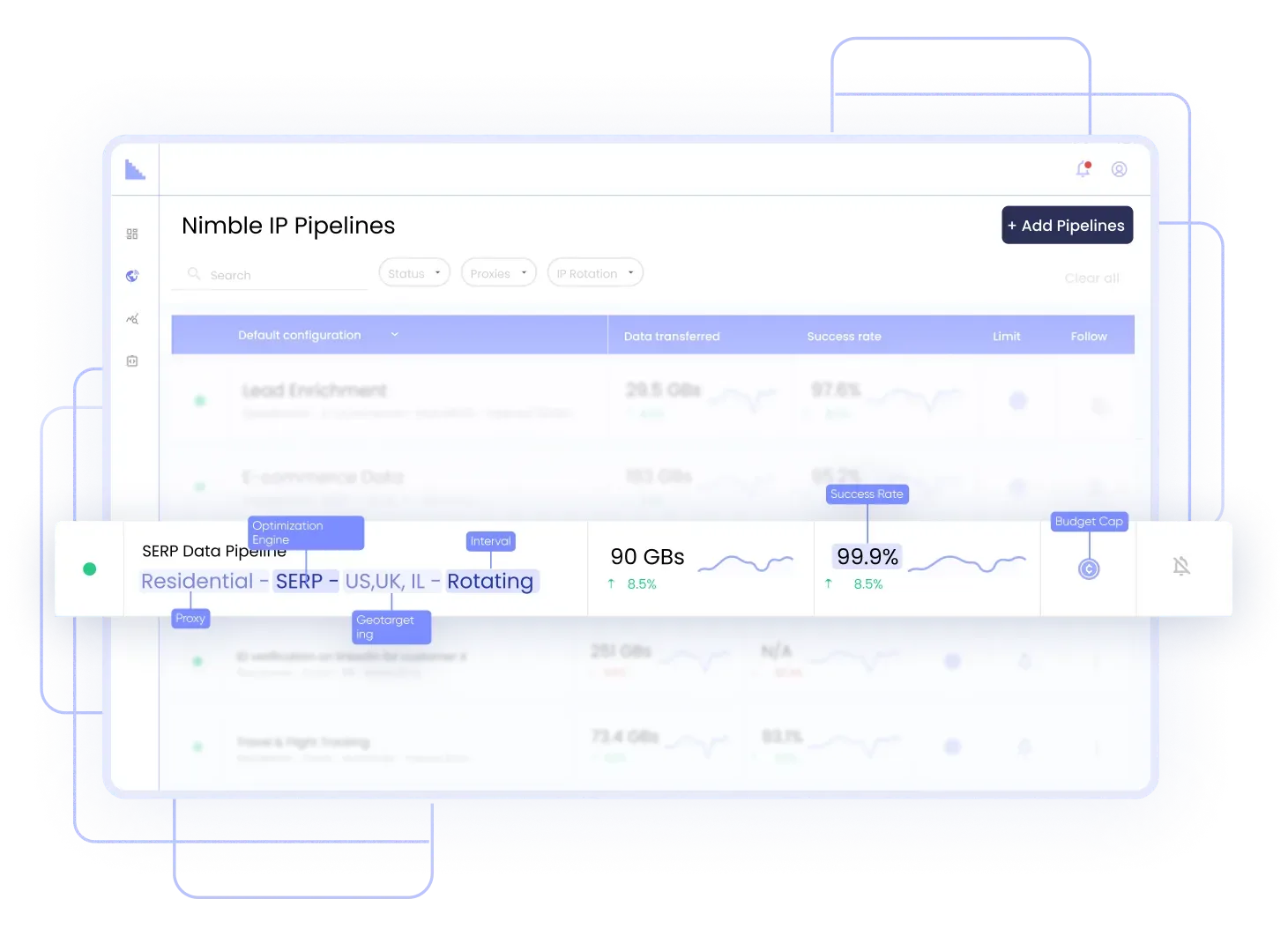
Best for: Enterprise retail price intelligence and live web data collection.
Unlike tools designed primarily around dashboards and alerts, Nimble delivers structured retail data into existing pricing systems, data platforms, and AI applications.
It collects live pricing, promotions, product information, inventory, and review data from public retail websites and delivers validated, structured data into BI platforms, pricing engines, data lakes, and AI workflows.
Organizations can use Nimble's Web Search Agents for multi-step pricing research and Extraction Templates for repeatable product-level data collection. This approach is particularly valuable for enterprises that need pricing data to power downstream analytics instead of simply viewing reports.
Key features
- Live collection of pricing, promotions, inventory, and product data
- Web Search Agents for complex pricing research
- Search API for large-scale retrieval
- Extraction Templates for repeatable product-level extraction
- Structured outputs for BI, pricing engines, and AI systems
- SDKs, APIs, streaming, data quality controls, and enterprise delivery options
Pricing: Pay-as-you-go pricing is available, with custom plans and volume discounts for enterprise deployments.
Review: "The technology at Nimble is very effective at scale (we make millions of requests per month) and works for a good number of our use cases. Nimble packs a lot of features and power behind their API, and it's pretty easy to use out of the box."
2. Browse AI
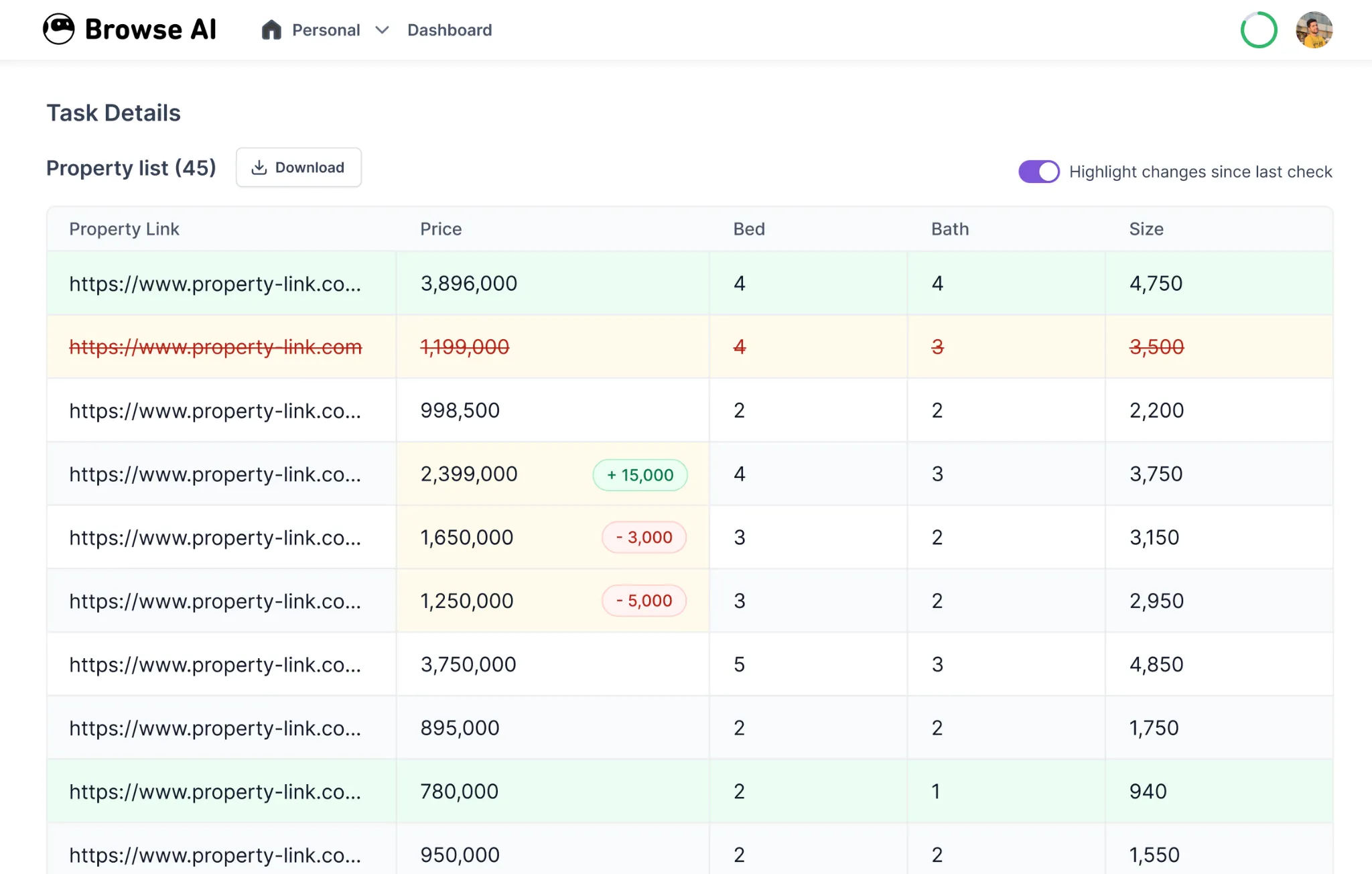
Best for: No-code website monitoring
Browse AI enables non-technical users to monitor website content without building custom scrapers. It's well-suited for smaller pricing projects and occasional monitoring.
Key features
- No-code data extraction
- Scheduled monitoring
- Website change alerts
- Export integrations
Pricing: Free plan available. By inquiry.
Review: "This tool makes it easy to automate any manual process performed online and allows you to connect those automations to other platforms."
Category 2: Best for Competitor Price Monitoring and Automated Repricing
3. PriceShape
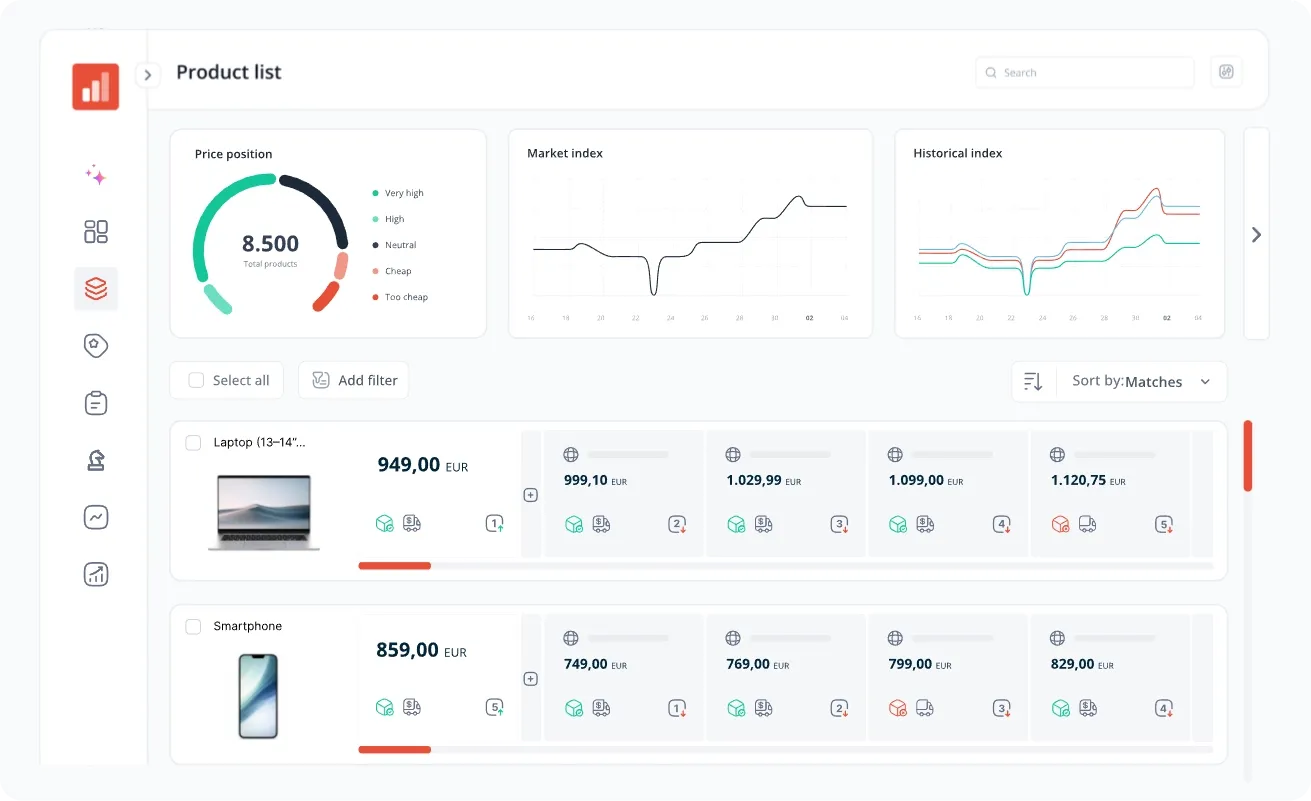
Best for: Marketplace price optimization
PriceShape combines competitor monitoring with pricing automation for retailers selling across marketplaces and ecommerce channels.
Key features
- Competitor monitoring
- Dynamic pricing
- Marketplace integrations
- Reporting
Pricing: By inquiry.
Review: "The dashboard is intuitive, and the data is reliable, making it a valuable tool for daily use."
4. Pricefy
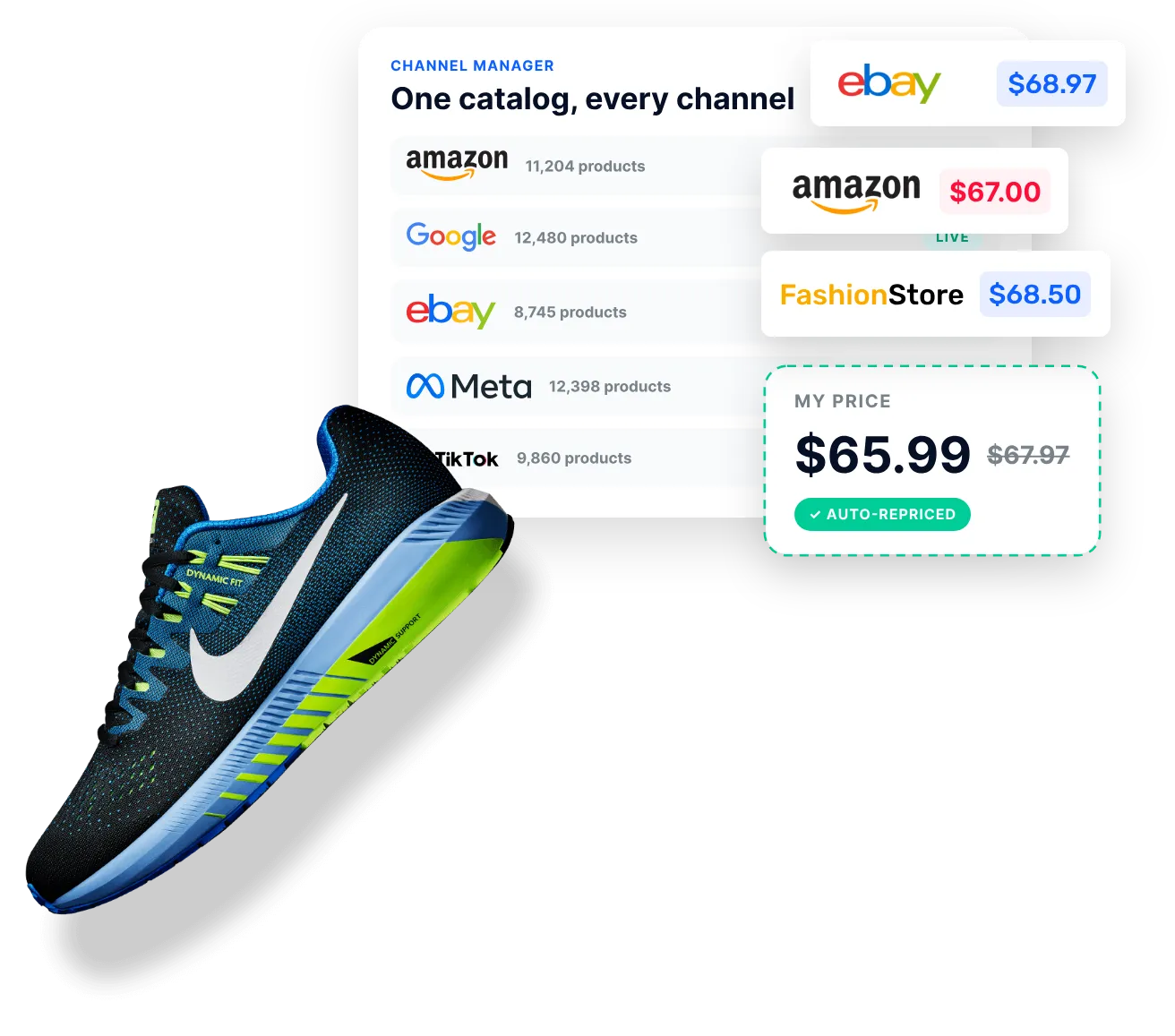
Best for: E-commerce competitor monitoring
Pricefy combines competitor price monitoring, AI-assisted product matching, automated repricing, and product-feed management for ecommerce merchants.
Key features
- Competitor tracking
- Price change alerts
- Dashboards and reports
- API integrations
Pricing: Free plan available; paid plans start at $49 per month.
Review: "Compare prices of a wide variety of products simply and quickly, [with] real-time adjustments."
5. Minderest
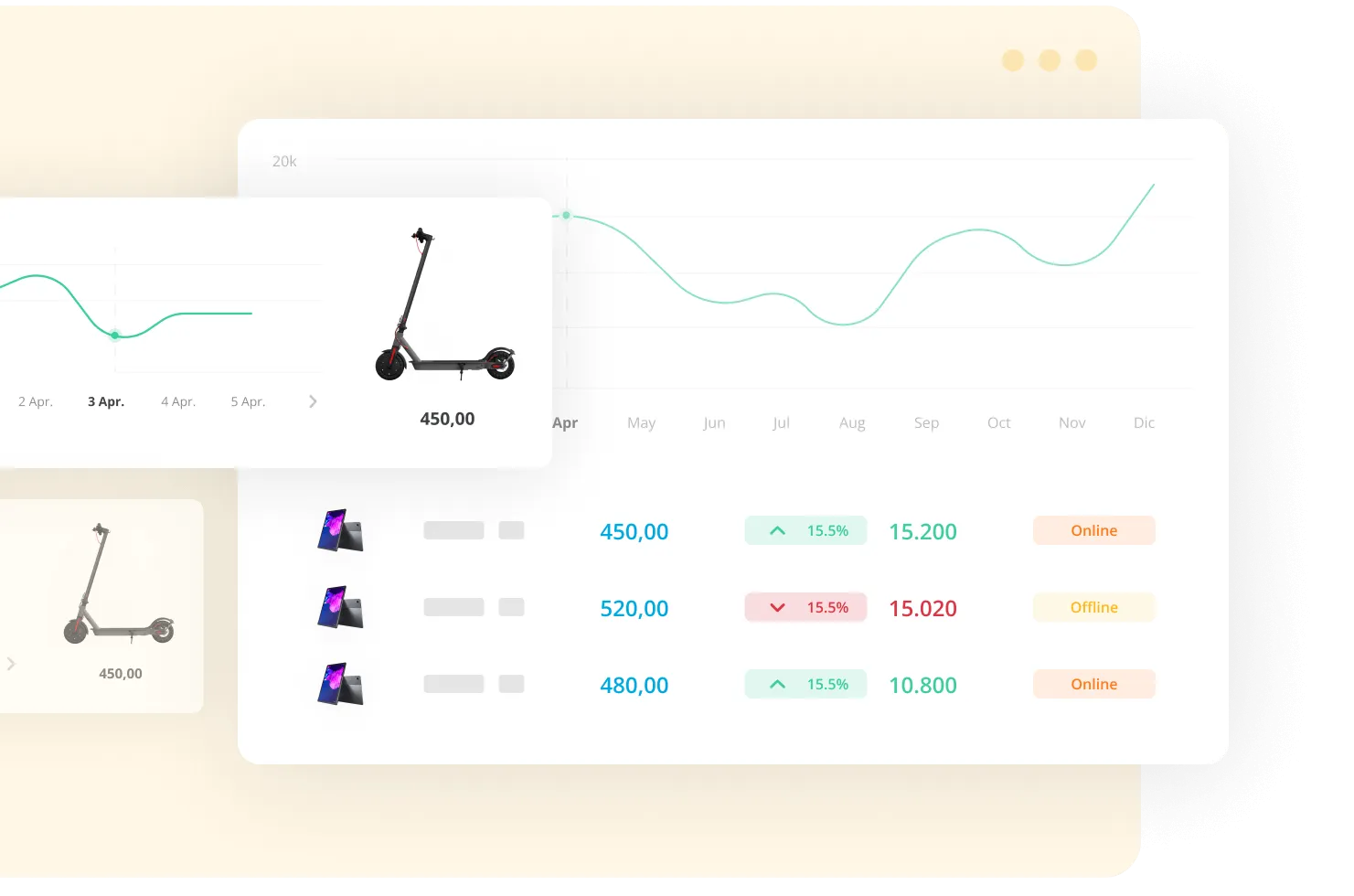
Best for: Enterprise digital shelf and pricing intelligence
Minderest helps retailers and brands monitor competitor prices, promotions, product availability, and assortment across e-commerce sites and marketplaces. Its platform is designed for companies that need ongoing competitive intelligence across multiple markets.
Key features
- Competitor price tracking
- Promotion and assortment monitoring
- Marketplace coverage
- Reporting and analytics
Pricing: By inquiry.
Review: "It allows us to have visibility of our prices against the competition in a unified way."
6. BlackCurve
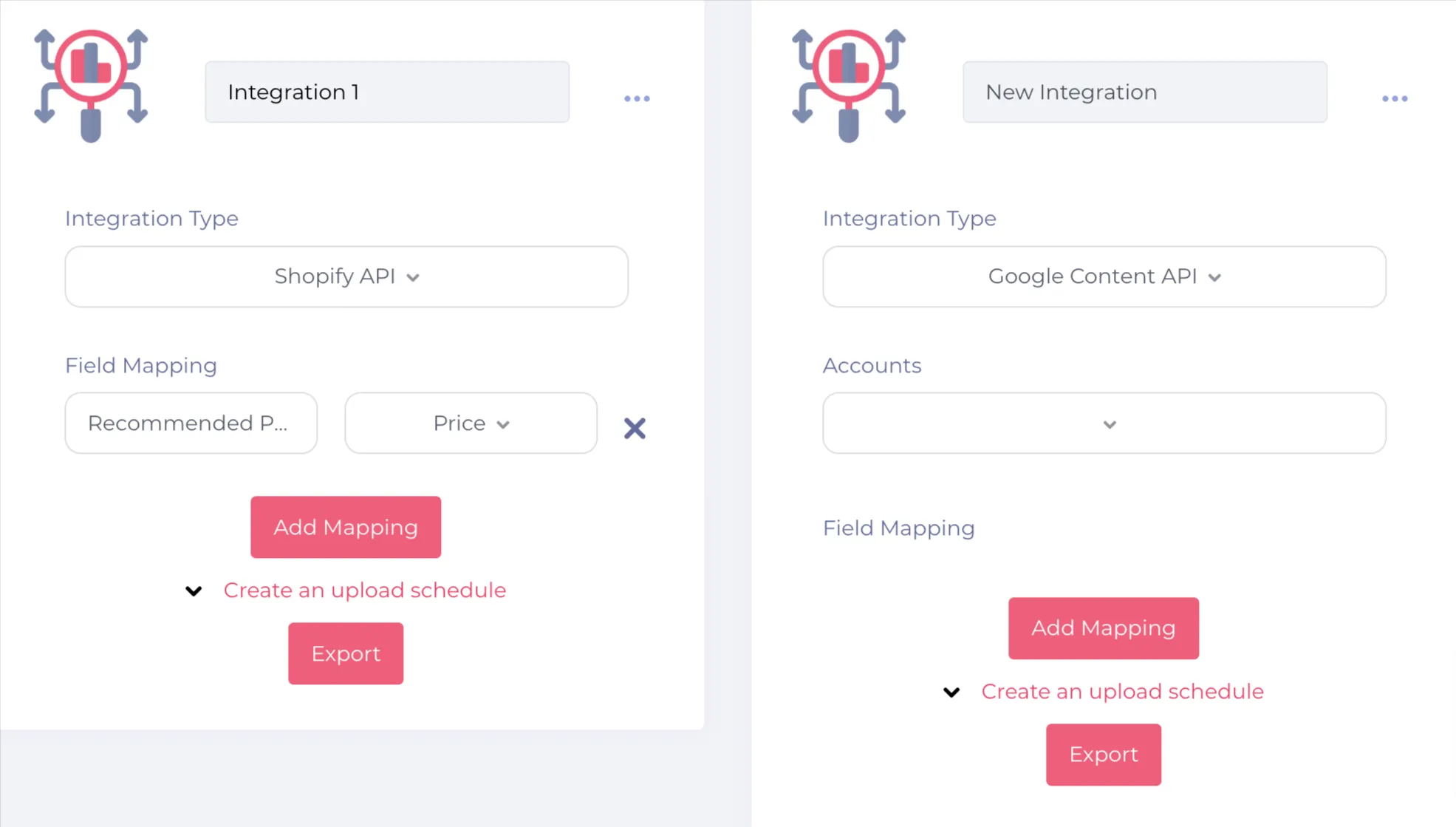
Best for: Pricing optimization for retailers
BlackCurve combines competitor price monitoring with pricing recommendations, enabling retailers to automate pricing decisions based on business context and market conditions.
Key features
- Competitor monitoring
- Automated pricing rules
- Margin optimization
- Performance dashboards
Pricing: By inquiry.
Review: "Setup is simple ... and you can go from zero to actively using the software within a week."
7. Pricemind
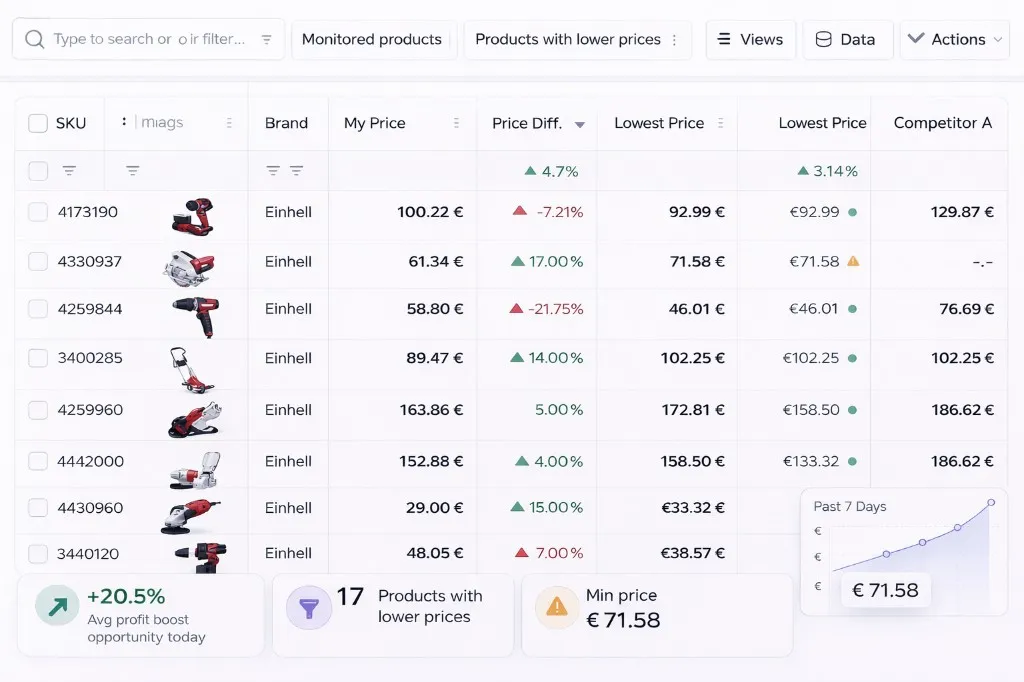
Best for: AI-driven pricing optimization
Pricemind combines competitor monitoring with AI-powered pricing recommendations to help retailers balance competitiveness and profitability.
Key features
- AI pricing optimization
- Competitor monitoring
- Dynamic pricing support
- Analytics
Pricing: By inquiry.
Review: None available.
Category 3: Best for AI-Powered Price Optimization and Demand Forecasting
8. Competera
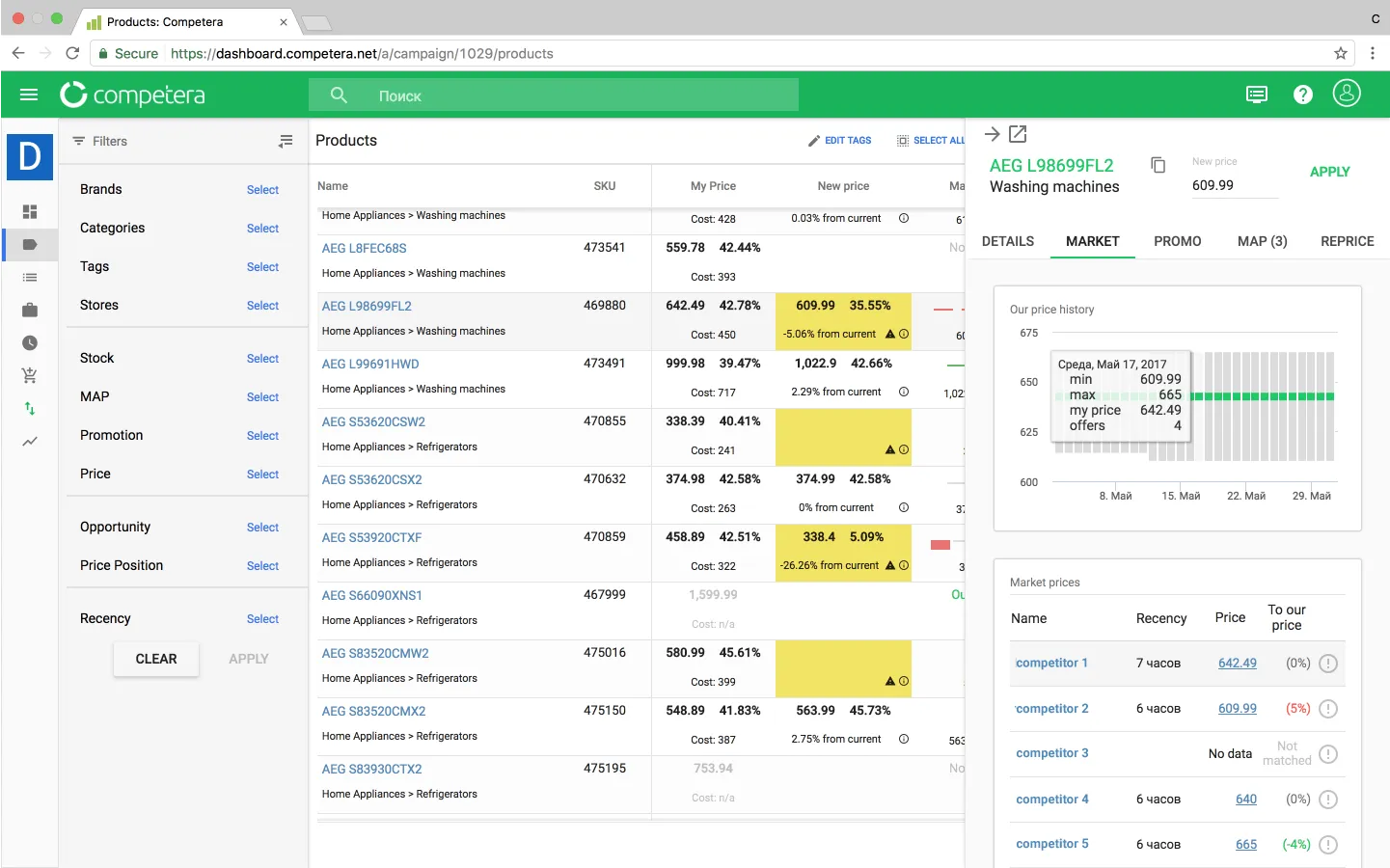
Best for: Enterprise pricing optimization
Competera uses AI-driven pricing recommendations alongside competitor monitoring to help retailers improve pricing decisions across large catalogs.
Key features
- AI pricing recommendations
- Competitive pricing analysis
- Promotion management
- Enterprise analytics
Pricing: By inquiry.
Review: "We've been able to set competitive prices as fast as necessary."
9. 7Learnings
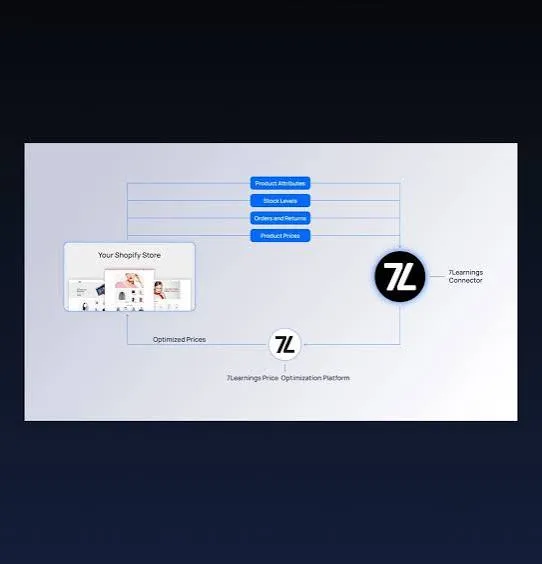
Best for: AI-powered pricing
7Learnings focuses on predictive pricing and revenue optimization using machine learning models trained on retail demand and pricing data.
Key features
- AI pricing
- Demand forecasting
- Revenue optimization
- Pricing simulations
Pricing: By inquiry.
Review: "The platform is intuitive, user-friendly, and packed with features that truly add value to our daily pricing operations."
10. Centric Software
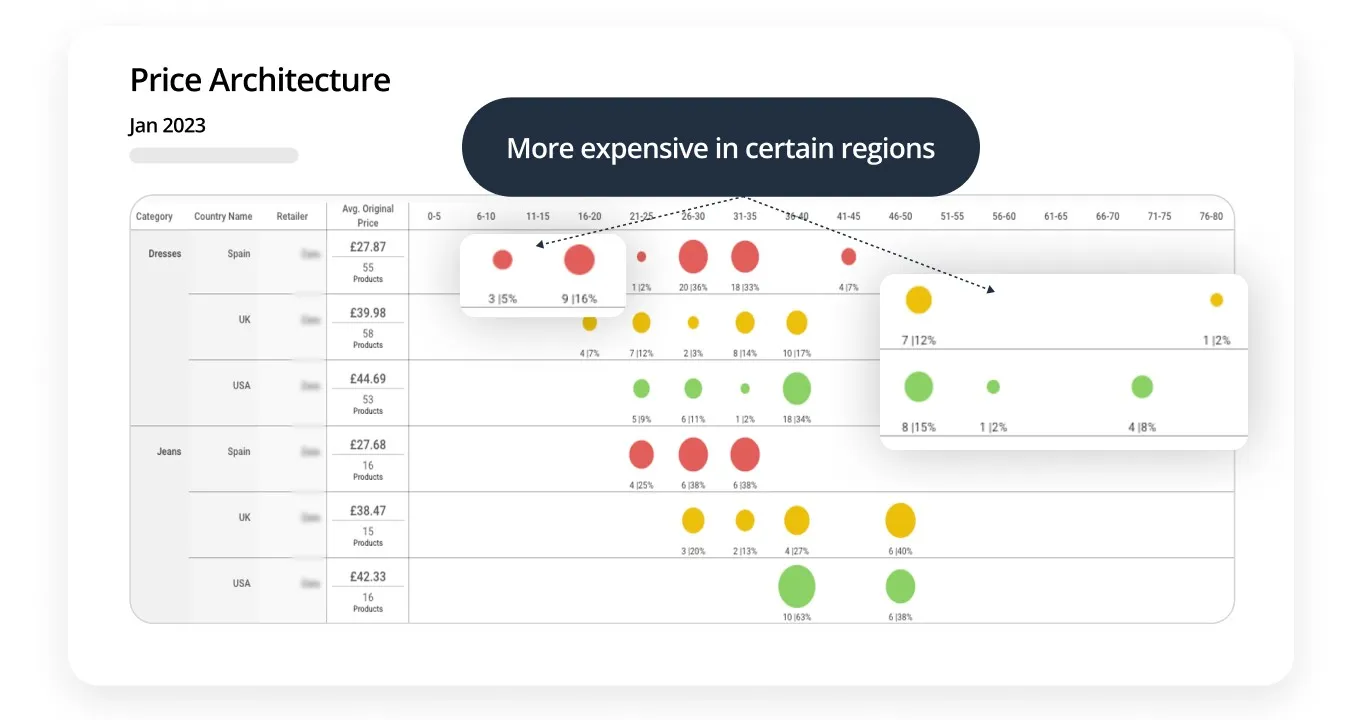
Best for: Enterprise retail planning
Centric Market Intelligence provides competitive pricing, assortment, and product intelligence for retailers and brands. It is part of Centric Software's broader retail planning portfolio.
Key features
- Merchandise planning
- Pricing management
- Assortment planning
- Retail analytics
Pricing: By inquiry.
Review: Enterprise users value its comprehensive retail planning capabilities.
Category 4: Best for Broader Retail Intelligence and Shopper-Facing Price Comparison
11. Particl
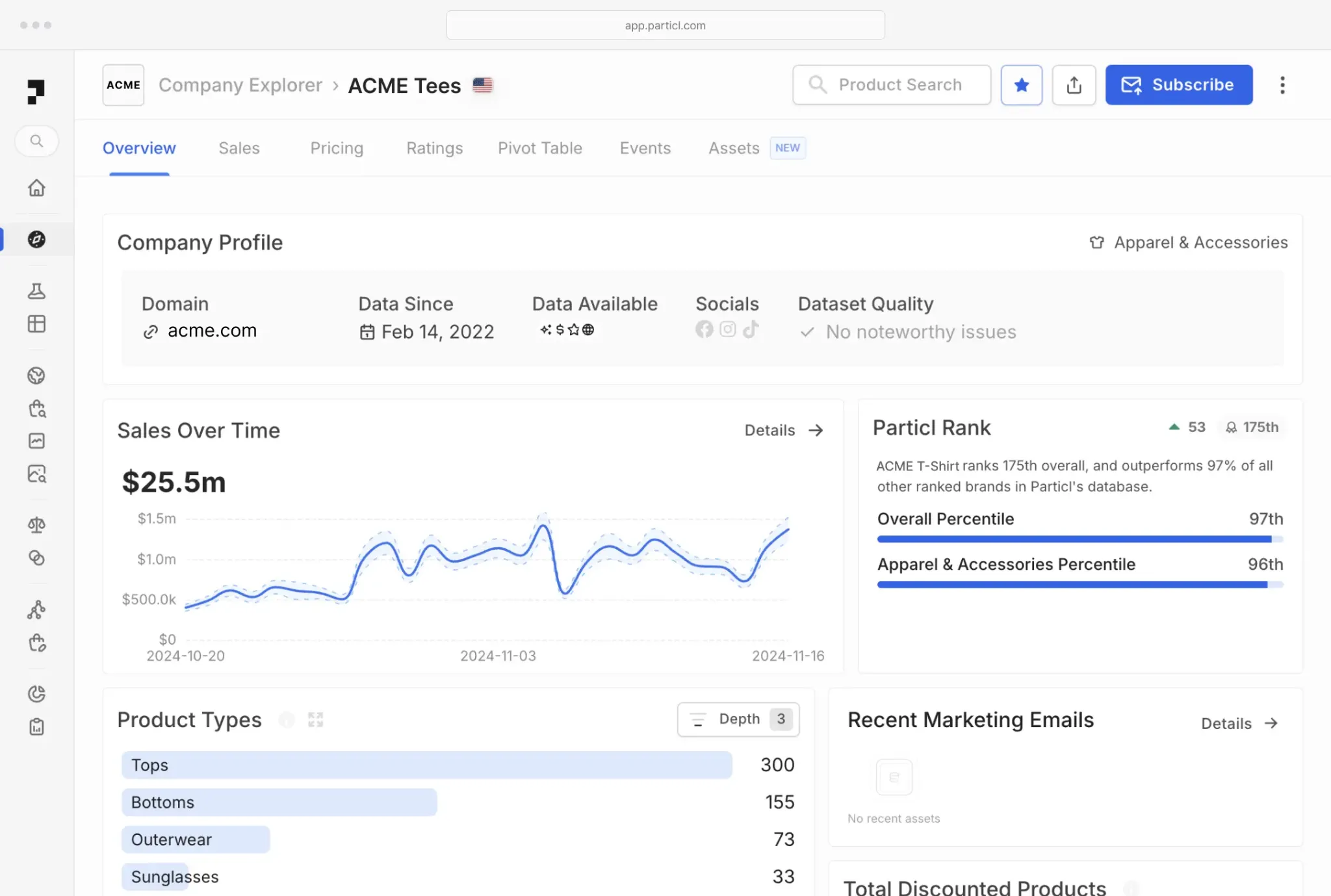
Best for: E-commerce market intelligence
Particl combines pricing, assortment, and merchandising intelligence to help brands monitor online competitors.
Key features
- Pricing intelligence
- Catalog monitoring
- Market analysis
- Brand benchmarking
Pricing: By inquiry.
Review: None available.
12. DataWeave
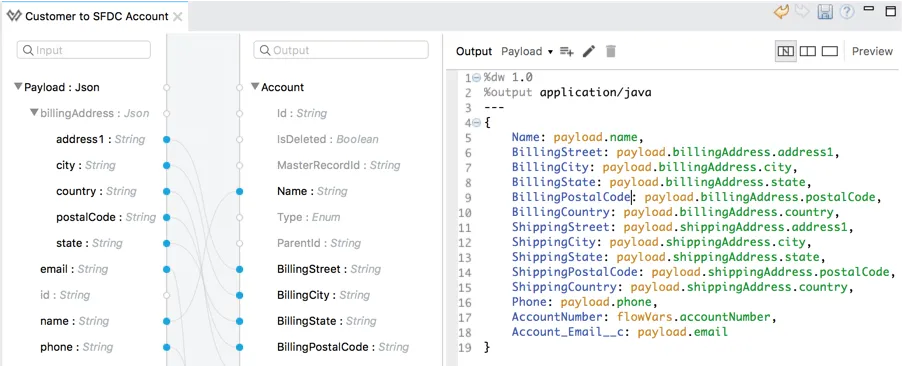
Best for: Enterprise digital shelf and competitive pricing intelligence
DataWeave helps retailers and consumer brands monitor competitor pricing, promotions, product availability, assortment, and digital shelf performance across e-commerce websites and marketplaces. Its platform combines AI-powered product matching with large-scale web data collection, making it well suited for multinational retailers and CPG brands.
Key features
- Competitor price monitoring
- Promotion and assortment tracking
- AI-powered product matching
- Marketplace intelligence
- APIs and analytics
Pricing: Contact sales
Review: "DataWeave's data quality and product matching capabilities have significantly improved our competitive pricing visibility."
13. Phia
Best for: Consumer-facing price comparison
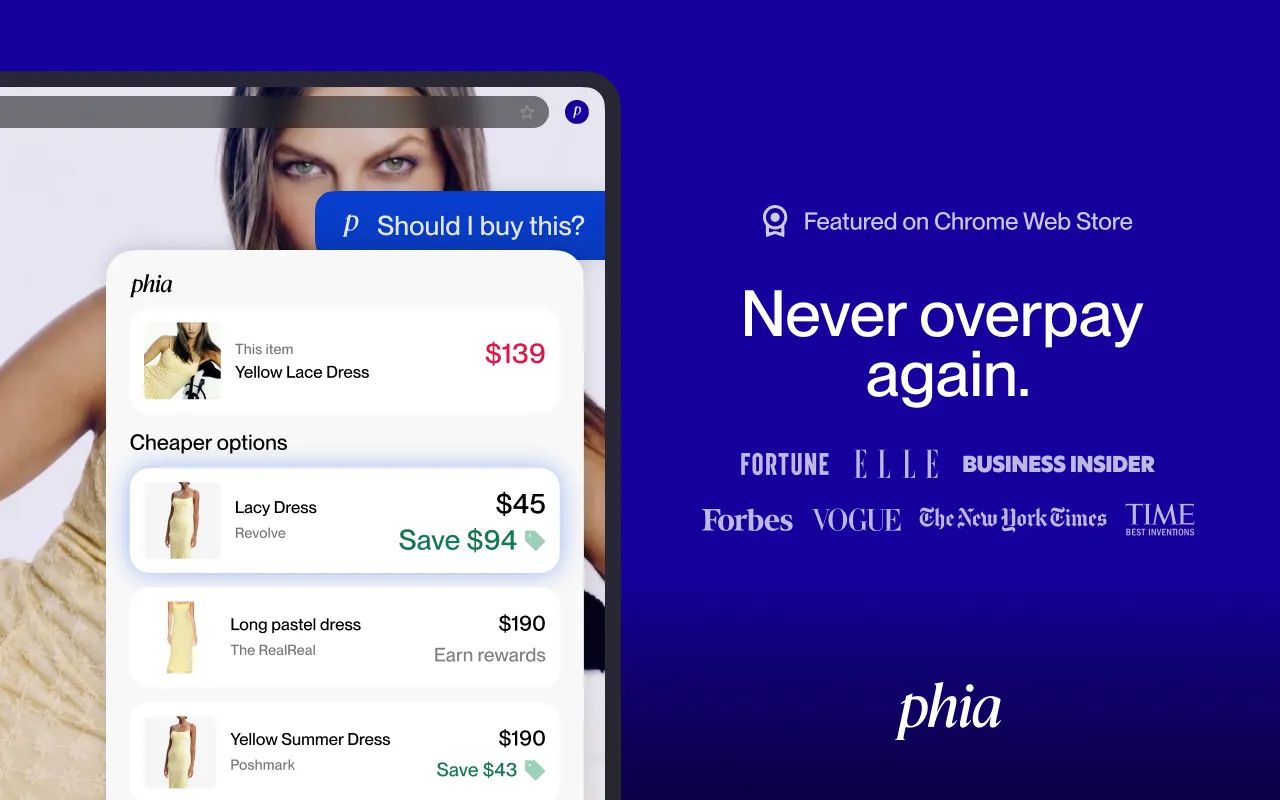
Phia is a consumer-facing shopping assistant rather than a conventional retail price-monitoring platform. It helps shoppers compare prices, discover alternatives, apply coupons, and receive price-drop alerts.
Key features
- Retail price comparison
- Product discovery
- Cross-retailer visibility
- Shopping insights
Pricing: By inquiry.
Review: "It gives me perspective and offers options that I, otherwise, wouldn't have checked."
14. Intelligence Node
Best for: Global retail price intelligence
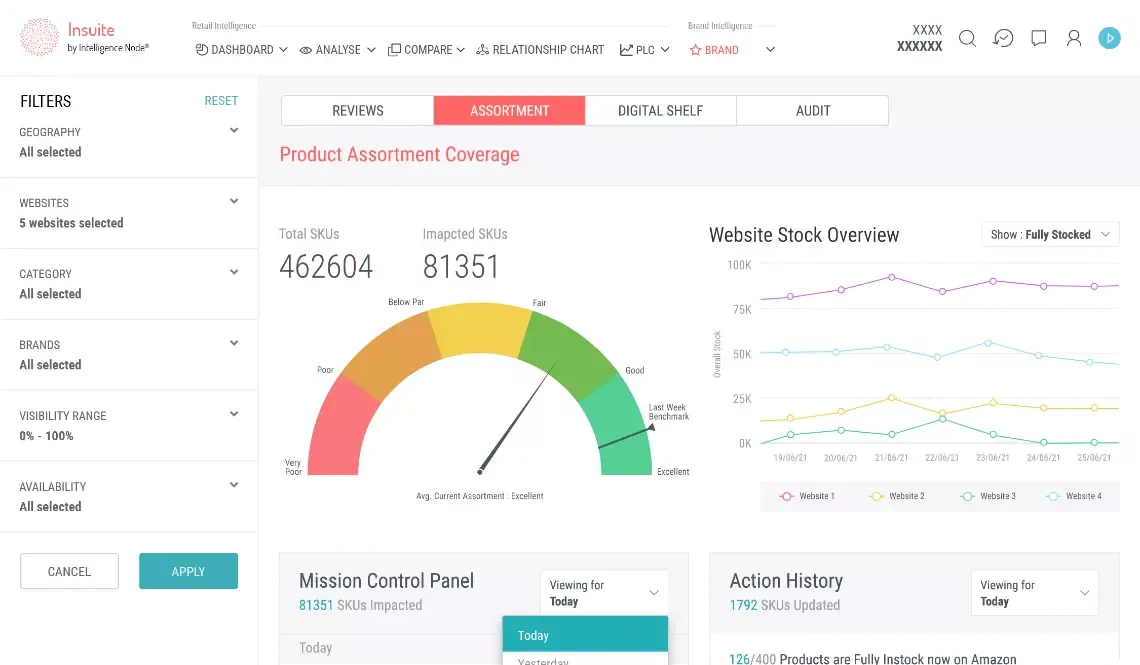
Intelligence Node provides AI-powered pricing, assortment, and market intelligence across retailers and marketplaces worldwide. Brands and retailers use the platform to monitor millions of products, benchmark pricing strategies, and identify opportunities for price optimization.
Key features
- Global price monitoring
- Assortment intelligence
- AI product matching
- Marketplace analytics
Pricing: By inquiry.
Review: "The platform gives us excellent visibility into pricing trends across multiple markets while reducing manual competitive analysis."
How We Compared These Tools
We compared these tools using publicly available vendor documentation, product pages, pricing information, and independent reviews available in July 2026. We did not conduct hands-on testing, and some vendors do not publish complete pricing or technical details.
Our evaluation focused on the capabilities that matter most for retail pricing teams:
- Data freshness: How frequently pricing and product data is updated.
- Coverage: Support for retailer websites, marketplaces, and multiple geographic regions.
- Automation: Scheduling, alerts, APIs, and workflow automation.
- Structured outputs: Whether data can be exported directly into analytics, pricing engines, or AI applications.
- Scalability: Suitability for monitoring hundreds or millions of products.
- Ease of integration: APIs, SDKs, exports, and compatibility with BI platforms and data lakes.
- Customer feedback: Reviews from G2 and other reputable review platforms.
When documentation or reviews conflicted, we avoided making unsupported claims and relied on vendor documentation wherever possible.
Choose a Platform That Fits Your Pricing Strategy
The right retail price monitoring tool depends on the scale and complexity of your program. Smaller teams may only need a dashboard, while retailers using automated pricing should prioritize SKU matching, marketplace coverage, and commerce integrations.
Enterprise teams often need more. They require continuously updated pricing, promotion, availability, product, and review data to be delivered to pricing engines, BI tools, data lakes, and AI applications.
Nimble supports this model by turning live retail websites into structured data for existing analytics and pricing workflows. Teams can use APIs and Extraction Templates for repeatable retrieval and extraction, while Web Search Agents handle multi-step research across sources.
For retailers, CPG brands, data teams, and AI companies that depend on fresh retail intelligence at scale, Nimble provides the infrastructure to collect and deliver live web data without requiring them to maintain the underlying retrieval stack.
Explore Nimble's Competitive Pricing solution, learn more about Web Search Agents, or book a demo to see how live retail web data can power your pricing strategy.
FAQ
Answers to frequently asked questions


.webp)
.webp)
.avif)