

18 LangChain Tools for Production AI Agents (by Use Case)
Match each LangChain integration to its job: web retrieval, memory, RAG, document ingestion, code execution, and observability.



Charlie Klein
18 LangChain Tools for Production AI Agents (by Use Case)
Match each LangChain integration to its job: web retrieval, memory, RAG, document ingestion, code execution, and observability.
Charlie Klein


Most popular articles


Get structured, reliable data for your stack.
Abstract
LangChain tools extend production AI agents with capabilities such as web retrieval, browser interaction, memory, RAG, document ingestion, code execution, and observability.
LangChain has more than 1,000 Python integrations spanning models, retrievers, vector stores, document loaders, tools, and infrastructure. The right LangChain tools depend on the production job your agent needs to perform. A tool that works well for static knowledge retrieval may not be the right choice for live web context, interactive browsing, persistent memory, or agent observability.
LangChain is already widely used for agent development. In Stack Overflow's 2025 Developer Survey, 33% of respondents who said they build AI agents and answered the orchestration question reported using LangChain.
Top recommendations by use case
- Recommended for live web retrieval and AI web scraping: Nimble
- Recommended for agent memory: Mem0
- Recommended for RAG orchestration and knowledge retrieval: LlamaIndex
- Recommended for document ingestion: Docling
- Recommended for LangChain-native observability: LangSmith
18 LangChain Tools by Use Case
Use Case 1: Web Search, Browsing, and Live Web Context
1. Nimble
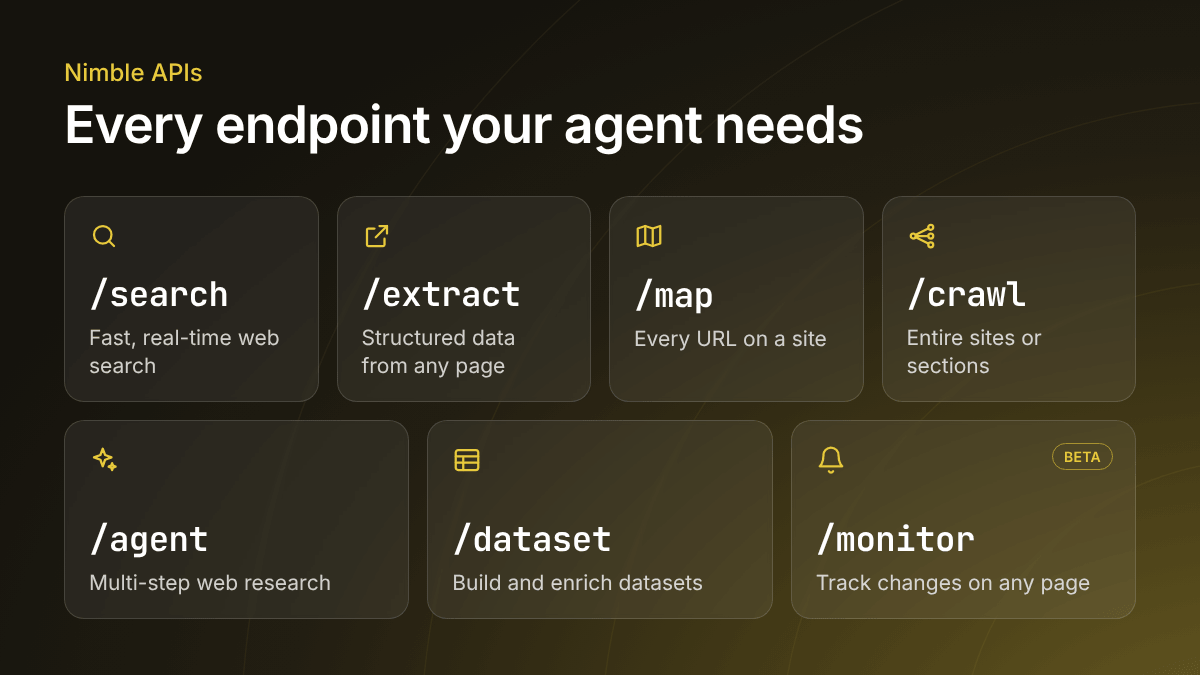
Nimble provides two paths for connecting agents to the web. Search + Extract APIs provide the retrieval layer when your LangChain application handles reasoning and orchestration itself. Web Search Agents handle research tasks requiring multiple searches, browsing, extraction, reasoning, citations, confidence signals, and structured output.
Nimble can render JavaScript and browse dynamic pages in real time. With Web Search Agents, engineers can inspect and govern research through Search Plans, source controls, citations, confidence scoring, schema enforcement, and output controls.
In a LangChain workflow, Search and Extract can supply web context to an agent or retriever that handles its own reasoning, while Web Search Agents can take over the full research workflow when the application needs a completed, cited result.
Main features:
- Search + Extract APIs for fast, composable web retrieval
- Web Search Agents for multi-step research, extraction, reasoning, and cited outputs
- Adaptive and self-learning retrieval: memory records effective retrieval paths, while a private index stores previous outputs, sources, and search history for repeat workflows.
Recommended for: LangChain agents that need current web context, use-case-specific retrieval, or multi-source research across dynamic and deeply nested sources.
2. Browserbase Stagehand
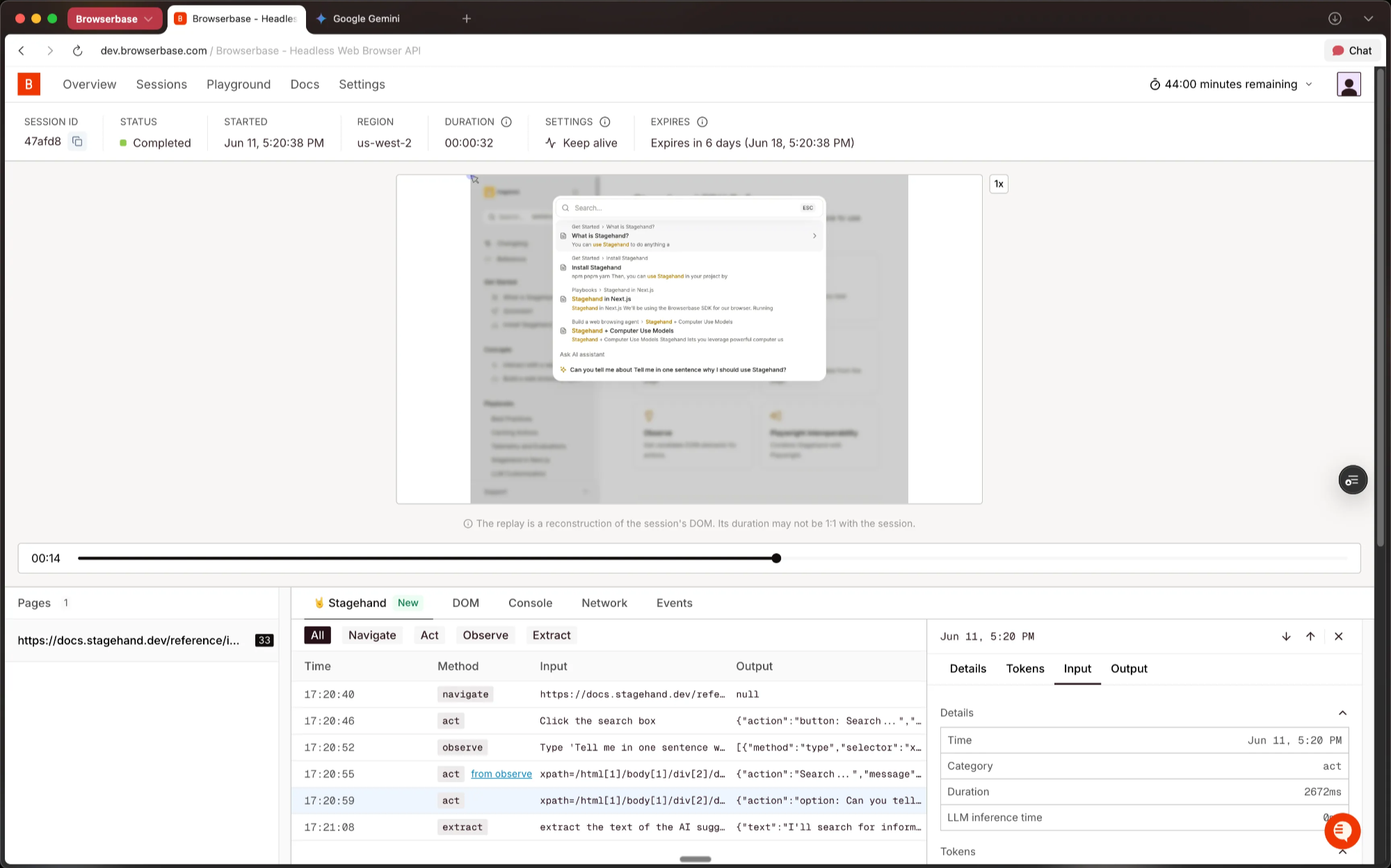
Browserbase provides managed browser infrastructure, while Stagehand adds agent-oriented browser automation. LangChain's current Browserbase guidance separates lightweight search and fetching from rendered extraction and interactive browser tasks, helping teams reserve browser sessions for pages that actually require them.
Main features:
- Managed cloud browsers for agent workflows
- Natural-language browser actions and page extraction
- Support for interactive, JavaScript-heavy websites
Recommended for: Agents that must navigate JavaScript-heavy interfaces, click controls, complete forms, or interact with websites.
3. TinyFish
TinyFish provides web infrastructure for agents across search, page retrieval, browser automation, and goal-directed web tasks. Its Search API returns structured web results, while Fetch retrieves clean content from known URLs. TinyFish also lists LangChain among the environments supported by its search and retrieval stack.
Main features:
- Structured web search and page retrieval
- Goal-directed web agents for multi-step browser tasks
- Managed Chromium sessions for direct browser automation
Recommended for: Agents that need a combination of web retrieval and browser interaction, particularly when workflows extend beyond search into navigation, form completion, user-authorized access, authentication, or structured extraction.
4. Firecrawl
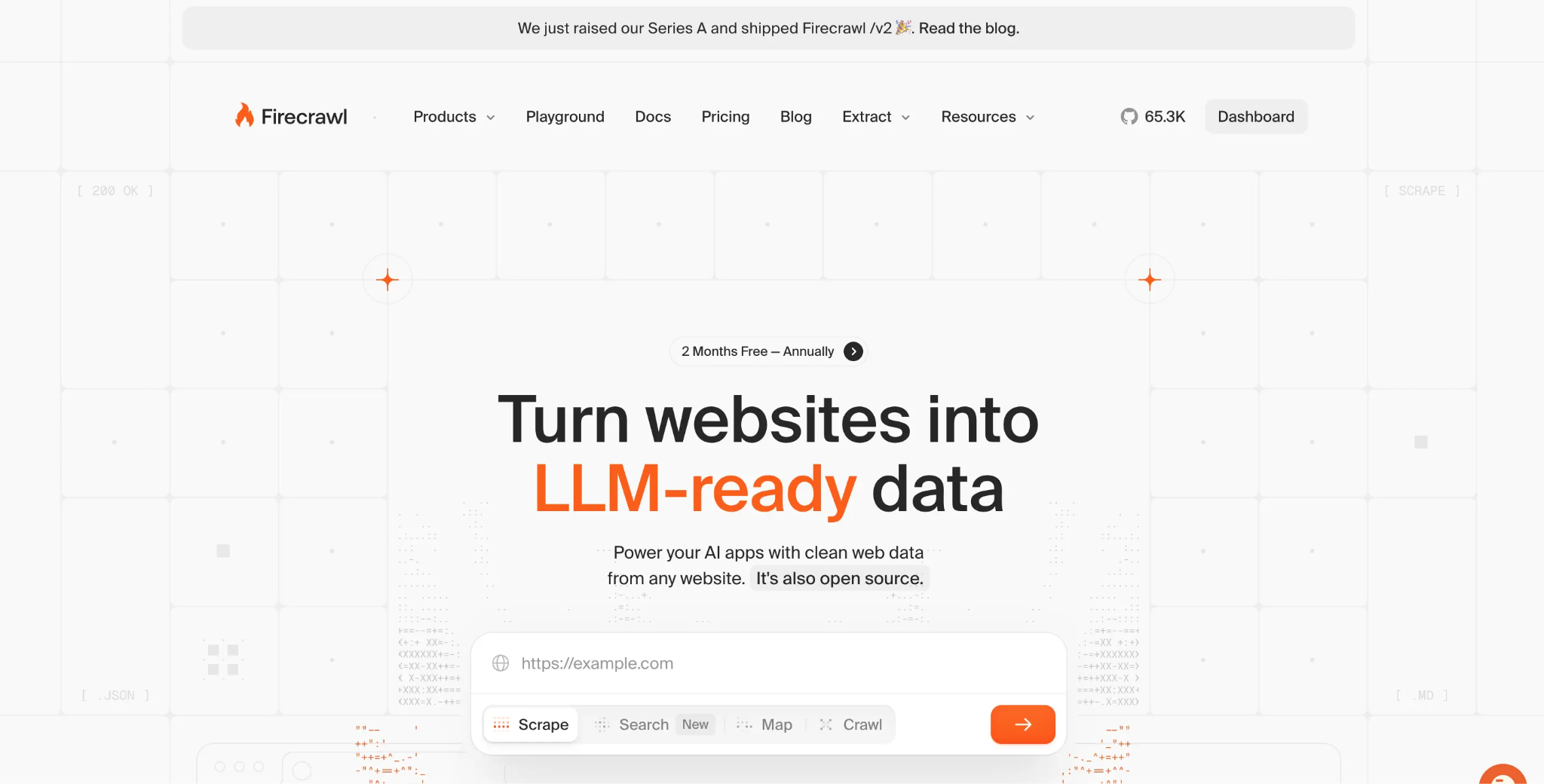
Firecrawl provides APIs for searching, scraping, and crawling web content for AI applications. For LangChain applications, Firecrawl can be used through LangChain document-loading workflows or wrapped as a tool for agent-driven search. This makes it useful both for live web context and for ingesting web content into RAG pipelines.
Main features:
- Web search with optional page-content extraction
- Page scraping into formats such as Markdown
- LangChain support for document ingestion and agent workflows
Recommended for: LangChain applications that need to discover, scrape, and ingest web content for RAG, research, or other retrieval workflows.
Use Case 2: Agent Execution, Memory, and State
5. Daytona
Daytona provides isolated sandboxes and a LangChain data-analysis tool supporting multi-step Python workflows and file handling.
Main features:
- Isolated sandboxes for generated code
- Multi-step Python execution and data analysis
- File upload, download, and processing inside isolated sandboxes
Recommended for: Agents that need to run generated code or perform data analysis without executing it directly in the application environment.
6. Mem0
Mem0 provides persistent memory with retrieval APIs and, on higher tiers, graph memory and memory consolidation. Its managed service has a free developer tier, with paid plans starting at $19 per month as checked in September 2026.
Main features:
- Persistent memory across sessions
- Semantic retrieval of relevant past information
- Graph-based memory options for connected facts
Recommended for: Personalized agents that need to recall information across conversations.
7. Zep
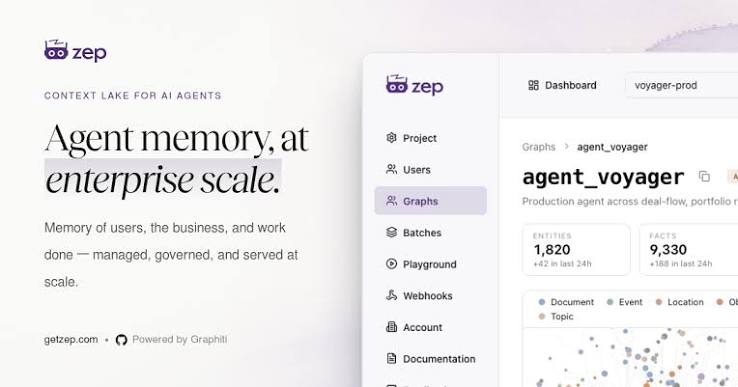
Zep provides long-term agent memory and currently positions its Context Graph around temporal memory. Its LangChain integration can retrieve relevant conversational context rather than relying only on the latest messages.
Main features:
- Temporal knowledge graphs for agent memory
- Retrieval of relevant historical context
- Support for relationships between entities and events
Recommended for: Agents where relationships between facts and their evolution over time matter.
Use Case 3: RAG, Knowledge Retrieval, and Document Ingestion
8. LlamaIndex
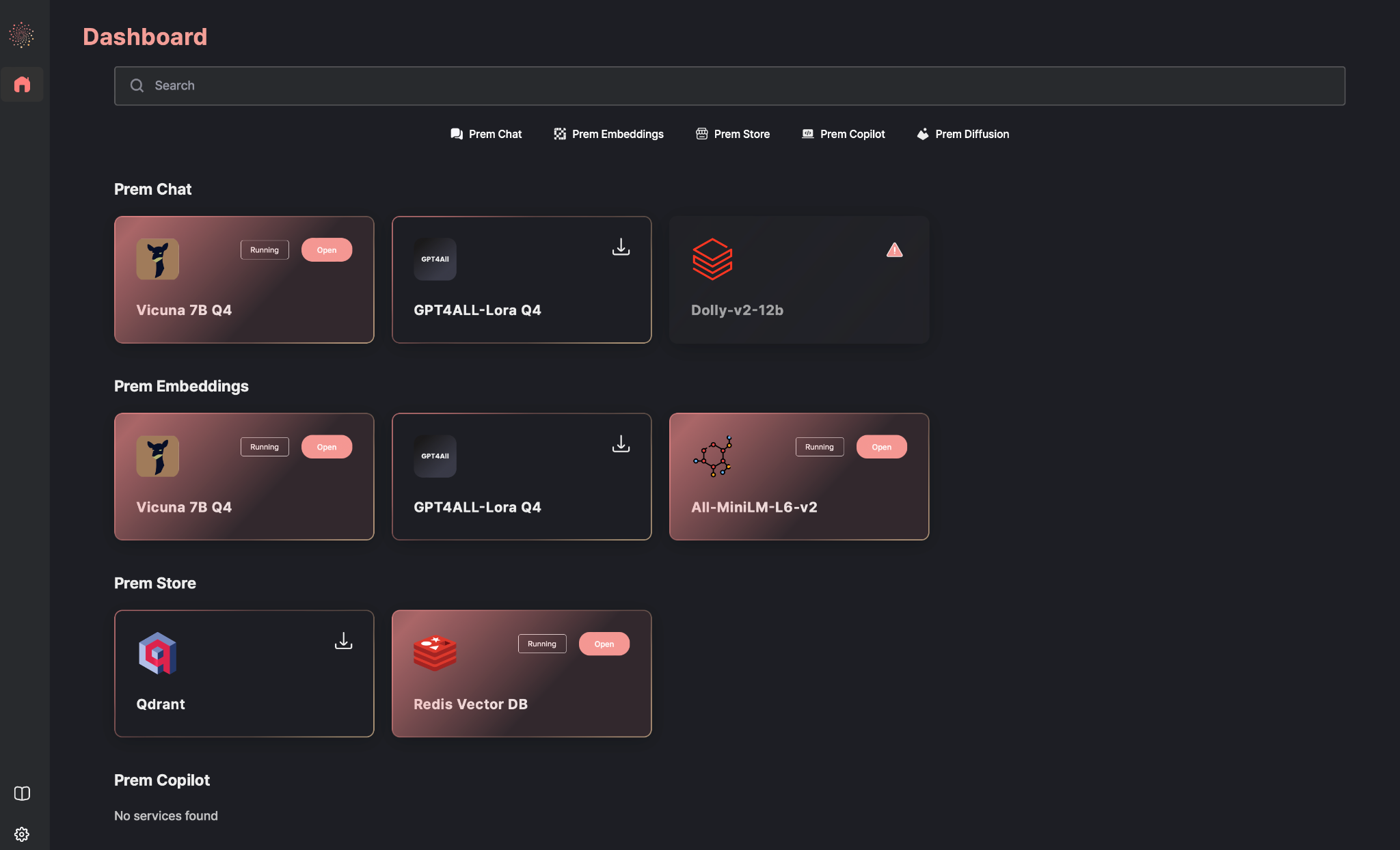
LlamaIndex is a framework for connecting LLM applications to private and external data through indexes, retrievers, query engines, and data-loading components. LlamaIndex can also expose query engines and other components as tools that LangChain agents can call, allowing teams to combine LlamaIndex retrieval workflows with LangChain-based agent orchestration.
Main features:
- Indexing and retrieval abstractions for RAG applications
- Query engines for natural-language access to connected data
- Tool abstractions that can be used with LangChain agents
Recommended for: Teams that want a flexible retrieval and RAG layer that can connect multiple data sources, indexes, and query strategies to LangChain agents.
9. Pinecone
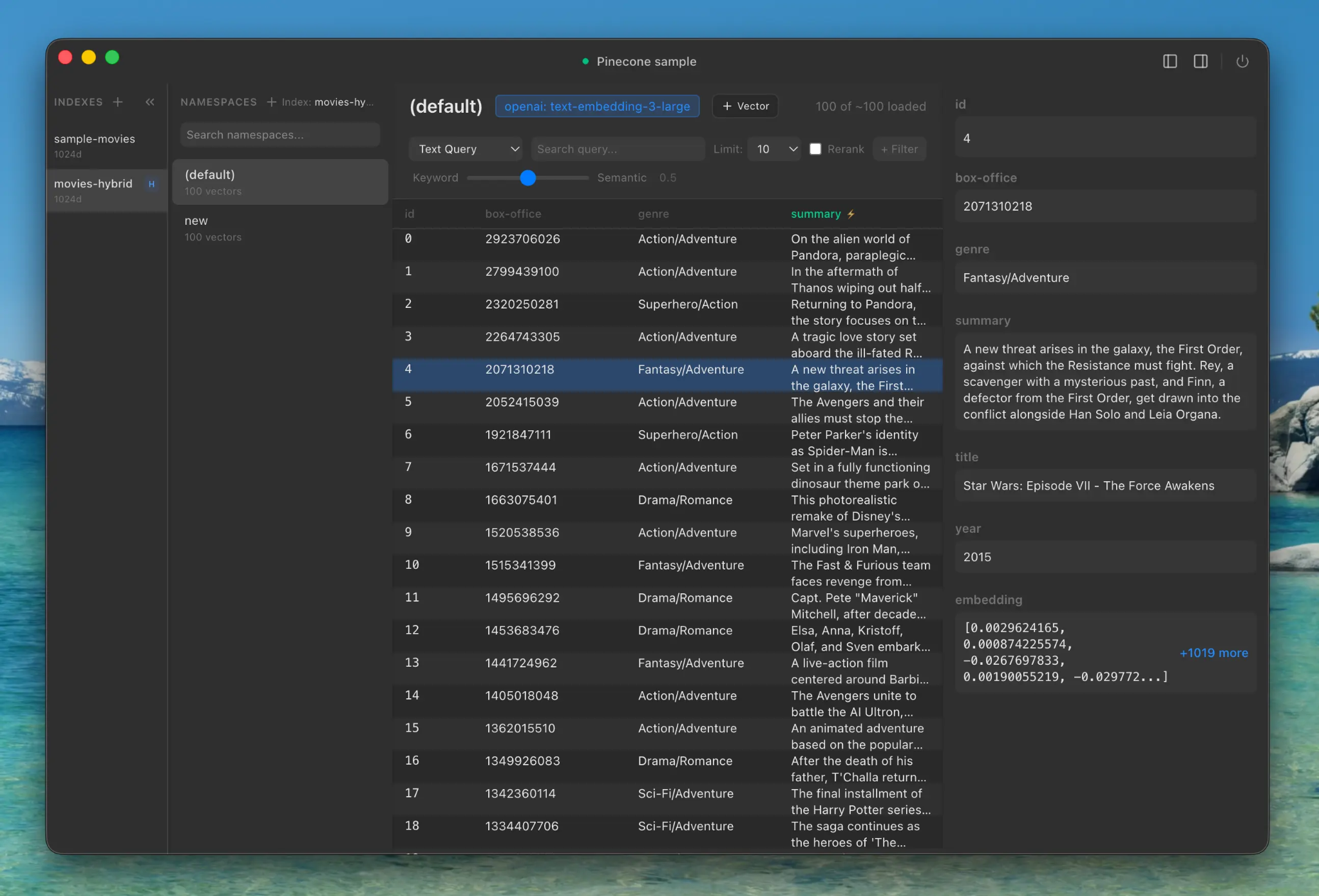
LangChain provides a dedicated langchain-pinecone package, while Pinecone supports managed dense, sparse, and full-text indexes. Its current plans range from a free Starter tier to production and enterprise options.
Main features:
- Fully managed vector indexes
- Dense and sparse retrieval
- Metadata filtering and namespaces
Recommended for: Teams that want a managed vector database without operating retrieval infrastructure.
10. Neo4j
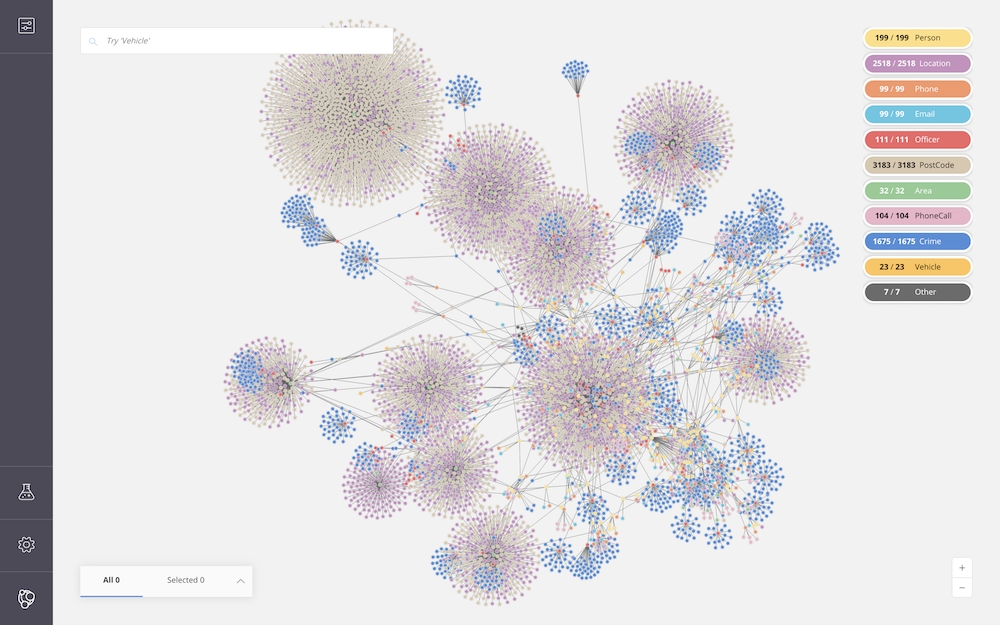
LangChain's Neo4j integration supports vector storage, Cypher-based question answering, knowledge-graph construction, and checkpointing.
Main features:
- Knowledge-graph storage and traversal
- Cypher-based question answering
- Vector and graph retrieval in the same data layer
Recommended for: Knowledge systems where relationships are as important as semantic similarity.
11. Milvus
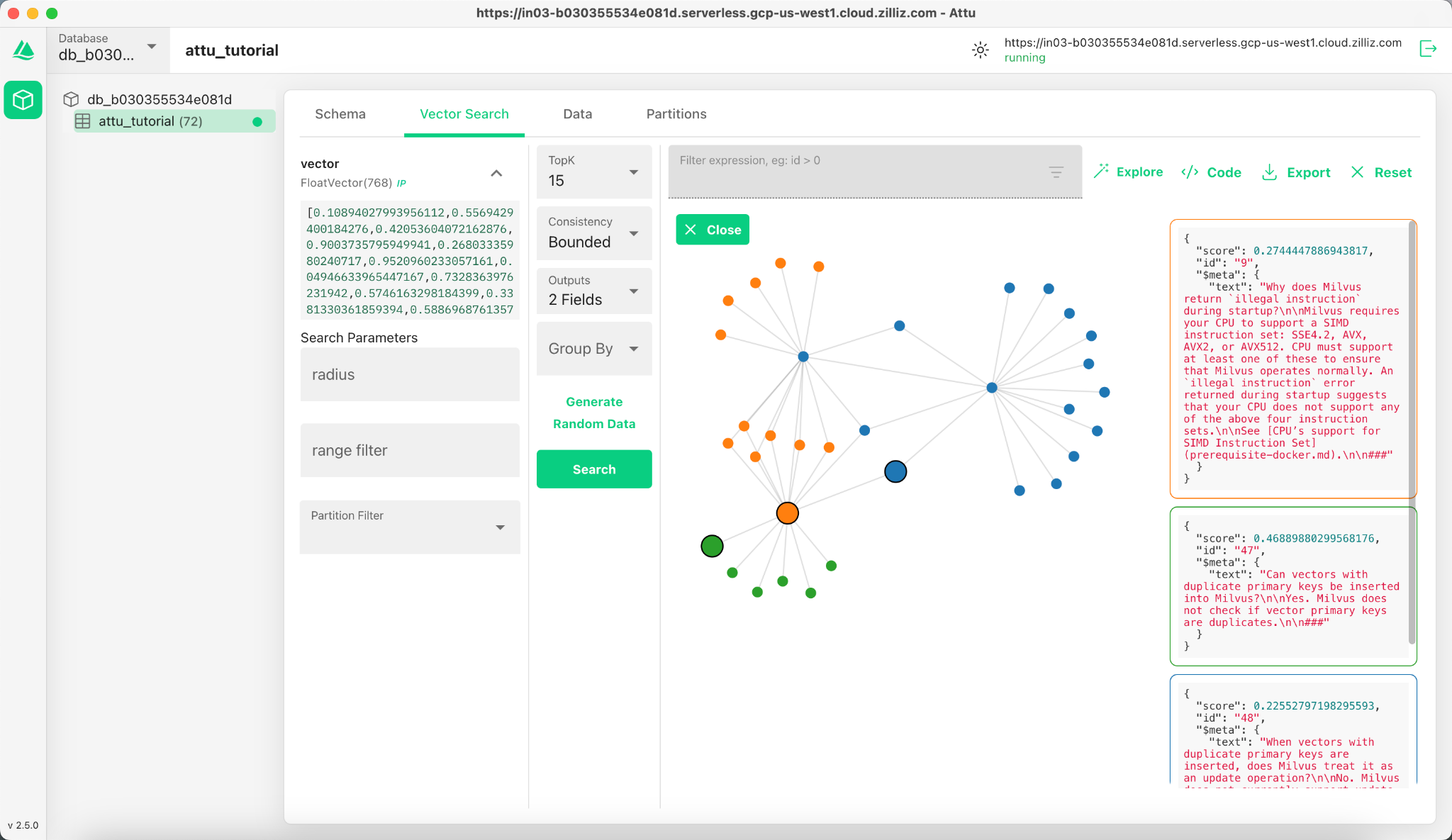
Milvus integrates through langchain-milvus and supports local prototyping plus standalone or distributed deployments for larger workloads. LangChain's documentation also demonstrates dense and sparse hybrid retrieval.
Main features:
- Large-scale vector similarity search
- Dense and sparse retrieval
- Distributed deployment for high-volume workloads
Recommended for: Teams that want control over high-volume vector infrastructure.
12. Redis
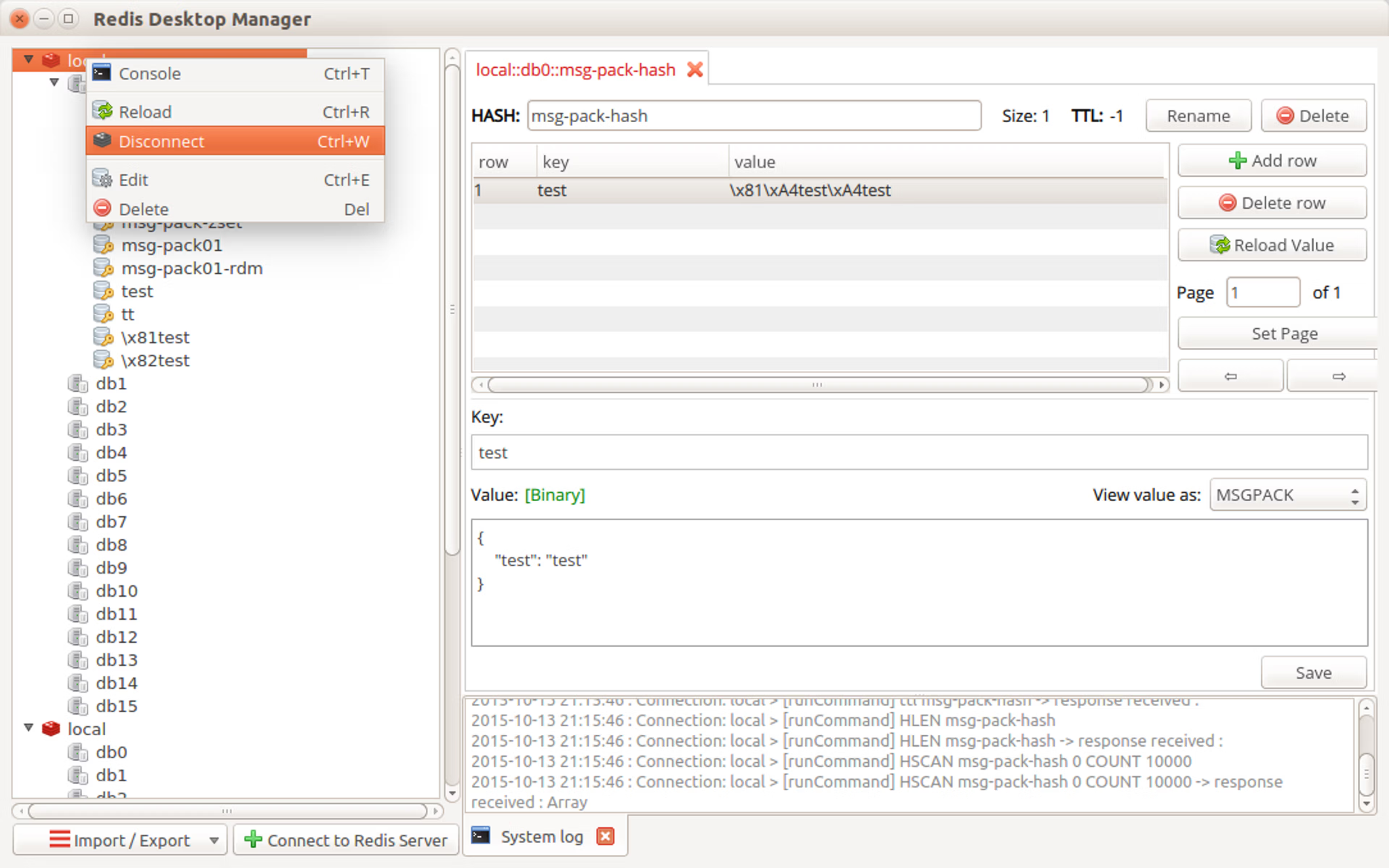
Redis supports vector retrieval alongside LangChain caching, including RedisSemanticCache. Its newer AI services also cover semantic caching, agent memory, and structured context retrieval.
Main features:
- Vector similarity search
- Semantic caching for LLM responses
- Metadata filtering alongside vector retrieval
Recommended for: Applications that want vector search, caching, and agent data close to an existing Redis stack.
13. Docling
Docling parses PDF, DOCX, PPTX, HTML, and other formats into a unified representation containing layout and table information. DoclingLoader exposes that representation directly to LangChain.
Main features:
- Parses PDFs, Office files, HTML, and other document formats
- Preserves document structure, including layout and tables
- Exports document-native chunks or Markdown for LangChain pipelines
Recommended for: RAG pipelines that need to preserve document structure.
14. Unstructured
The langchain-unstructured integration connects LangChain to Unstructured's document-partitioning workflow, with options for local processing or remote API-based partitioning.
Main features:
- Partitioning across multiple document formats
- Metadata-aware document processing
- Local and API-based ingestion options
Recommended for: Pipelines ingesting varied enterprise document formats.
Use Case 4: Observability, Evaluation, and Agent Reliability
15. LangSmith
LangChain agents automatically support LangSmith tracing. Traces capture model calls, tool use, and decision points, while LangSmith also supports offline experiments and production evaluations.
Main features:
- End-to-end tracing of model and tool calls
- Dataset-based evaluations and experiments
- Production monitoring for agent runs
Recommended for: LangChain and LangGraph teams wanting tracing and evaluation with minimal integration work.
16. Langfuse
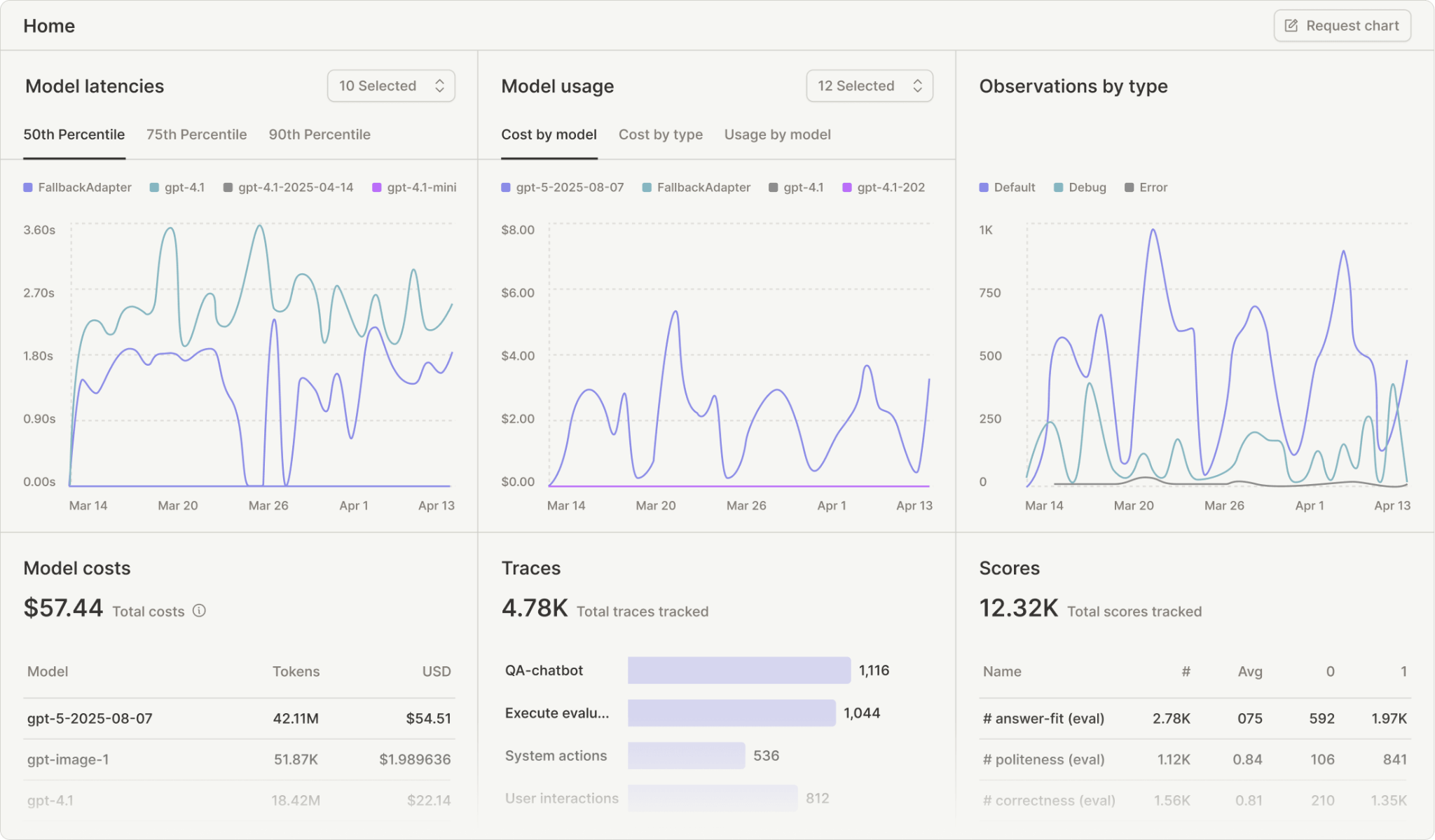
Langfuse integrates through LangChain callbacks and supports LangGraph as well as LangChain. Its core self-hosted platform is MIT-licensed and free, while Langfuse Cloud offers managed plans.
Main features:
- LangChain and LangGraph tracing
- Prompt and evaluation management
- Self-hosted and managed deployment options
Recommended for: Teams that want LangChain tracing with an open-source, self-hostable platform.
17. Arize Phoenix
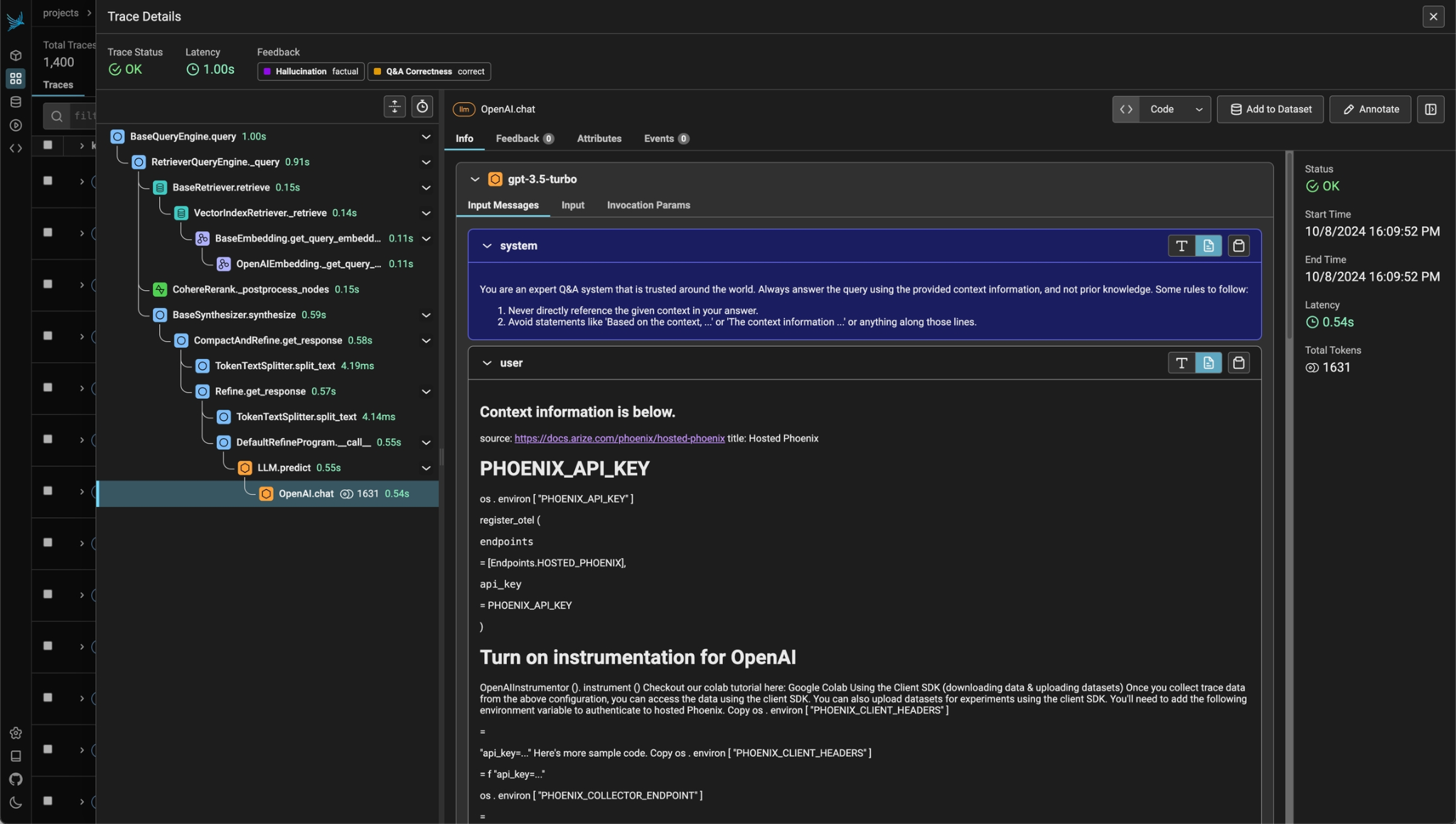
Phoenix is open source and built on OpenTelemetry and OpenInference, with instrumentation for LangChain and other frameworks. It combines tracing with datasets, experiments, prompt workflows, and code-, human-, or LLM-based evaluations.
Main features:
- OpenTelemetry and OpenInference-based tracing
- RAG and retrieval evaluation
- Dataset and experiment workflows
Recommended for: Teams standardizing AI observability around open telemetry.
18. Braintrust
Braintrust provides LangChain tracing plus experiments that preserve evaluation runs for comparison over time. Evaluations can run locally, in the UI, or in CI/CD to catch regressions before deployment.
Main features:
- Dataset-driven agent evaluations
- Experiment comparison and regression tracking
- CI/CD integration for automated testing
Pricing: A free Starter tier is available; Pro is currently $249 per month, with usage charges depending on data and scoring volume.
Recommended for: Teams making evals part of their release process.
How We Selected and Compared These LangChain Tools
Beyond tracing, production teams may also need security controls around agent actions and tool calls, particularly when agents can execute workflows across external systems.
This comparison is based on public research conducted in September 2026 using LangChain documentation, vendor documentation, repositories, product pages, pricing pages, and current Nimble messaging. No standardized hands-on benchmark was conducted.
Tools were selected based on documented LangChain compatibility, production relevance, active availability, differentiation within their category, implementation requirements, deployment model, observability and control, and publicly documented pricing where available.
Connect LangChain Agents to the Live Web With Nimble
LangChain agents that depend on current web data need a retrieval layer that can search, access, and extract information from live sources. Nimble supports two architectures: Search + Extract APIs for applications that handle their own reasoning and orchestration, and Web Search Agents for multi-step research that requires browsing, extraction, reasoning, and synthesis.
Key features include:
- Search + Extract APIs: Search the web and extract page-level content for LangChain workflows that manage reasoning and orchestration themselves.
- Web Search Agents: Run multi-step research across multiple sources and return cited prose or schema-constrained structured outputs.
- Full-fidelity web access: Work with dynamic pages using capabilities such as JavaScript rendering, real-time browsing, clicks, scrolling, filters, and pagination.
- Adaptive retrieval: Specialize search and crawling around the agent's objective, sources, vocabulary, and output requirements.
- Research controls: Use Search Plans, source controls, citations, confidence scoring, and schema enforcement to inspect and govern research workflows.
For repeat workflows, Nimble can also use memory and a private index of previous outputs, sources, and search history to reduce redundant retrieval.
How to Choose the Right LangChain Tools by Use Case
Production LangChain agents often need several types of infrastructure, from retrieval and memory to execution and observability. Choose each integration for a defined role rather than adding tools with overlapping responsibilities.
For agents that depend on current web context, use Nimble's Search and Extract APIs when your application owns the reasoning layer. For research that requires multiple searches, browsing, extraction, cross-checking, and a cited or structured result, use Web Search Agents.
Explore Nimble's Search API to add live web context to production LangChain agents.
FAQ
Answers to frequently asked questions