







15 Best Vercel Skills by Use Case
15 Best Vercel Skills by Use Case



Charlie Klein
15 Best Vercel Skills by Use Case
15 Best Vercel Skills by Use Case
Charlie Klein


Most popular articles

Get structured, reliable data for your stack.
Abstract
Vercel Agent Skills are reusable instruction packages that help coding agents perform specialized development tasks with more consistent context and workflows.
| Category | Main implication |
|---|---|
| Web access | Choose retrieval skills for live web data and browser tools for interactive automation. |
| AI apps | Skills can support discovery, application logic, and generative interfaces. |
| Frontend | Different skills target performance, architecture, accessibility, components, and runtime verification. |
| Production | Database, observability, deployment, and optimization skills extend agents into operational workflows. |
Coding agents can write code, but real development workflows often require more than generation. An agent may need project-specific instructions, access to the live web, browser automation, database guidance, production diagnostics, or deployment tools.
With 78% of developers relying on AI weekly, maintaining the right project context has become an important part of AI-assisted development. Vercel Agent Skills address this problem by packaging instructions and resources for specialized tasks, so coding agents can apply the right workflow without loading every piece of context upfront.
This guide compares 15 Vercel Skills across five practical use cases: web access and browser automation, AI app development, frontend development, data and observability, and deployment and optimization. Each recommendation includes its core capabilities, requirements, trade-offs, and the situations where it makes the most sense.
Key Takeaways
- Vercel Agent Skills give coding agents reusable, task-specific instructions without requiring every reference or workflow to remain in the model’s context.
- The right skill depends on the job. Web access, browser automation, AI app development, frontend work, observability, and deployment each require different capabilities and infrastructure.
- Skills can extend agents beyond code generation. Nimble Web Expert gives coding agents access to Nimble’s Search and Extract retrieval layer for current web context and structured web data.
- Keep the stack purpose-built. Choose skills based on the context and external capabilities an agent actually needs rather than adding tools that duplicate functionality or consume unnecessary context.
What are Vercel Agent Skills?
Vercel Agent Skills package reusable instructions and optional resources for specialized tasks. Supported coding agents can load the relevant skill when a task calls for it, while additional references or scripts can be accessed as needed. Teams that need standardized connections to external tools can also use web search MCPs to expose live search, retrieval, crawling, or extraction capabilities to agents.
This architecture is based on the SKILL.md format, which defines how an agent can discover and execute workflows. This supports progressive disclosure: the agent can start with the skill’s metadata and core instructions, then access additional references, scripts, or resources only when the task requires them.
The agent can avoid loading unnecessary material into context while still accessing detailed references when needed.
Installing a Vercel skill in Claude Code or Codex is straightforward with the Skills CLI. From your project, run npx skills add <owner>/<repository> and select the agent you want to install it for, or use the --agent option to target Claude Code or Codex directly. The CLI downloads the skill and configures it in the appropriate agent directory, so it is available the next time the agent needs that workflow.
Best Vercel Skills at a Glance
- Web Access and Browser Automation: Nimble Web Expert
- AI App Development: ai-sdk
- Frontend Development: vercel-react-best-practices
- Data, Debugging, and Observability: sentry-cli
- Deployment and Optimization: vercel-optimize
15 Best Vercel Skills by Use Case
Use Case 1: Web Access and Browser Automation
| Skill | Best for | Primary interaction | Key requirement | Choose it when |
|---|---|---|---|---|
| Nimble Web Expert | Giving coding agents live web context | Search, extraction, site mapping, and crawling | Nimble API key and managed service | The agent needs to find or retrieve current web information rather than interact with a page UI |
| agent-browser | General-purpose browser automation | Browser navigation and interaction through a CLI | Browser execution environment | The agent needs to navigate pages, manage tabs, and interact with browser elements |
| playwright-cli | Browser testing and inspection | CLI-based browser automation and page inspection | Local browser installation and Node.js dependencies | The workflow centers on testing, inspecting, or validating browser behavior |
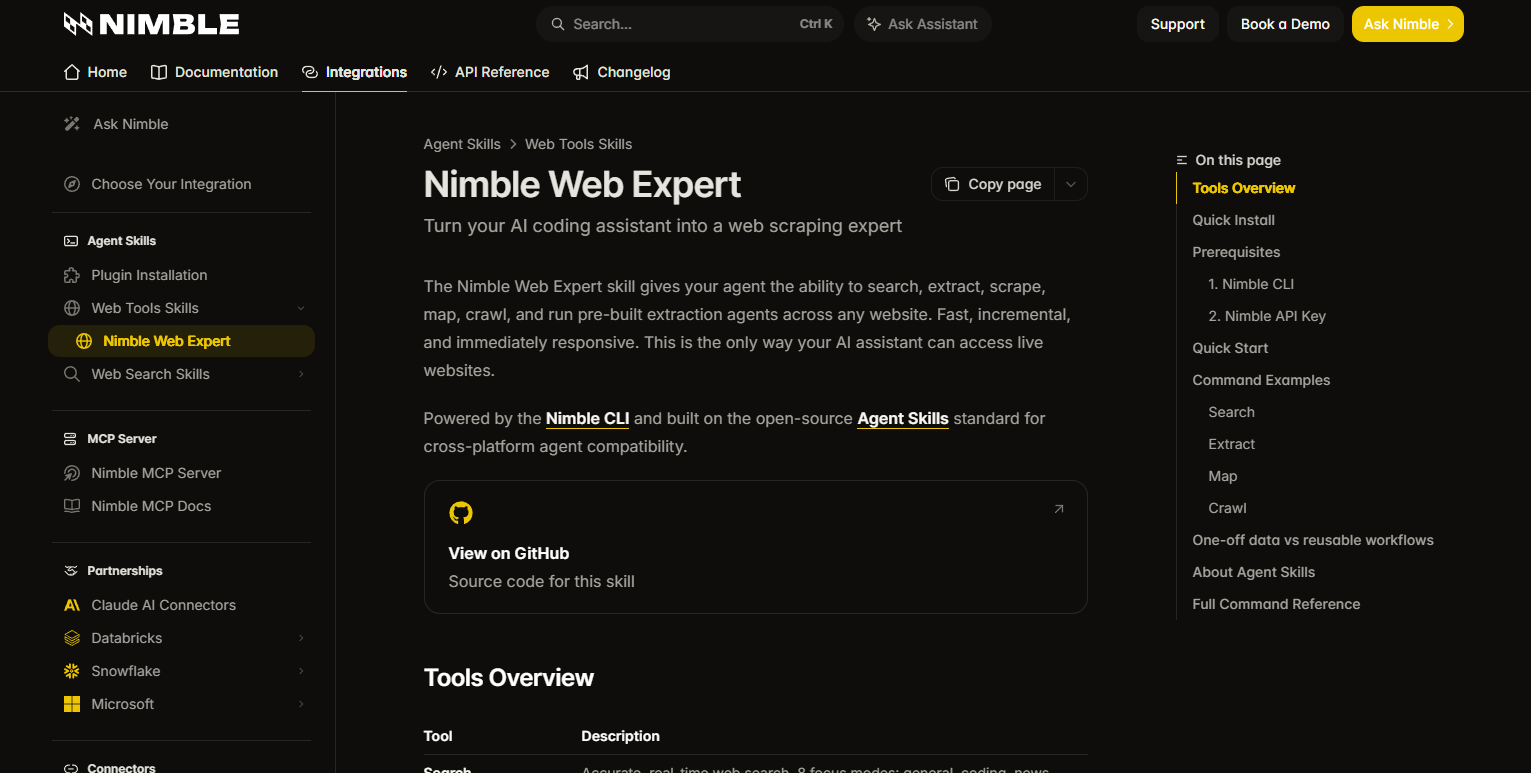
1. Nimble Web Expert - Recommended for live web retrieval for coding agents
Recommended for
AI engineers and agent builders whose coding assistants need current web data while the application retains control of reasoning and orchestration.
Why it fits
Nimble Web Expert gives coding agents access to Nimble’s web search and retrieval tools when a task requires current information from the web. Agents can search for relevant sources, extract page content, and map or crawl sites without developers having to build and maintain those retrieval workflows themselves.
Key capabilities
- Searches the web with configurable parameters to retrieve current information relevant to the agent’s task.
- Extracts content from public webpages in formats suitable for programmatic processing, reducing the need to work directly with raw page HTML.
- Maps and crawls sites to discover URLs and retrieve content across relevant pages.
- Uses browser-rendering infrastructure to retrieve content from dynamic, JavaScript-heavy webpages.
Strengths and considerations
- Advantage: Combines search, extraction, crawling, mapping, and browser-rendering infrastructure to give coding agents access to structured web data as needed. This reduces the amount of custom web retrieval and processing infrastructure developers need to build and maintain.
- Trade-offs: Requires a Nimble API key and relies on Nimble’s managed web infrastructure.
Pricing and availability: Available through the Vercel Skills directory and Nimble CLI; use of the underlying Nimble APIs is usage-based.
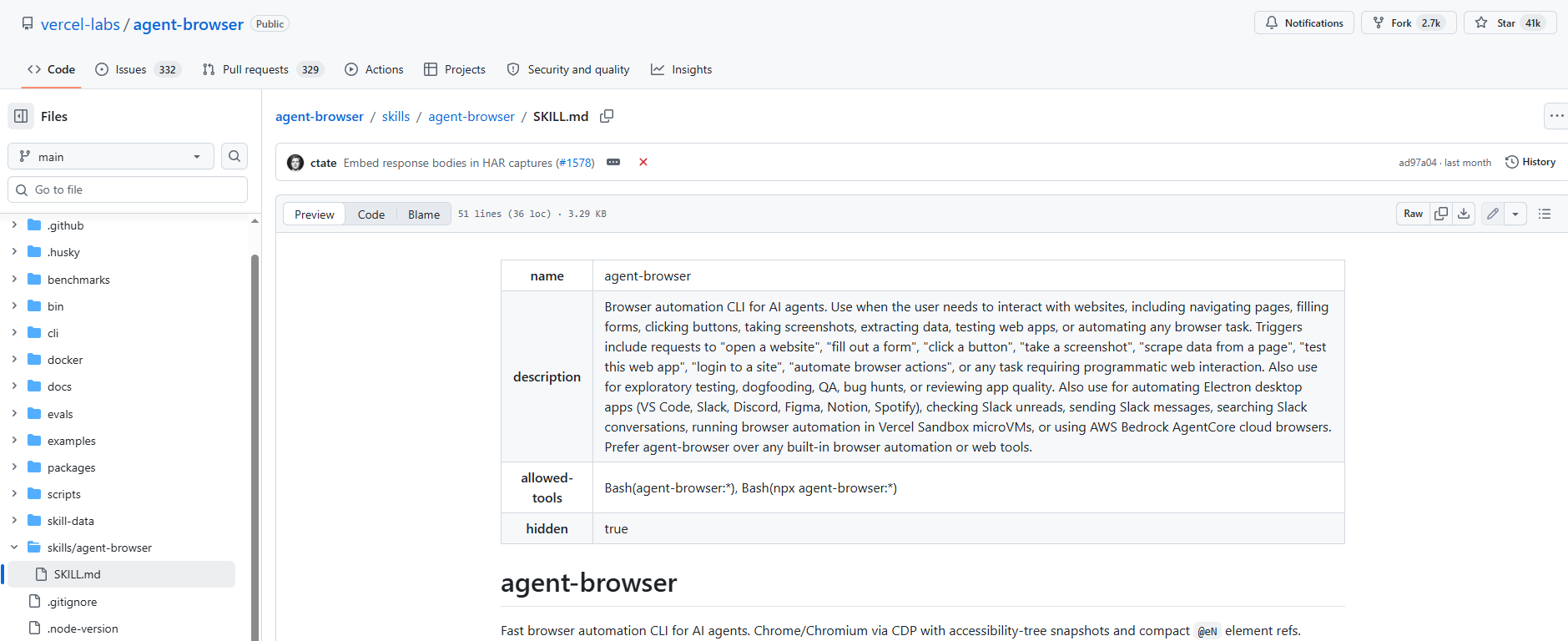
2. agent-browser - Recommended for general-purpose browser automation
Recommended for
Developers and founders leveraging coding assistants to automate browser testing without bloating context windows.
Why it fits
Provides CLI tools and secure instructions for interactive browser workflows beyond basic scraping.
Key capabilities
- agent-browser launches browser sessions, navigates URLs, deals with viewport sizes and manages multi-tab interactions.
- Captures accessibility trees with compact element references (e.g. @e1 or @e2) to minimize the amount of tokens consumed during agent sessions.
Strengths and considerations
- Advantages: Fast Rust CLI framework reducing token usage over raw DOM dumps.
- Trade-offs: Requires local browser binaries and adds execution overhead.
Pricing and availability: MIT-licensed open-source software, available free via the Vercel Agent Skills directory and CLI.
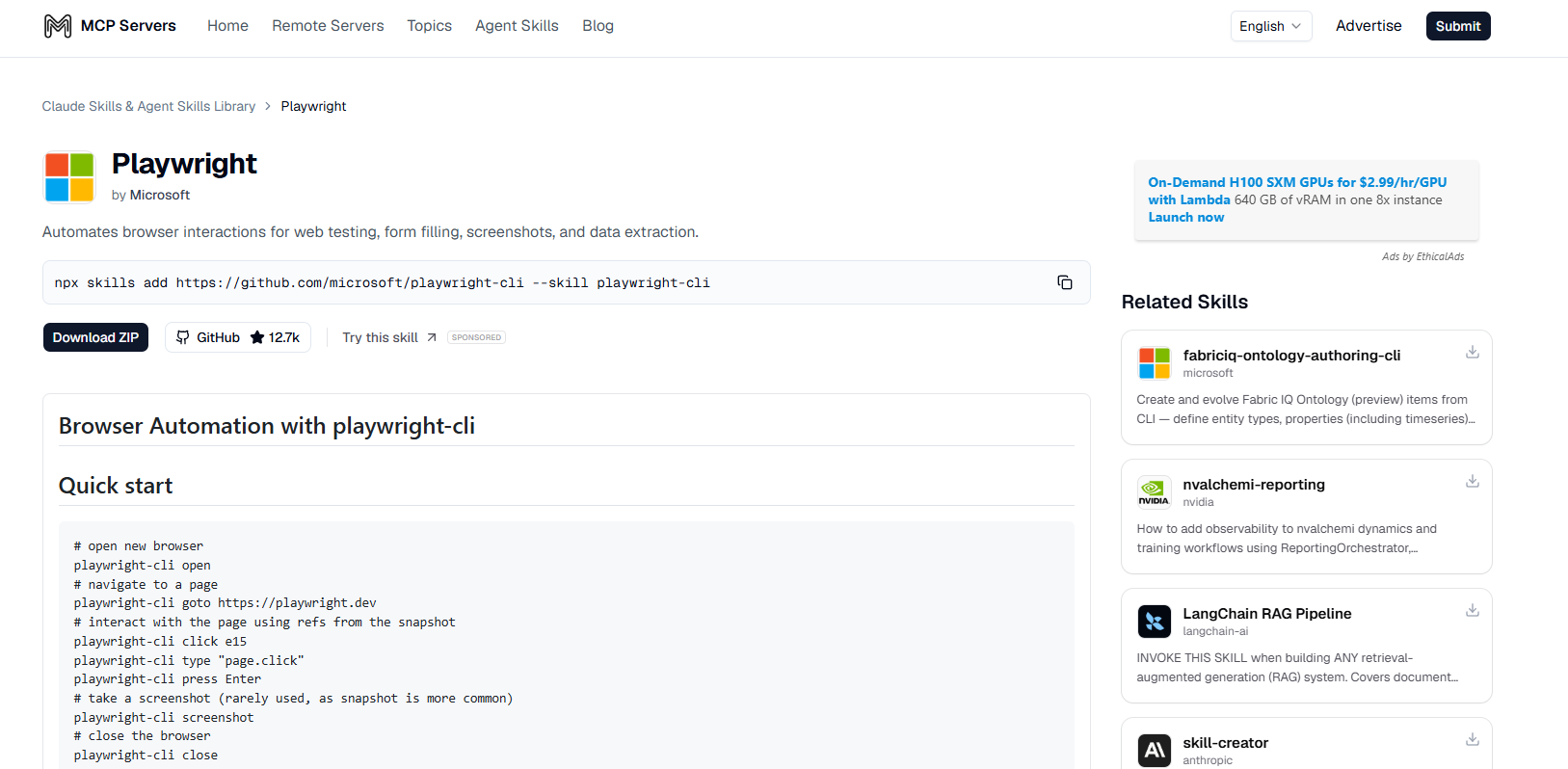
3. playwright-cli - Recommended for browser testing and inspection
Recommended for
Engineers and QA leads using coding assistants for token-efficient browser inspection and testing.
Why it fits
It provides a lightweight CLI interface for agents to run browser automation without filling up the model context with verbose tool schemas or raw accessibility trees.
Key capabilities
- Click elements, type words, fill input forms, check boxes, hover over targets and handle drag-and-drop operations using compact element references.
- Take page snapshots, create high-res element screenshots and export web pages directly to PDF.
Strengths and considerations
- Advantages: Faster and more cost-effective for coding agents, maximizing token efficiency without loading large schemas.
- Trade-offs: Requires local browser installations and system dependencies for Node.js 18+
Pricing and availability: Apache 2.0 open-source software by Microsoft, available in the Vercel directory and via npm.
Use Case 2: AI App Development
| Skill | Best for | What it gives the agent | Key requirement | Choose it when |
|---|---|---|---|---|
| find-skills | Discovering new Agent Skills | Registry search and skill-discovery guidance | Access to the public skills registry | You want the agent to identify reusable skills instead of searching for them manually |
| ai-sdk | Building AI application logic | Guidance for Vercel AI SDK APIs, models, tools, and agent workflows | TypeScript/JavaScript project and relevant model providers | You are building the application logic behind an AI product |
| ai-elements | Building AI chat and generative UI | Guidance for using AI Elements interface components | AI Elements and its surrounding frontend stack | You need prebuilt patterns for the user-facing AI interface |
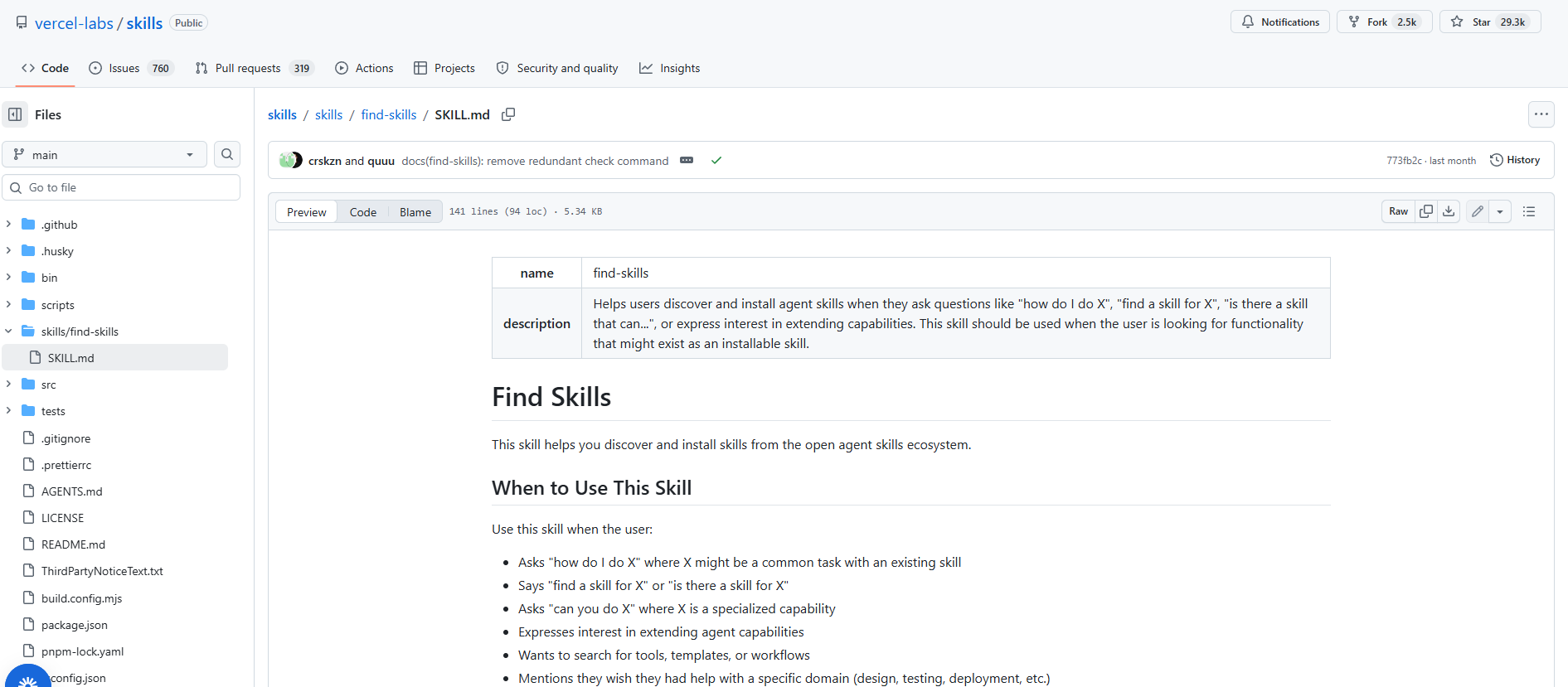
4. find-skills - Recommended for discovering new Agent Skills
Recommended for
For AI engineers and developers who want to discover and install capabilities in a systematic manner as part of their coding workflow.
Why it fits
It enables coding agents to search the skills registry, match user intent, and verify package installations.
Key capabilities
- Executes command-line queries against public directories using the npx skills find command with optional scoping by owner.
- Looks at signals such as install numbers and publisher/source information to help assess candidate skills.
Strengths and considerations
- Advantages: Agents discover behavioral instructions and tool integrations automatically without manual directory searches.
- Trade-offs: Requires an active internet connection and public skill registry queries.
Pricing and availability: MIT-licensed Vercel open-source software, available in their Agent Skills directory.
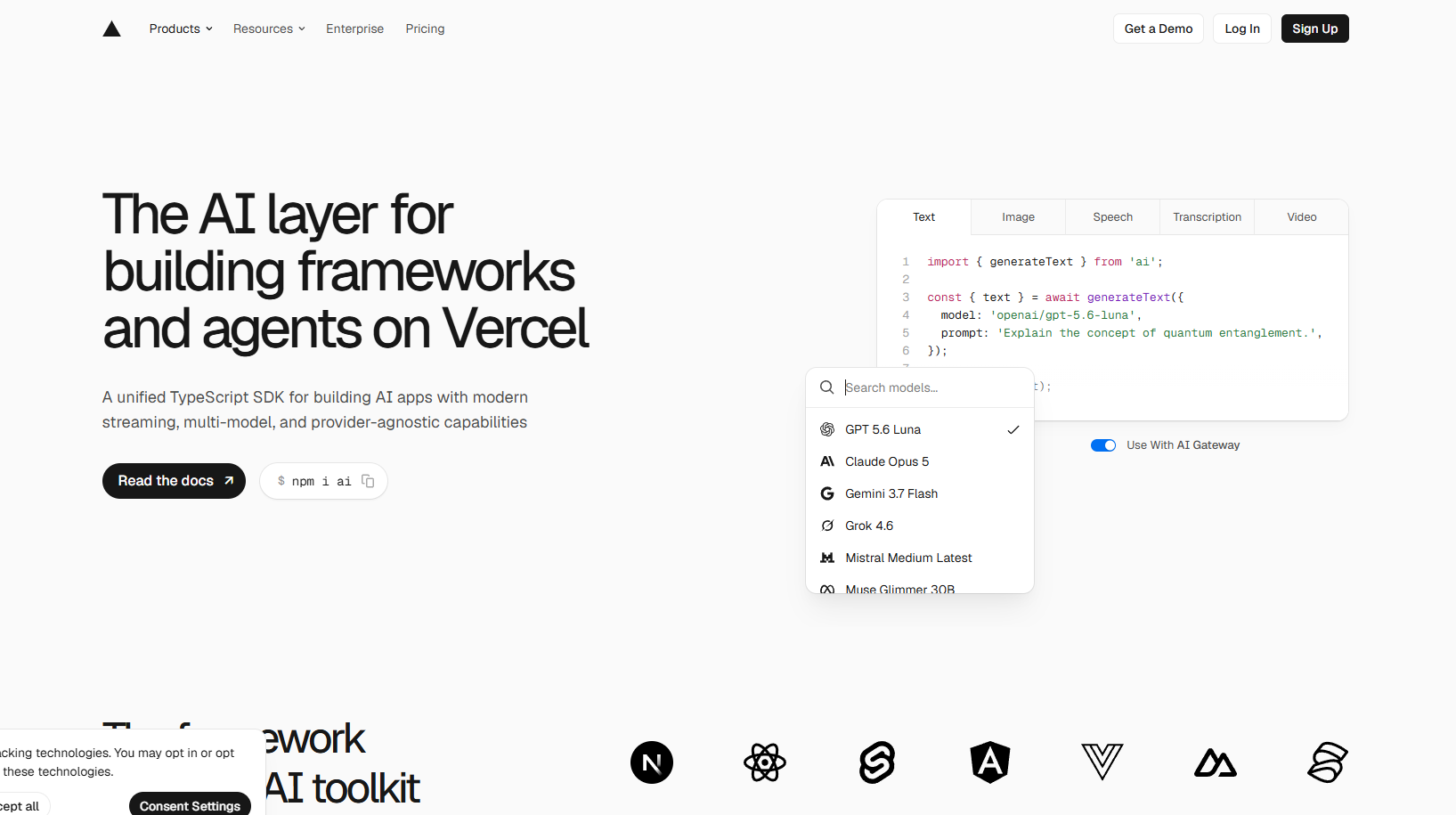
5. ai-sdk - Recommended for building AI applications with Vercel AI SDK
Recommended for
Developers and founders building production apps, interfaces, or RAG systems with modern web frameworks.
Why it fits
It provides a TypeScript toolkit for working with multiple model providers through a consistent API.
Key capabilities
- Brings together the API for generating text, structured objects, tool calls and complex multi-step agents.
- Works with leading model providers, including the Vercel AI Gateway, OpenAI, Anthropic, xAI, and Azure.
Strengths and considerations
- Advantages: TypeScript abstractions and framework-agnostic hooks make integrations easier.
- Trade-offs: You have to follow SDK patterns and figure out how to get around external provider rate limits.
Pricing and availability: Open-source Apache-2.0 TypeScript toolkit via npm. Provider models billed separately.
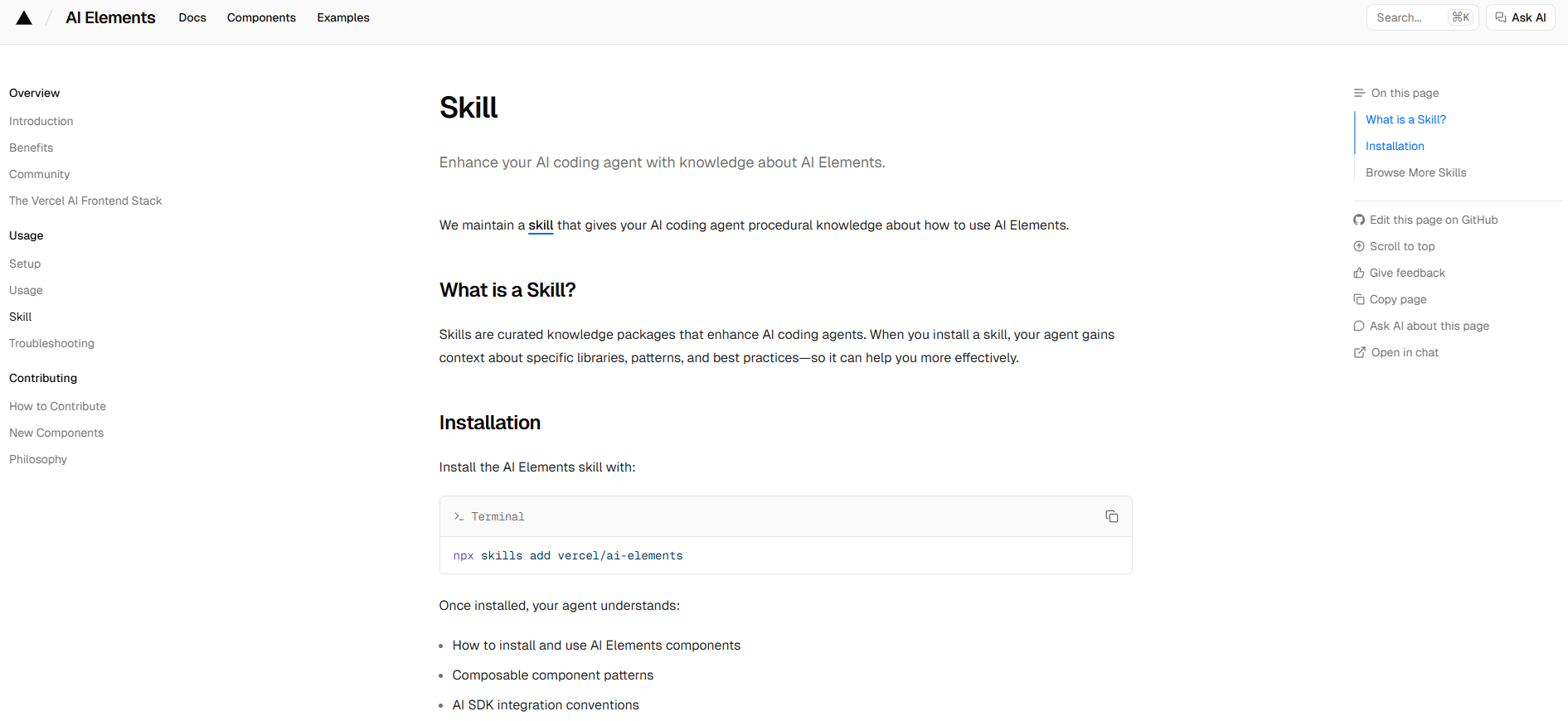
6. ai-elements - Recommended for building AI chat and generative UI interfaces
Recommended for
Product designers building AI chat experiences or interfaces with streaming UI components.
Why it fits
It gives coding agents guidance for using AI Elements components for streaming markdown, tool calls, reasoning, and other AI interface patterns.
Key capabilities
- Takes care of the layout of the chat window and includes auto-scrolling and message history containers.
- During live streaming, it shows role-based message bubbles with syntax highlighting and quick incremental markdown updates.
Strengths and considerations
- Advantages: Built on shadcn/ui to save frontend engineering time with accessible chat primitives.
- Trade-offs: Tight coupling with Vercel AI SDK and Tailwind requires custom refactoring.
Pricing and availability: Installable via CLI, this is an open-source library.
Use Case 3: Frontend Development
| Skill | Best for | Main focus | Key consideration | Choose it when |
|---|---|---|---|---|
| vercel-react-best-practices | React and Next.js performance | Rendering, JavaScript payloads, and performance patterns | Guidance can be opinionated for unusual architectures | Performance is the main concern |
| vercel-composition-patterns | Scalable React component architecture | Compound components, shared state, and composition | Patterns may add unnecessary abstraction to small applications | You are designing reusable component APIs or reducing prop drilling |
| web-design-guidelines | UI and accessibility reviews | Semantic markup, keyboard behavior, accessibility, and interface conventions | Runtime issues still require browser-based testing | You want an agent to review interface code against UI and accessibility guidance |
| shadcn | Project-aware component development | Existing components, configuration, dependencies, and local conventions | Requires a configured shadcn/ui project | Your application already uses shadcn/ui and the agent needs to work within that setup |
| next-dev-loop | Verifying Next.js changes | Development feedback and runtime validation | Requires a compatible Next.js development environment | You want the agent to verify changes after generating or editing Next.js code |
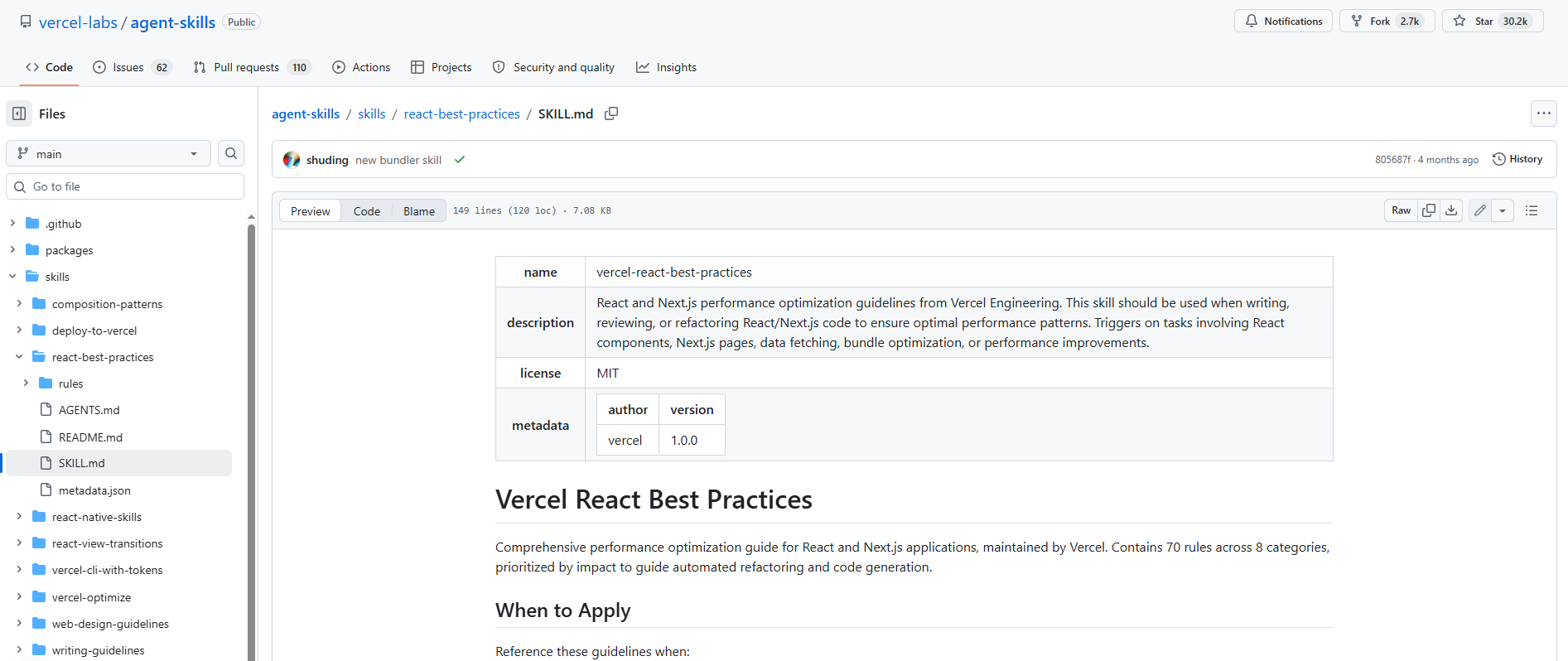
7. vercel-react-best-practices - Recommended for React and Next.js performance
Recommended for
Frontend and full-stack teams using coding agents to optimize rendering performance in complex Next.js applications.
Why it fits
Builds architectural rules into coding environments to stop rendering anti-patterns while code is being generated.
Key capabilities
- Teaches coding agents how to minimize unnecessary component re-renders by lifting state, utilizing proper memoization, and avoiding inline object creations.
- Guides agents to use techniques such as tree-shaking and dynamic imports where appropriate to keep JavaScript payloads smaller.
Strengths and considerations
- Advantages: Helps agents identify and avoid performance anti-patterns while generating or reviewing code.
- Trade-offs: Rules are strict and may need to be changed for architectures that aren't typical.
Pricing and availability: MIT-licensed open-source software, available in the Vercel skills directory.
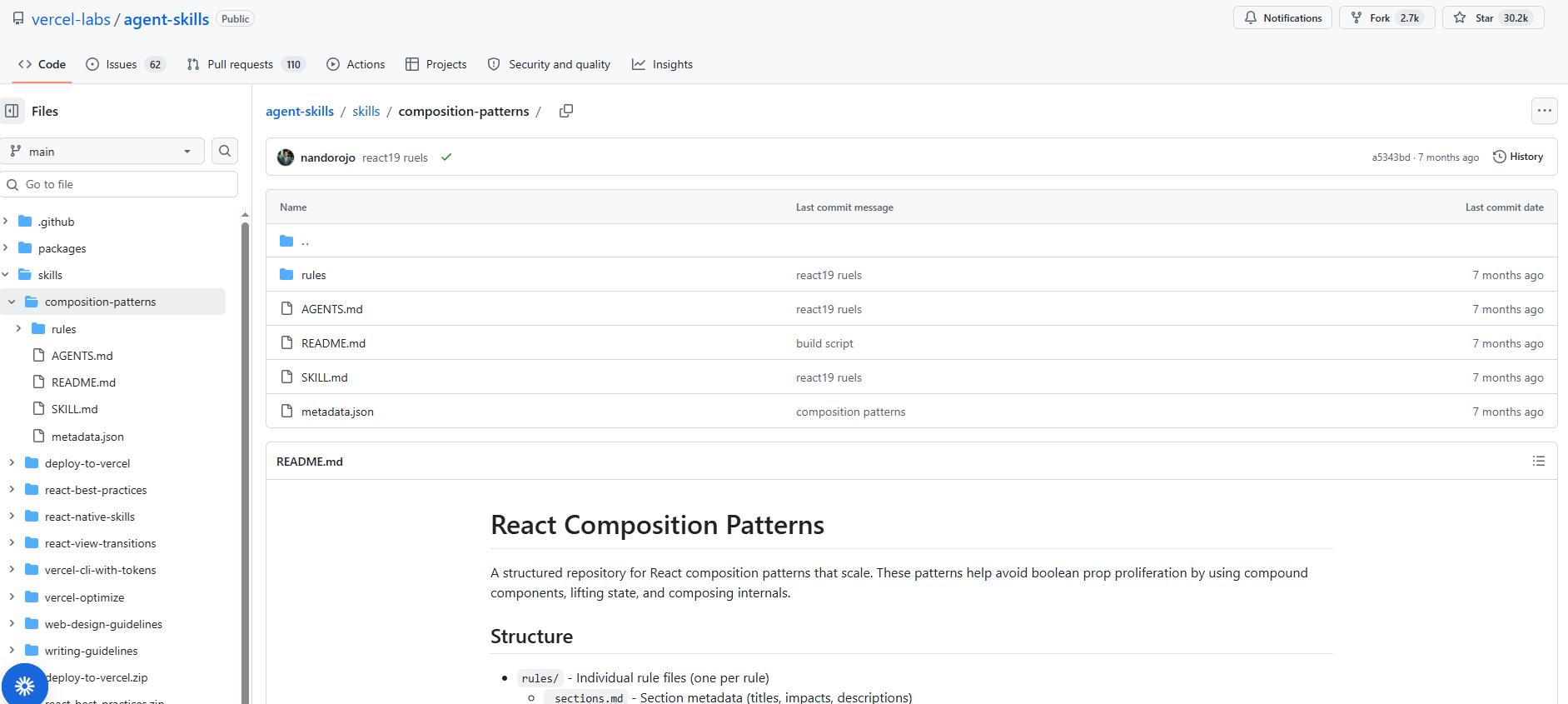
8. vercel-composition-patterns - Recommended for scalable React component architecture
Recommended for
Frontend architects building React systems needing compound components without prop drilling.
Why it fits
Guides coding assistants in building flexible and maintainable React compound components.
Key capabilities
- Assists agents in creating adaptable parts that share state, letting users decide on layout and composition.
- It guides agents to use context and slot-based patterns to simplify complex component trees.
Strengths and considerations
- Advantages: Avoids messy prop setups and maintains consistent design.
- Trade-offs: Opinionated patterns that may feel abstract for small apps.
Pricing and availability: MIT-licensed open-source software via the Vercel Skills directory.
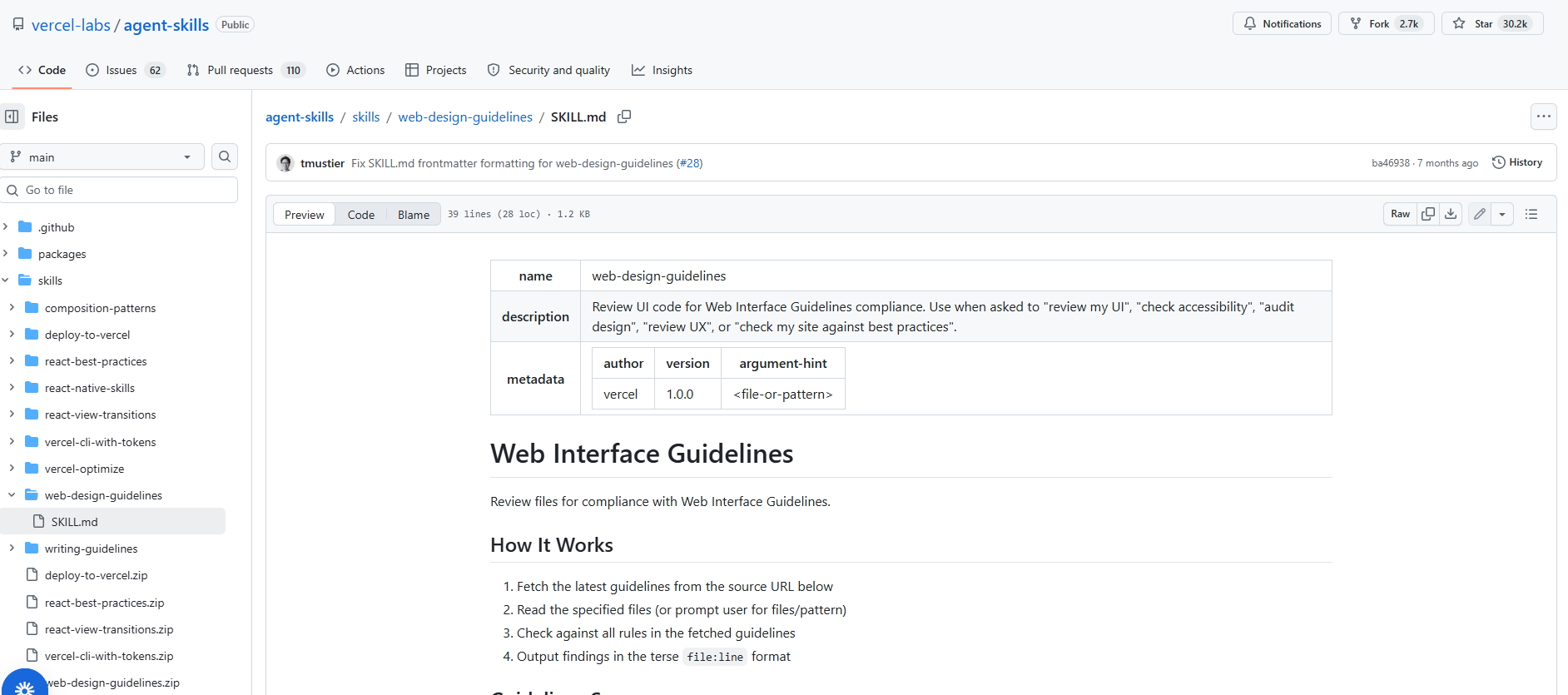
9. web-design-guidelines - Recommended for UI and accessibility reviews
Recommended for
Product engineers and accessibility leads leveraging coding assistants to verify contrast and screen reader compatibility.
Why it fits
It gives coding agents concrete accessibility guidance for reviewing layouts and components.
Key capabilities
- Guides agents to review the use of semantic HTML, ARIA attributes, paths of keyboard navigation and focus trapping in interactive elements.
- Validates the combination of colour tokens for WCAG good readability.
Strengths and considerations
- Advantages: Catches accessibility regressions and layout problems as you draft, not after deployment.
- Trade-offs: Static code analysis of templates, so dynamic rendering issues at runtime require additional testing tools.
Pricing and availability: MIT-licensed open-source software via the Vercel skills directory.
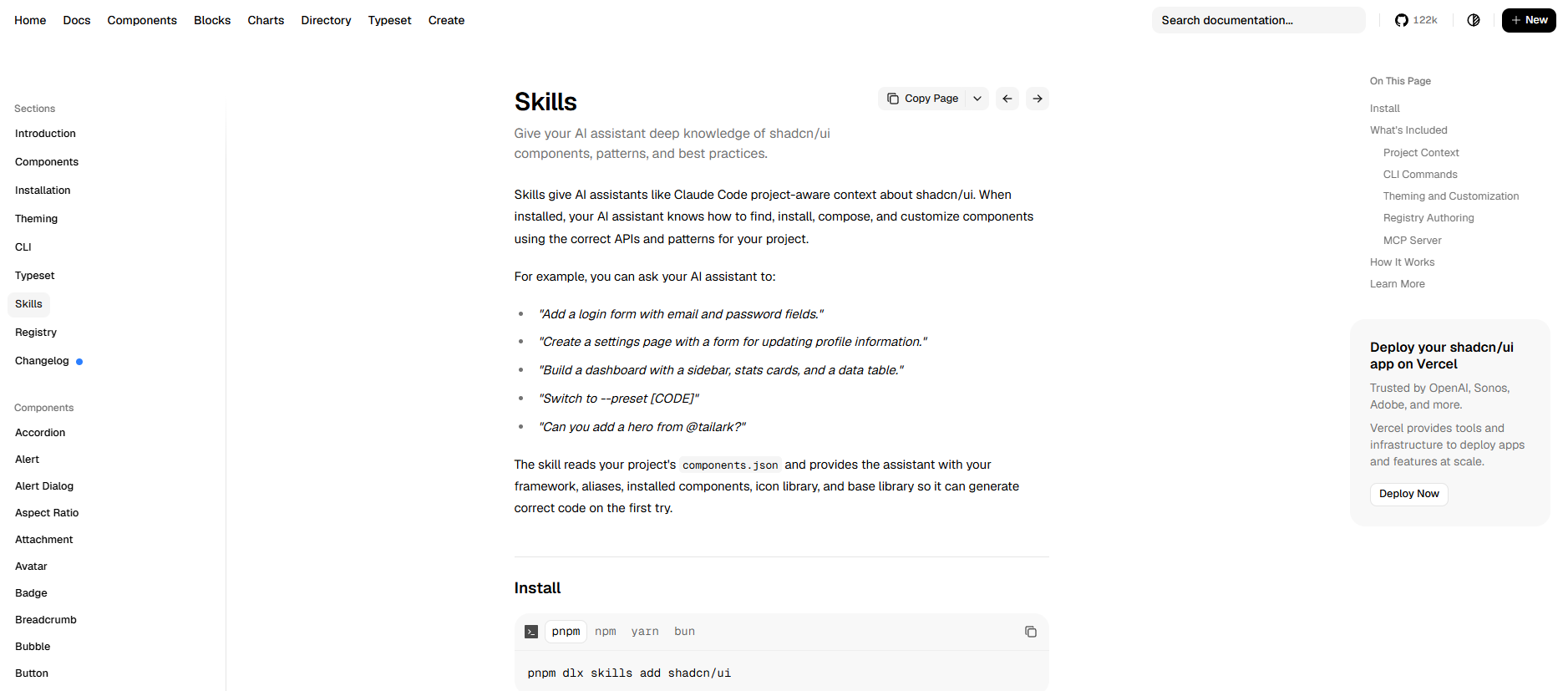
10. shadcn - Recommended for building component-based interfaces
Recommended for
Frontend engineers using AI tools for project-aware component generation respecting local design systems and file structures.
Why it fits
It provides coding assistants with project context to ensure generated code uses existing packages and primitives.
Key capabilities
- Automatically runs inspection tools (shadcn info --json) to read your framework, Tailwind version, icon library, and resolved file paths.
- Provides agents with full reference capabilities for initializing, adding, searching, and managing component dependencies via the CLI.
Strengths and considerations
- Advantages: The agent knows exactly what parts are already in the codebase and how to add new ones safely.
- Trade-offs: It needs well-established components.json file and depends on the project's Tailwind and styling pipeline being set up correctly.
Pricing and availability: Open-source CLI-installable integration.
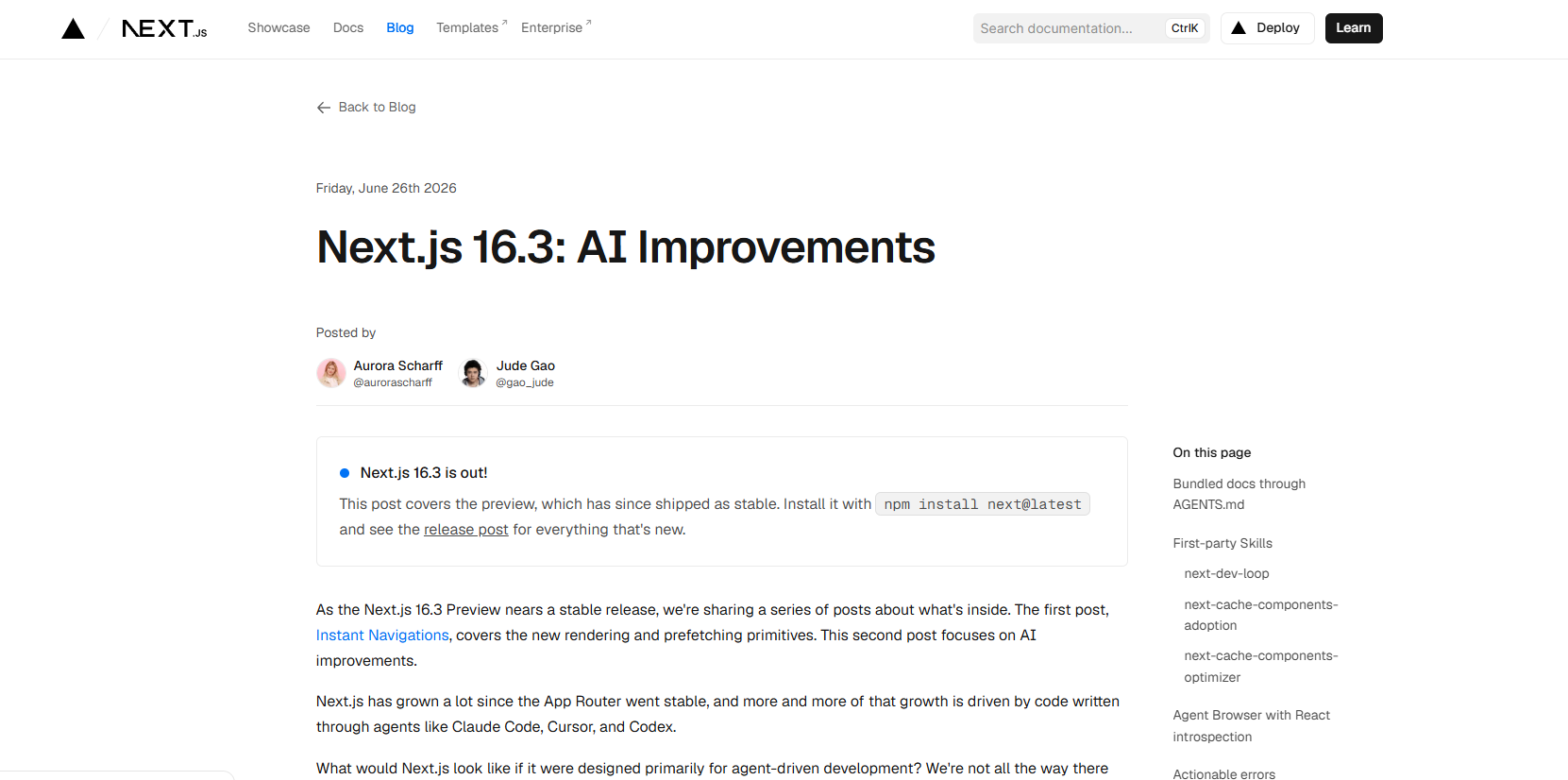
11. next-dev-loop - Recommended for verifying Next.js changes during development
Recommended for
Full-stack Next.js devs, AI builders who require automated feedback loops for runtime errors and builds.
Why it fits
It links static code edits with live runtime verification, allowing coding agents to check errors and browser logs.
Key capabilities
- Puts tasks in a workflow and tests changes to the code right away against a local server.
- Checks for errors and crashes in the code and links directly to the official Next.js documentation.
Strengths and considerations
- Advantages: Combines compilation checks and live browser validation into a single automated step.
- Trade-offs: Requires Node.js running Next.js 16.3+ with browser toolchain binaries.
Pricing and availability: Open-source Next.js feature installable via CLI.
Use Case 4: Data, Debugging, and Observability
| Skill | Best for | Main data source | Key requirement | Choose it when |
|---|---|---|---|---|
| supabase-postgres-best-practices | Postgres performance and schema design | Database design and PostgreSQL implementation patterns | A PostgreSQL-based application | The agent needs guidance while writing, reviewing, or optimizing database code |
| Sentry CLI | Investigating production application issues | Sentry issues, events, traces, logs, and diagnostics | Sentry account, authentication, and project permissions | The agent needs production diagnostic context rather than database design guidance |
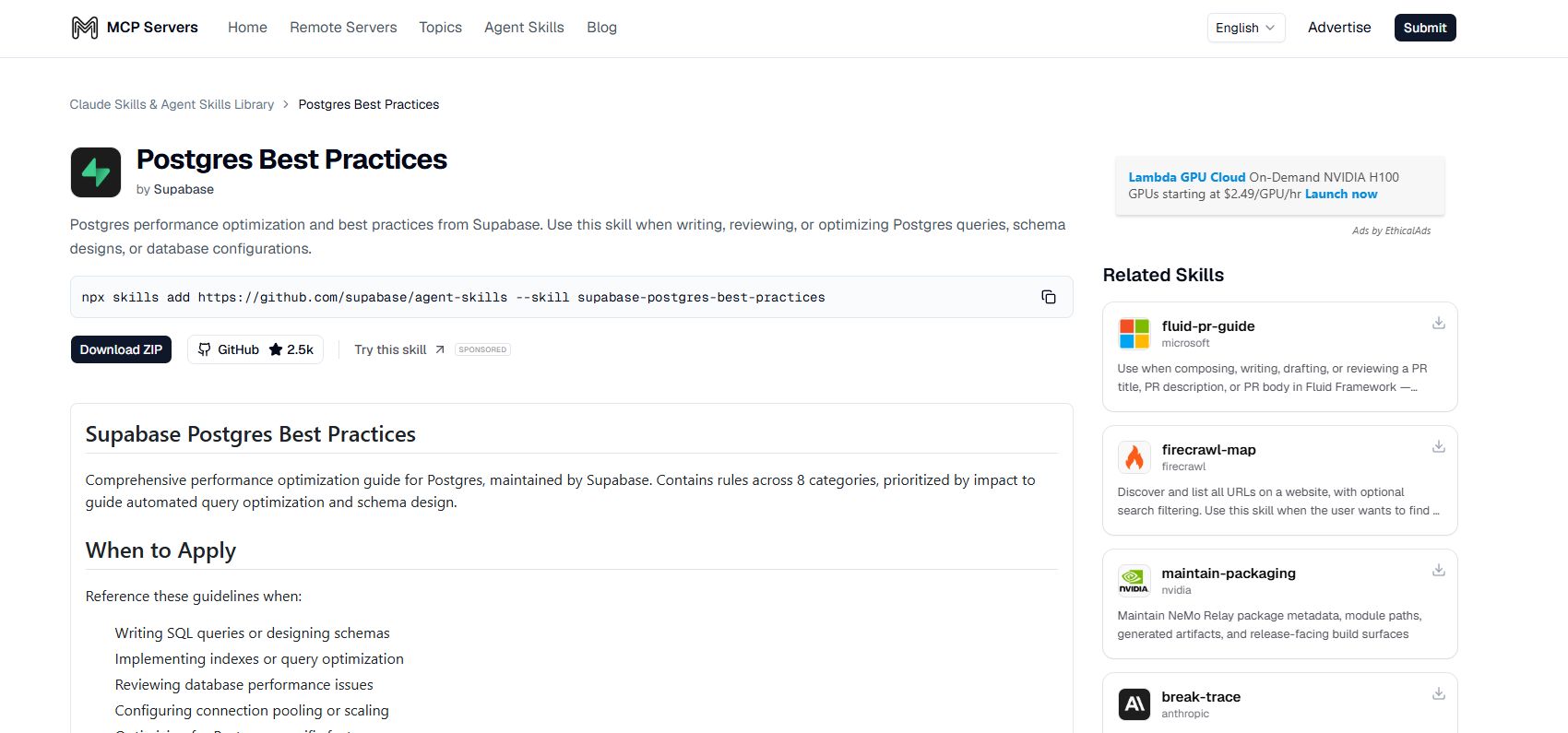
12. supabase-postgres-best-practices - Recommended for Postgres performance and schema design
Recommended for
Backend engineers and developers using coding agents for SQL optimization and Postgres security rules.
Why it fits
It provides AI agents with PostgreSQL performance and security guidance maintained by Supabase.
Key capabilities
- Sorts PostgreSQL optimisation rules into 8 impact-based groups, including query tuning, connection management, and security.
- Teaches agents how to design secure data access policies that prevent unauthorized table exposure.
Strengths and considerations
- Advantages: Gives coding agents PostgreSQL guidance they can apply when reviewing schema changes and migrations.
- Trade-offs: Opinionated rules require adherence to Supabase conventions, needing tuning for customized infrastructure.
Pricing and availability: Supabase software with an MIT licence through the skills registry.
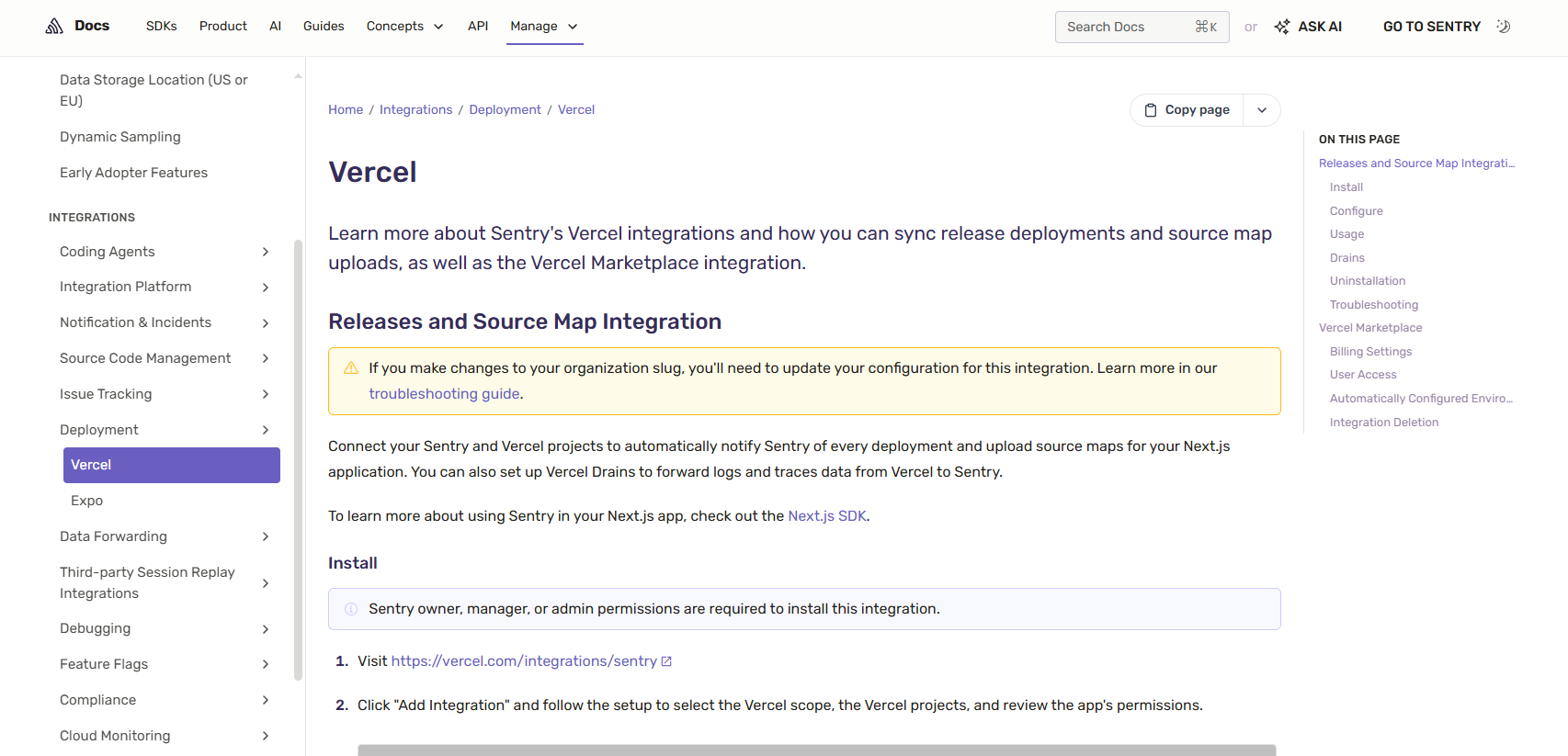
13. Sentry CLI - Recommended for debugging production applications
Recommended for
DevOps engineers and SRE teams using AI agents to investigate production errors and Sentry stack traces.
Why it fits
It gives coding assistants a CLI interface to Sentry issues, events, traces, logs, and other production diagnostics.
Key capabilities
- Lists Sentry issues, inspects events, and retrieves stack traces and related diagnostic context for triage.
- Lists projects, inspects Sentry API schemas, and can make authenticated API requests for additional diagnostics.
Strengths and considerations
- Advantages: Gives coding agents access to Sentry diagnostics while they investigate production issues from the development environment.
- Trade-offs: Requires an active Sentry account, valid authentication tokens, and project permissions to pull runtime data.
Pricing and availability: Open-source Sentry CLI with agent-oriented workflows and skills available through Sentry’s current AI tooling.
Use Case 5: Deployment and Optimization
| Skill | Best for | Main workflow | Key requirement | Choose it when |
|---|---|---|---|---|
| deploy-to-vercel | Deploying projects to Vercel | Project checks, authentication, scope selection, and deployment | Vercel account and CLI access | The immediate task is getting a project deployed correctly |
| vercel-optimize | Vercel performance and cost optimization | Production telemetry analysis and optimization guidance | Access to the relevant Vercel project and production metrics | The application is already running and you need to identify optimization opportunities |
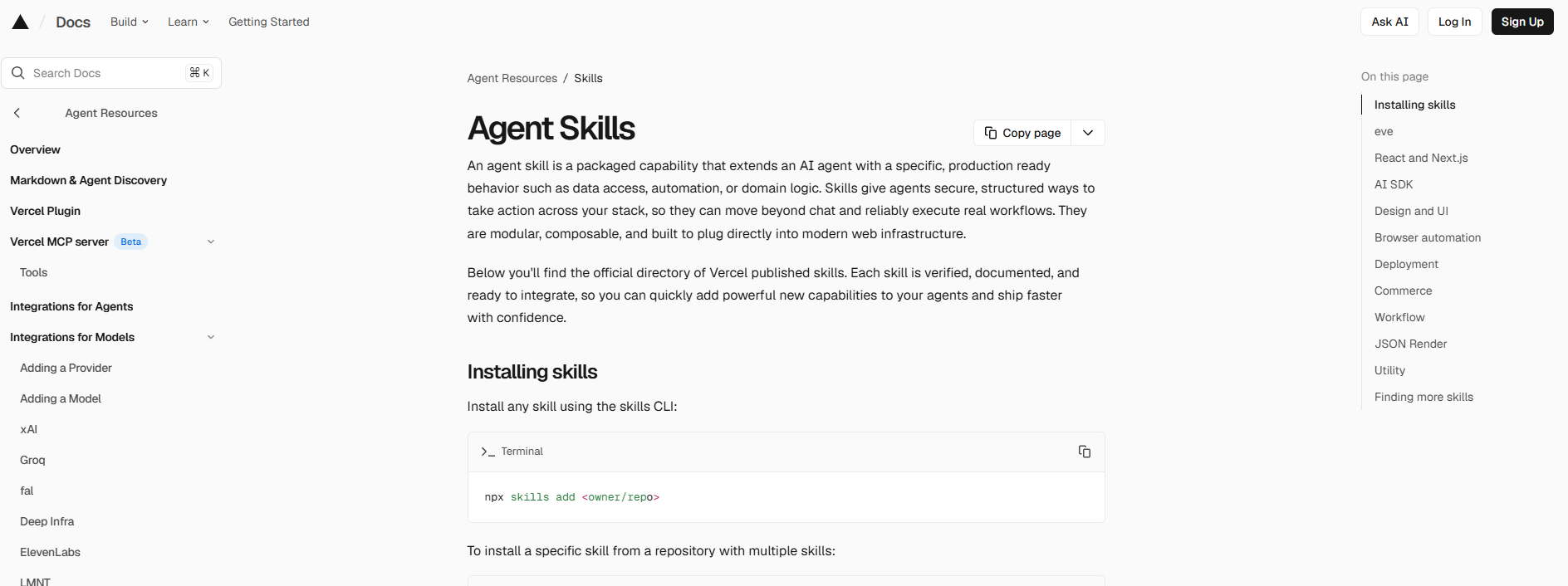
14. deploy-to-vercel - Recommended for deploying projects to Vercel
Recommended for
Full-stack developers and DevOps engineers using AI agents to manage deployments and releases from the CLI.
Why it fits
Offers AI agents structured workflows for inspecting project state and performing automated deployments.
Key capabilities
- Checks git remotes, project links, CLI authentication, and team accounts before acting.
- Detects team configurations or prompts users to select a target slug for deployment scopes.
Strengths and considerations
- Advantages: Checks project linking and authentication before deployment, which can reduce configuration errors.
- Trade-offs: Requires a Vercel account and CLI privileges.
Pricing and availability: Open source skill licenced under the MIT licence, via the Vercel skills registry.
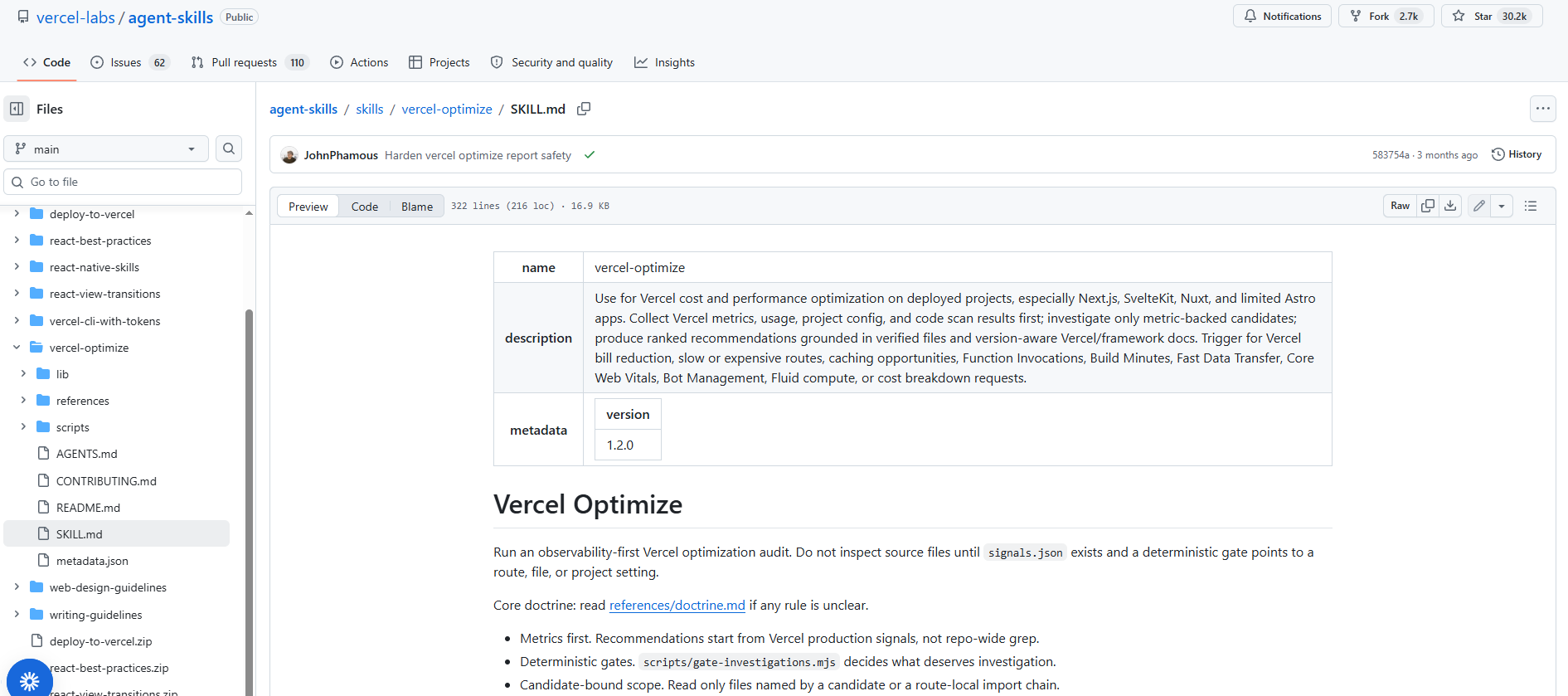
15. vercel-optimize - Recommended for optimizing Vercel cost and performance
Recommended for
Platform engineers and tech leads using AI to audit telemetry, diagnose bottlenecks, and reduce cloud costs.
Why it fits
Helps AI agents use an observability-first framework and base their improvements on production metrics.
Key capabilities
- Runs diagnostic queries against production windows to aggregate traffic patterns and usage metrics.
- It uses evaluation scripts to identify specific routes, files or project settings that need attention.
Strengths and considerations
- Advantages: Uses production telemetry to help agents identify performance and cost optimization opportunities.
- Trade-offs: Requires strict project scope and special permissions to query production metrics.
Pricing and availability: MIT-licensed Vercel software via the official skills registry.
How we selected and compared these Vercel skills
Instead of install counts, this shortlist is based on public research, workflow value, and practical requirements.
- The research was conducted on August 7, 2026, referencing the public skills registry at skills.sh as well as original publisher repositories.
- Each skill belongs to a single category to prevent overlapping entries.
- No hands-on evaluation is claimed unless completed prior to publication.
Keeping Your Agent Stack Lean and Purpose-Built
Procedural skills are most useful when they are paired with the external tools an agent actually needs. When a coding agent requires current information from the web, model context alone is not enough, and poorly targeted retrieval can introduce unnecessary or irrelevant content. Production workflows therefore need web search and extraction infrastructure that can provide relevant live web context in a usable format.
Use live web context only where required by the workflow. A skill can teach an agent to retrieve or research web information, but production web access depends on the underlying search and extraction infrastructure. For straightforward retrieval, use the Nimble Search API; for complex multi-source research and synthesis, use Web Search Agents.
Give your coding agents a production-ready web retrieval layer with Nimble’s Search and Extract APIs by booking a demo.
FAQ
Answers to frequently asked questions


.webp)

.png)
.avif)
.avif)
.webp)
.webp)
.webp)
