







Top 10 Anthropic Claude Agent Skills for 2026


.avif)
Ilan Chemla
.png)
Top 10 Anthropic Claude Agent Skills for 2026
Ilan Chemla


Most popular articles


Get structured, reliable data for your stack.
Abstract: Claude Agent Skills give Claude reusable instructions for specific tasks, so teams do not have to rebuild the same workflow from scratch every time. They make agents work more consistently and easier to manage across research, data extraction, analysis, testing, and automation.
Top Claude Agent Skills Include
- Skill Creator
- MCP Builder
- XLSX
- WebApp Testing
- Nimble Skills
- Hugging Face LLM Trainer
- Hugging Face Datasets
- Tinybird Best Practices
- Sentry Code Review
- Competitive Ads Extractor
Prompts alone don’t give you AI agents that work consistently in production. Workflows need re-prompting, context needs manual rebuilding, and over time, behavior drifts. In 2026, the question is not whether an agent performs well in testing, but whether it behaves reliably in production.
Despite AI agent experimentation being high, this inconsistency is a big reason why a recent survey showed only 17% of executives say they have fully adopted AI agents throughout their company. Anthropic Claude Agent Skills help agents behave consistently in production with reusable capability modules that teams can invoke automatically across Claude.ai, Claude Code, and the API without maintaining separate logic for each surface.
Here is a practical breakdown of the ten Claude Agent Skills that matter in real production environments.
What Are Anthropic Claude Agent Skills?
At their core, Anthropic Claude Agent Skills are structured capability packages that Claude can discover and invoke when a task requires them. Each Skill is a reusable specification that defines how a capability should behave and when it should activate.
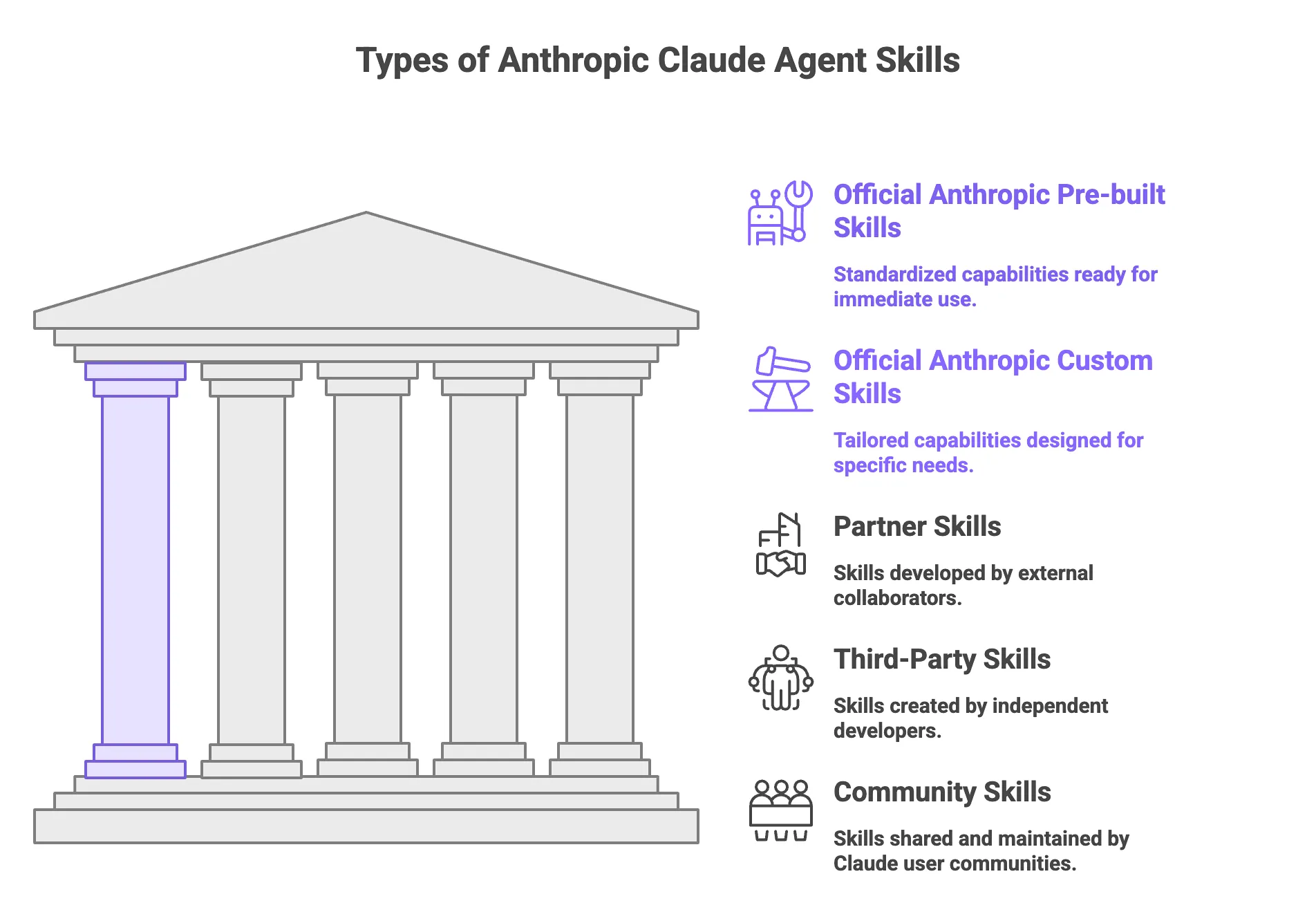
Anthropic refers to them interchangeably as Agent Skills or simply Skills throughout their official documentation. Anthropic’s official skills model centers on pre-built Agent Skills and custom Skills. Beyond that, a broader Claude-compatible ecosystem includes partner, third-party, and community-published skills.
Developers, AI engineers, data teams, and technical operators are the primary audience. These are teams that need repeatable, consistent behavior from agentic systems at scale. Once those systems are expected to perform reliably, ad hoc prompting becomes impossible to manage.
The practical benefits of Agent Skills are significant:
- Keeping logic in a reusable module eliminates repeated prompting across interactions.
- Teams can inspect and version capability definitions, making agent behavior more auditable and easier to govern.
- Because only the relevant context loads when needed, token overhead stays lean.
Beyond efficiency, there is a strategic dimension to using Anthropic Skills. Organizations can formalize how high-stakes tasks like compliance checks, pricing analysis, and data validation should be handled, then let agents operate consistently within those boundaries. That is the difference between an AI assistant and a production-grade agent.
How Official Anthropic Claude Agent Skills Work
Anthropic documents Skills as modular, file system-based capabilities Claude can identify and load only when a task requires them. Within that model, pre-built Agent Skills and custom Skills share the same underlying architecture, even though they serve different purposes.
Outside that framework, there is also a wider Claude-compatible landscape of partner, third-party, and community-created skills. Those can differ in packaging and maintenance, but they are still built to support similar agent workflows.
This section focuses on the official Anthropic framework: how Skills are structured, how Claude determines when to use them, and how they function across Claude’s supported environments:
Each Skill Lives in a SKILL.md file
This file contains structured instructions, workflow logic, tool references, and task-scoped context. It defines how Claude should handle a specific type of task when that capability is needed.
Claude Dynamically Loads Skills
When a task matches a Skill’s purpose, Claude retrieves and reads that file at the moment of execution. It does not preload every Skill into context, which prevents unnecessary token usage and context bloat.
Two Invocation Modes Exist
- Explicit invocation: A user or developer triggers a Skill directly via a command or direct prompt.
- Automatic invocation: Claude detects that a task matches a Skill’s description and loads it without being manually prompted.
A Typical SKILL.md File Includes:
- A description of when the Skill should be invoked
- A structured, step-by-step workflow
- References to required tools or APIs
- Output format constraints (e.g., JSON schema, structured report, table)
- Optional example inputs and outputs to guide behavior
Skills Are Cross-platform by Design
The same Skill file can operate across Claude.ai, Claude Code, and API-based deployments. Teams do not need to rewrite capability logic for each environment.
Skills Are Composable
Multiple Agent Skills can operate within a single workflow. Claude activates whichever module is relevant at each stage of a multi-step task, allowing complex workflows to be assembled from smaller, reusable capabilities.
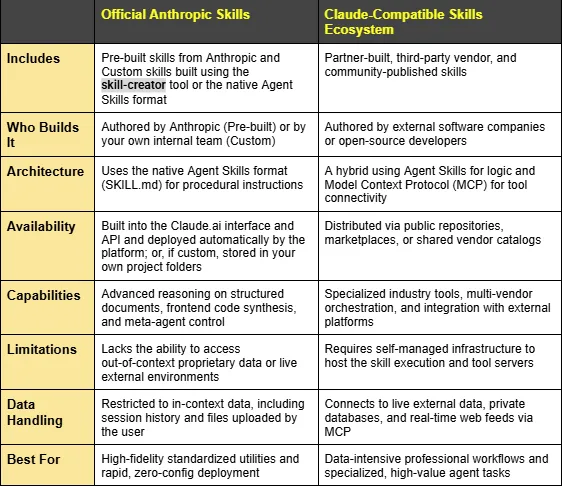
Official Anthropic Skills vs. the Claude-Compatible Skills Ecosystem
Anthropic’s official model is narrower than the broader ecosystem that has formed around Claude. The distinction matters because Anthropic defines the framework, while external skill publishers expand the range of production use cases teams can support. Here’s how they compare:
Top 10 Anthropic Claude Agent Skills for 2026 [by Category]
Official Anthropic Skills
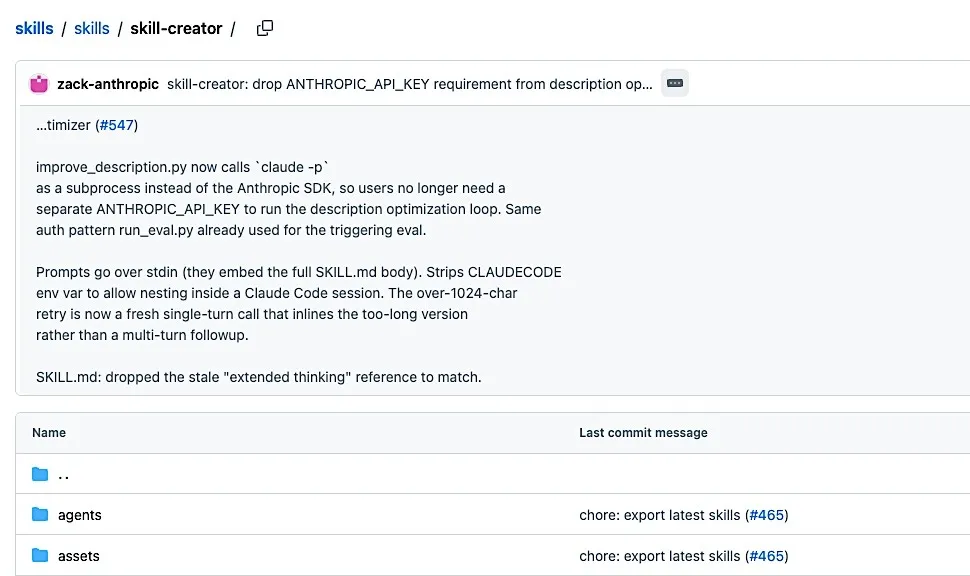
1. Skill Creator
What it is:
A Skill that helps teams generate and scaffold new SKILL.md files following Anthropic's best practices for structure, trigger descriptions, progressive disclosure, and scoped tool declarations.
Why it’s essential:
Teams that can build high-quality Skills reliably can encode any domain workflow into Claude. As agent usage scales, having a systematic, consistent approach to packaging domain knowledge into reusable modules becomes critical, because the alternative is prompt sprawl and inconsistent agent behavior across teams.
Who it’s for:
AI engineers, data engineers, and developers building custom agent capabilities for their organization.
Use Cases:
- Standardizing compliance checks
- Packaging pricing review logic
- Creating reusable validation workflows
Example:
A data engineering team uses skill-creator to standardize how they build and document internal Claude Skills, ensuring consistent trigger behavior and output formatting across their entire agent library.
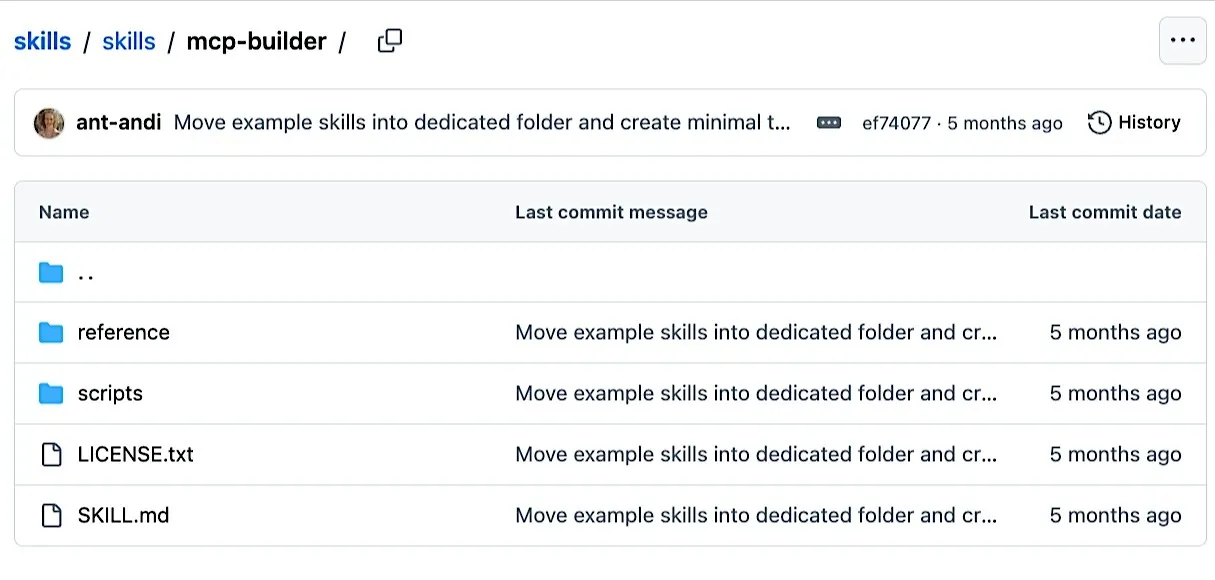
2. MCP Builder
What it is:
A Skill that allows teams to define and register Model Context Protocol (MCP) servers to integrate external APIs and services into Claude agent workflows.
Why it’s essential:
MCP is the connectivity layer that lets Claude agents reach beyond their context window into live systems. Without it, agents are limited to what is already in context. This Skill encodes the patterns for building those integrations correctly and consistently, turning Claude into an operational agent rather than an isolated one.
Who it’s for:
AI platform engineers and backend developers building production agent infrastructure that connects Claude to proprietary data sources, internal tools, or third-party services.
Use Cases:
- Connecting Claude to internal APIs
- Triggering workflows inside enterprise systems
- Allowing agents to retrieve structured internal data at inference time
Example:
An AI engineering team uses the mcp-builder Skill to scaffold an MCP server connecting their Claude agents to an internal pricing database, enabling real-time price lookup during inference without manual data export.
3. XLSX
What it is:
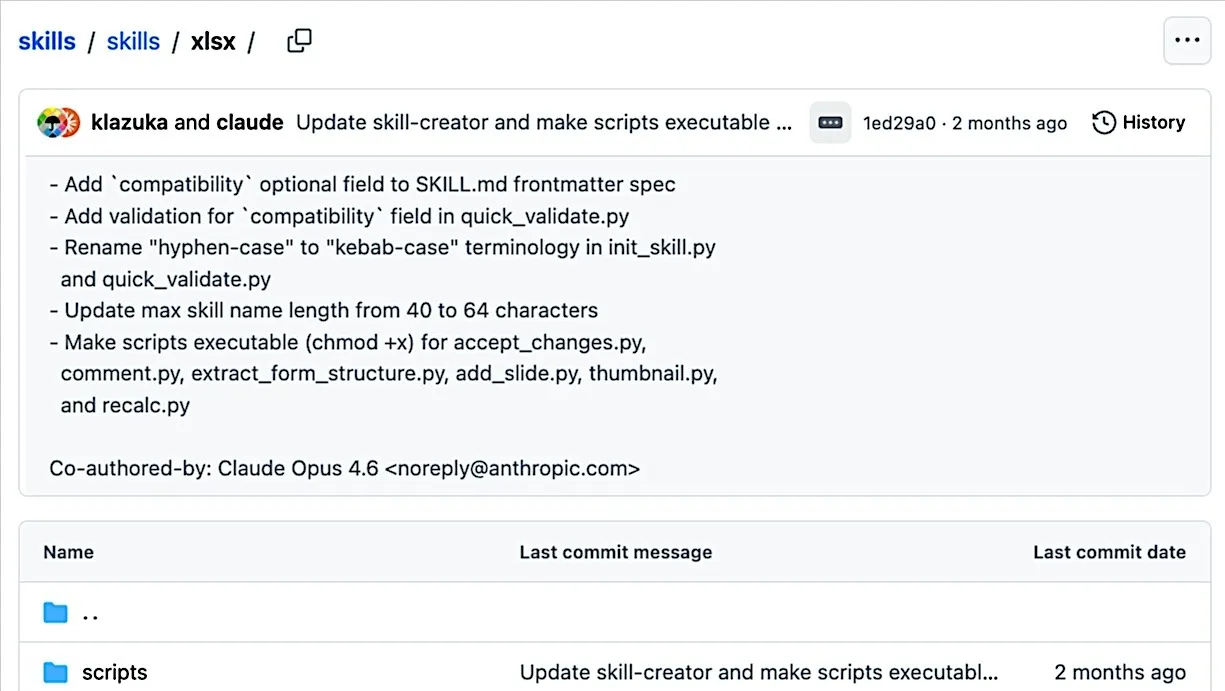
A Skill that allows Claude to create, edit, and analyze Excel spreadsheets with formulas, formatting, and data structures.
Why it’s essential:
There is a persistent gap between Claude's analytical output and the spreadsheet formats that BI workflows and business stakeholders actually consume. The xlsx Skill closes that gap by allowing agents to produce structured, distribution-ready Excel files without manual reformatting.
Who it’s for:
Data engineers, analysts, and business operations teams that need Claude to produce or manipulate structured data files consistently.
Use Cases:
- Generating structured pricing reports
- Auditing inventory spreadsheets
- Converting unstructured exports into clean tables
- Validating forecast sheets before distribution
Example:
A Head of Data uses this Skill so a Claude agent automatically produces weekly performance reports in formatted Excel files, ready for distribution to business leaders without manual cleanup.
4. WebApp Testing
What it is:
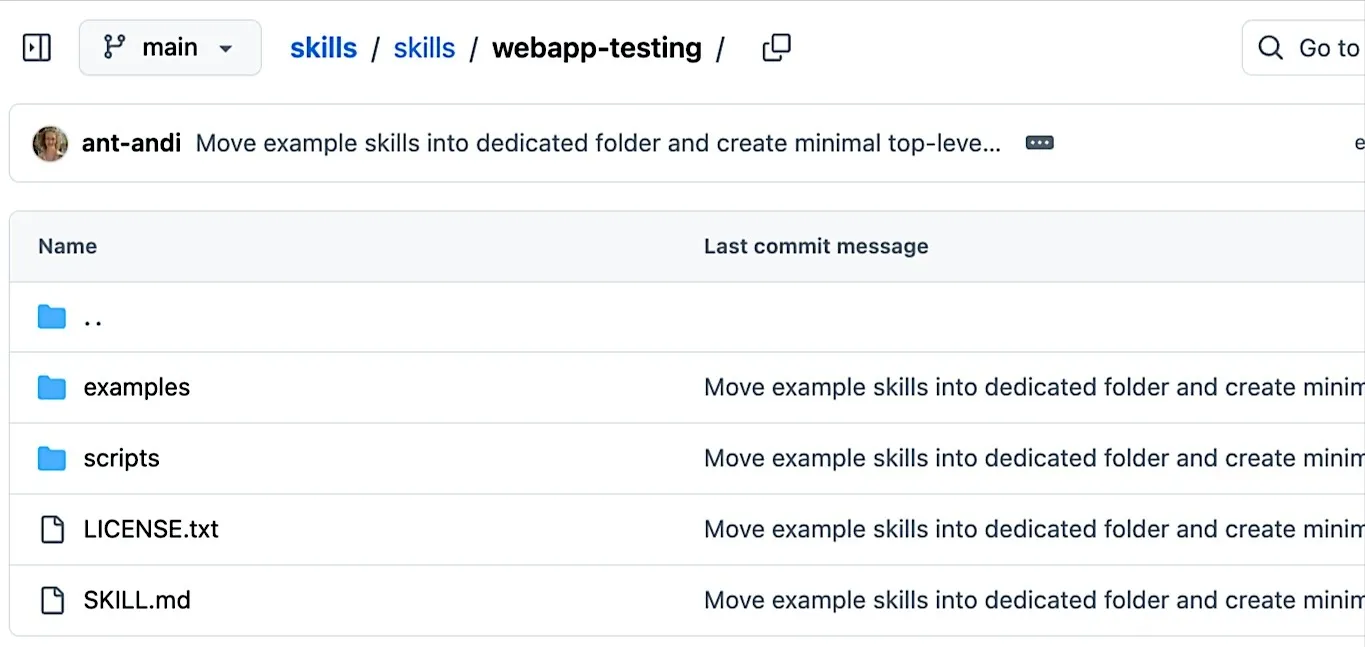
A Skill that enables Claude to simulate structured web application testing workflows. It supports automated verification of frontend functionality, UI debugging, browser screenshots, and log inspection.
Why it’s essential:
Automated agents need reliable validation of interactive web surfaces when they are integrated into QA pipelines, regression tests, or release workflows. Manual verification is slow, inconsistent, and doesn’t scale across environments. webapp-testing turns frontend testing into a shareable, repeatable agent capability.
Who it’s for:
QA engineers, frontend developers, platform teams, and DevOps groups who want to embed web UI checks into agentic workflows or CI/CD pipelines.
Use cases:
- Verify form behavior after a UI change before deployment
- Capture browser screenshots for visual regression analysis
- Debug UI issues automatically when triggered by regression tests
Example:
A QA team asks Claude to verify that all critical user journeys (login, checkout, search) still function after a frontend deployment. The Skill uses Playwright to interact with the app, captures screenshots on failure, and returns a structured report of broken paths and browser logs.
Partner & Third-Party Skills
5. Nimble Skills (Nimble official)
What it is:
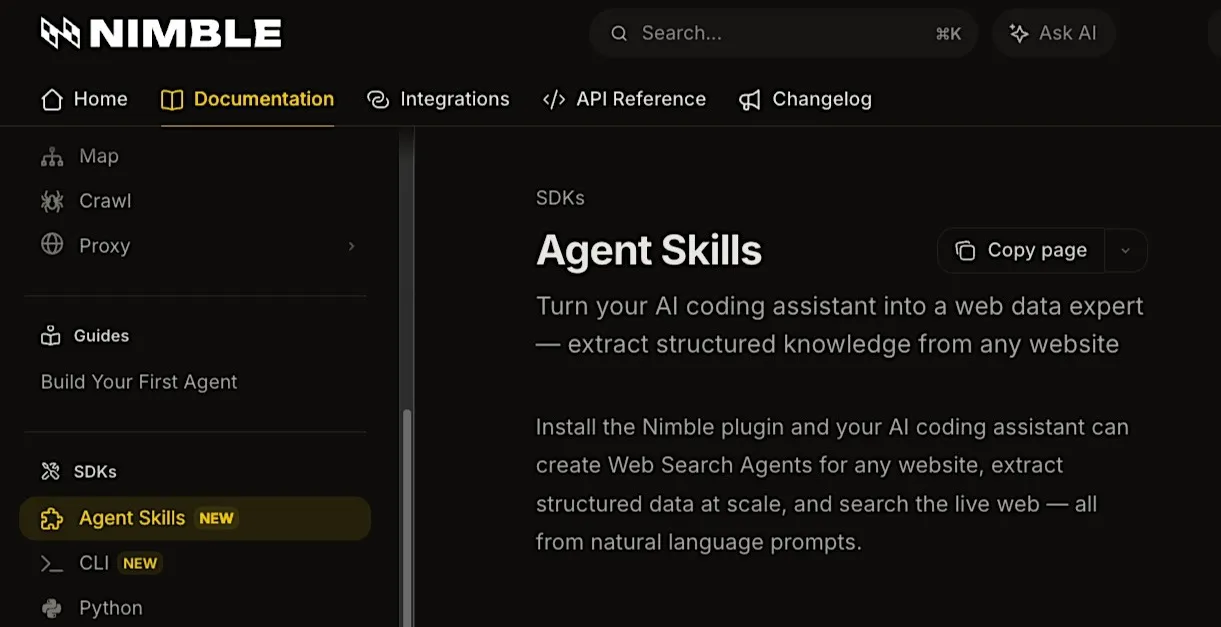
Nimble's official set of plug-and-play Claude Agent Skills that gives AI agents direct access to Nimble's web data infrastructure for live web search, structured extraction, and full business intelligence workflows.
The Skills are organized into two layers:
- Web Data Toolkit – Exposes Nimble's core web capabilities directly: real-time web search, page extraction, site mapping, crawling, and an agent-builder for creating reusable extraction pipelines via the Nimble CLI.
- Web Search Skills – One-command intelligence workflows that spawn parallel sub-agents, gather live web data via Nimble APIs, and deliver structured reports with verified dates and source URLs. Four workflow categories are included:
- Business Research: 360° company profiles, competitor monitoring, and market discovery
- Marketing: Competitor positioning tracking, messaging shifts, pricing changes, and content gap analysis
- SEO: Keyword research, rank tracking, technical site audits with JS rendering, content gap analysis, and AI search visibility across platforms
- Productivity: Meeting prep with attendee and company research, and local business discovery
Skills maintain a private local web knowledge index at ~/.nimble/memory/ that compounds across sessions, ensuring agents highlight only what has changed since the last run.
Why it’s essential:
Most web data approaches return raw text or unstructured HTML that agents must parse manually, which is brittle, slow, and unreliable at scale. Nimble Skills give Claude structured, validated, analysis-ready data at inference time, sourced from live web infrastructure.
The higher-order Web Search Skills go further by turning multi-step research workflows into a single agent command. That's the difference between an agent that demos well and one that holds up in production.
Who it’s for:
Data engineers, AI platform teams, analytics leads, pricing and competitive intelligence teams, SEO professionals, and developers building agents that depend on high-quality, real-time external data. Compatible with Claude Code, Cursor, and the Vercel Agent Skills CLI.
Use Cases:
- Compare pricing, availability, and product details across e-commerce sites and marketplaces.
- Run competitor monitoring workflows that track news, funding, hiring, and product launches.
- Perform live SEO audits and content gap analyses without manual tooling.
- Prepare for meetings with structured attendee and company research pulled from live web sources.
- Build real-time competitive dashboards that feed directly into pricing or promotion automation.
Example:
A pricing team asks Claude to monitor a competitor's product page for pricing changes and summarize the last week of activity. A Nimble Web Search Skill orchestrates live extraction via the Web Data Toolkit, deduplicates against the previous run stored in the local knowledge index, and returns a structured report of only what's new, with no manual scraping, brittle parsers, or stale data to contend with.
6. Hugging Face LLM Trainer (Hugging Face official)
What it is:
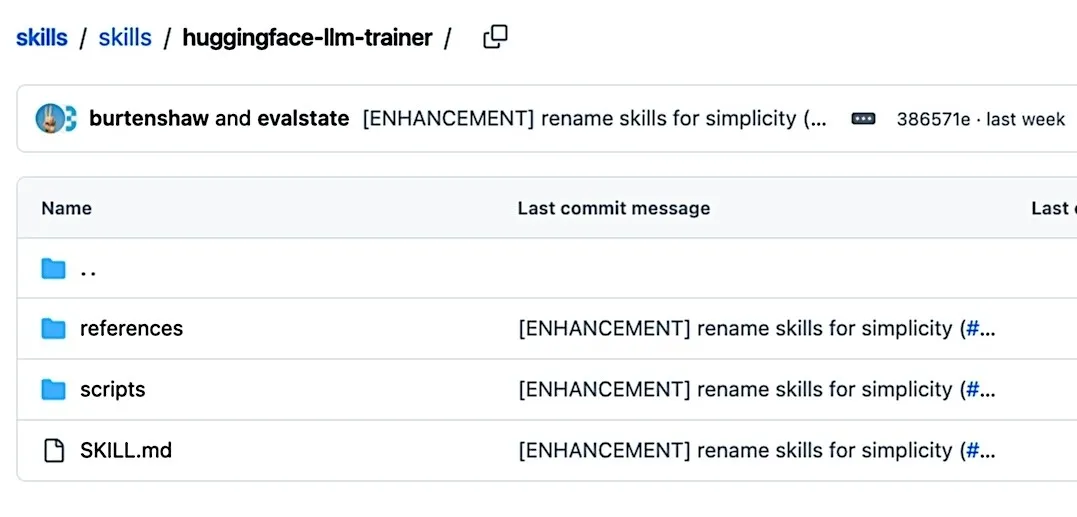
Hugging Face is a popular open AI platform for sharing, building, and deploying machine learning models. The LLM Trainer Skill allows Claude to manage end-to-end model training workflows via Hugging Face's TRL library and Hugging Face Jobs infrastructure.
It encodes pipelines for Supervised Fine-Tuning (SFT), Direct Preference Optimization (DPO), Group Relative Policy Optimization (GRPO), and GGUF conversion for local deployment, covering the full range of modern LLM fine-tuning approaches from small focused models up to 70B parameters.
Why it’s essential:
Production AI systems often require domain-specific fine-tuning. Encoding the pipeline methodology with huggingface-llm-trainer means Claude applies consistent best practices across training runs rather than improvising the approach each time.
Who it’s for:
ML engineers and AI research teams building or refining domain-specific models.
Use Cases:
- Fine-tuning LLMs on proprietary corpora using SFT, DPO, or GRPO
- Running training experiments on Hugging Face cloud GPUs
- Converting trained models to GGUF for local deployment
- Managing model evaluation pipelines
Example:
An AI team instructs Claude to fine-tune a classification model on curated web-sourced training datasets. The Skill selects appropriate hardware, submits the job to Hugging Face Jobs, monitors progress, and summarizes evaluation metrics automatically.
7. Hugging Face Datasets
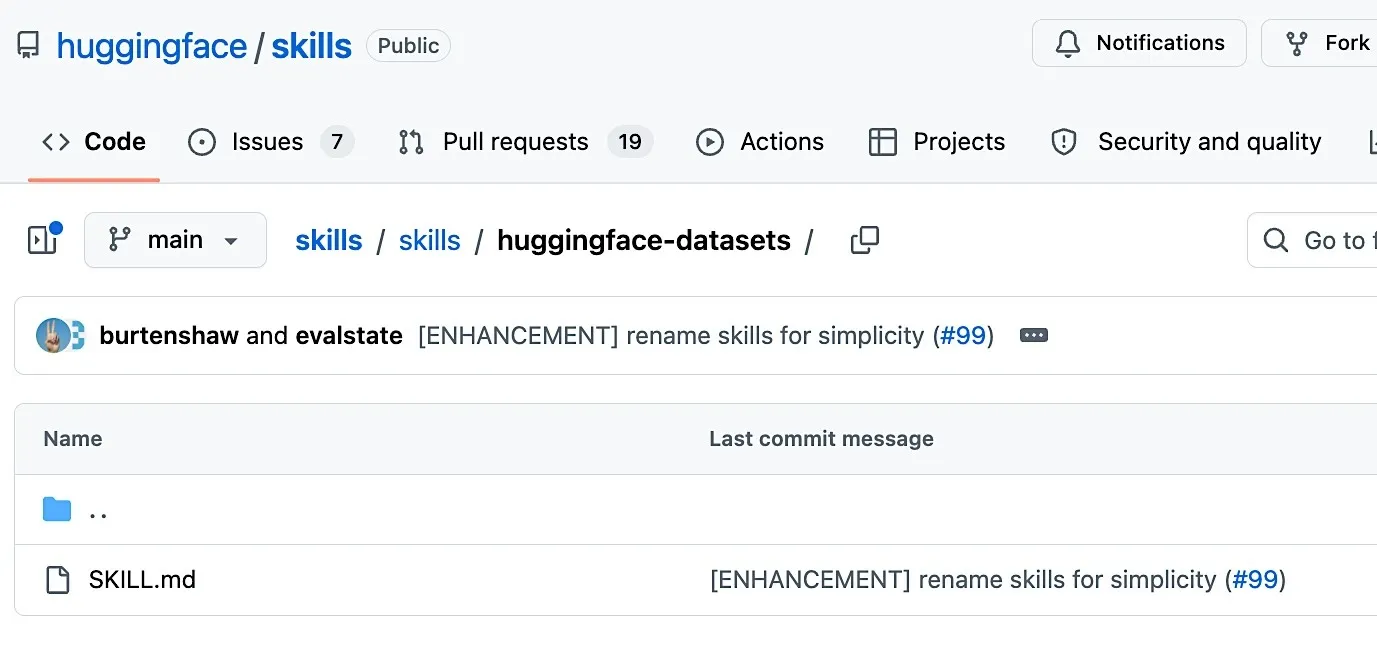
What it is:
This official Hugging Face Agent Skill is designed for creating and managing datasets with configs and SQL querying on the Hugging Face Hub.
Why it’s essential:
Dataset preparation is repetitive and error-prone. This Skill encodes the workflow for creating, versioning, and querying datasets consistently, which makes it directly relevant to teams building AI and LLM training pipelines from web-sourced data.
Who it’s for:
AI engineers and data teams building inference-ready training pipelines or managing large structured datasets.
Use Cases:
- Creating and configuring new datasets on the Hugging Face Hub
- Versioning datasets across training pipeline iterations
- Querying structured datasets via SQL for validation and inspection
- Publishing curated web content as analysis-ready training data
Example:
An LLM company uses a Claude agent with the huggingface-datasets Skill to process, structure, and publish batches of curated web content as versioned Hugging Face datasets, ready for training pipeline ingestion.
8. Tinybird Best Practices
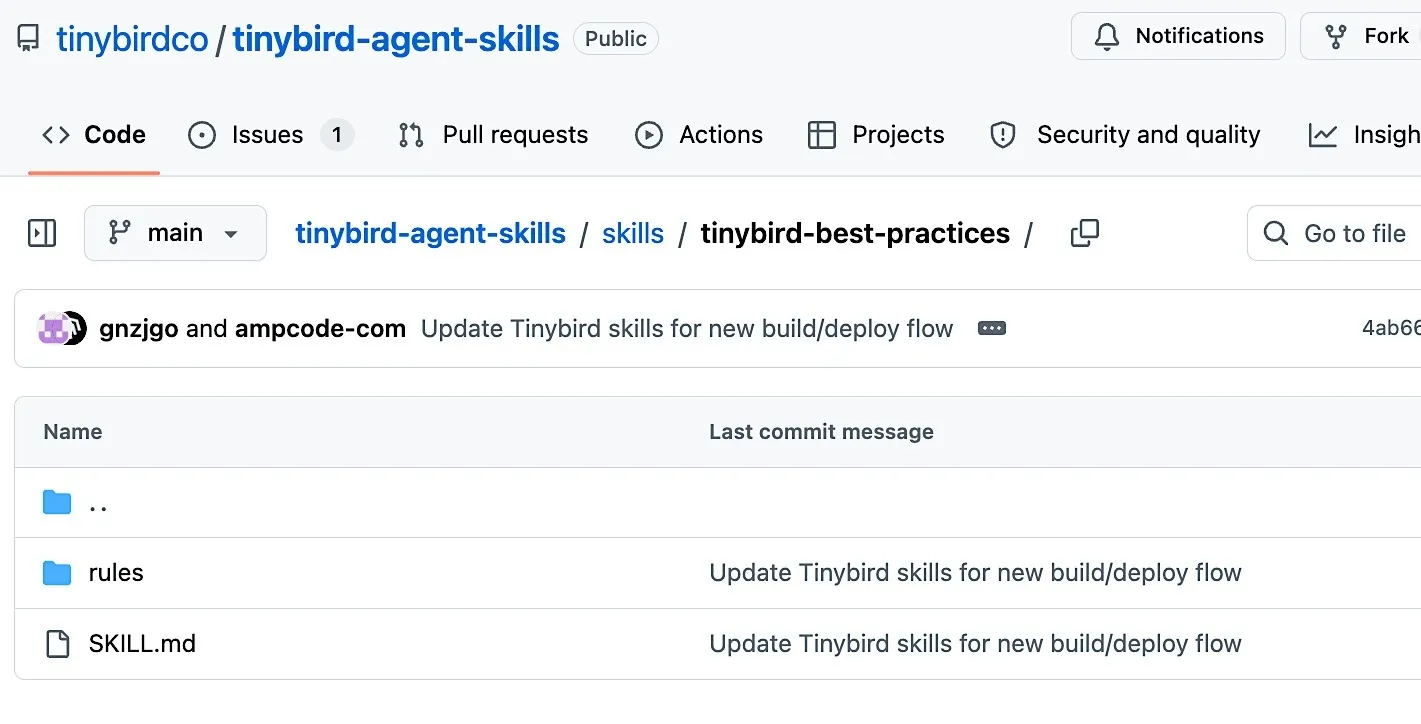
What it is:
Tinybird is a data platform for data and engineering teams to solve complex real-time, operational, and user-facing analytics use cases at any scale, and one of the key ways they do this is through a series of Claude-compatible Skills.
This Skill encodes Tinybird project guidelines for datasources, pipes, endpoints, and SQL to provide the methodology for building real-time analytics APIs on top of streaming data.
Why it’s essential:
Real-time analytics infrastructure requires consistent patterns to perform reliably at scale. tinybird-agent-skills ensures Claude follows Tinybird's actual production conventions when scaffolding or modifying data pipelines, rather than generating generic SQL that breaks under production load.
Who it’s for:
Data engineers and analytics engineers building high-throughput, low-latency data pipelines.
Use Cases:
- Scaffolding Tinybird datasources and pipe definitions
- Designing and validating real-time data endpoints
- Optimizing SQL queries for streaming analytics performance
- Generating endpoint definitions from structured web data feeds
Example:
A data engineering team uses this Skill to have Claude generate Tinybird endpoint definitions from structured web data feeds, enabling real-time market signal dashboards for business teams.
9. Sentry Code Review
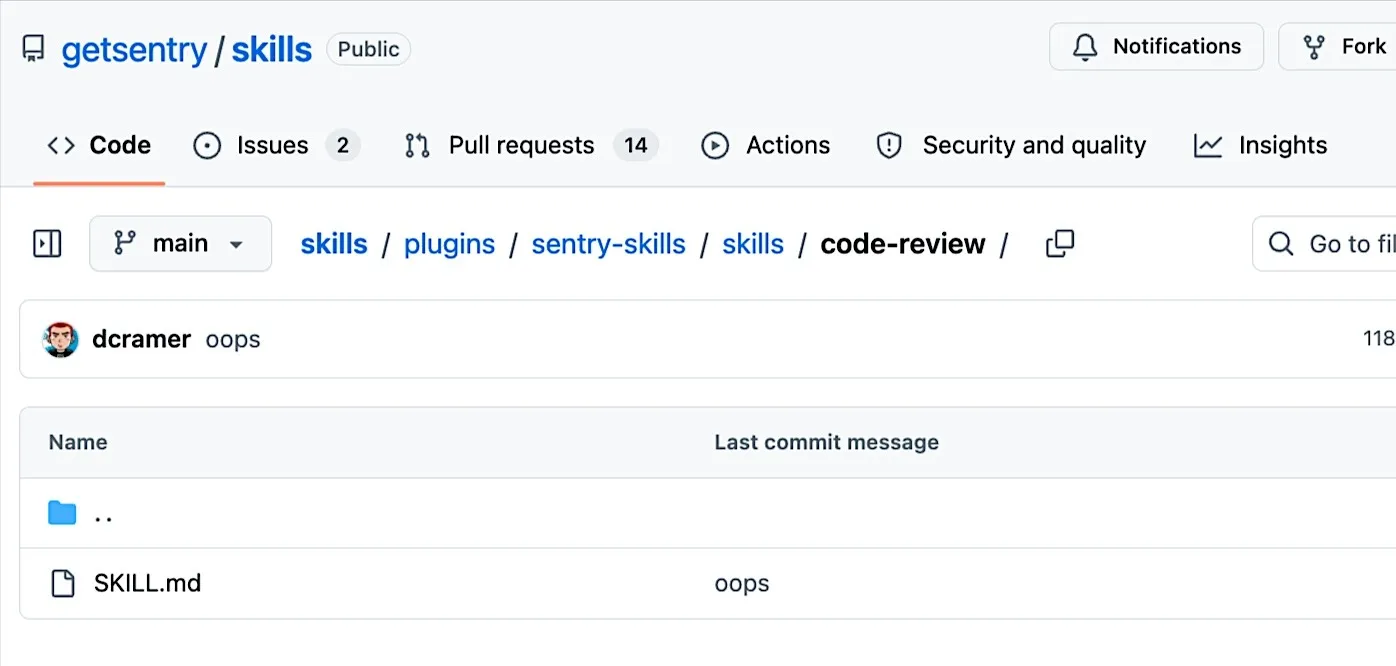
What it is:
Channeling the engineering standards and monitoring of Sentry’s platform, this Skill enables Claude Code to perform structured, production-aware code reviews. It checks for error handling patterns, monitoring gaps, and production readiness across pull requests, and can automatically analyze and resolve issues flagged by Sentry's bot in GitHub PR comments.
Why it's essential:
Code review quality is inconsistent without guardrails. This Skill encodes production-oriented review criteria so Claude Code issues are flagged that matter in live environments, not just syntactic concerns. For teams running data pipelines or agent infrastructure, catching monitoring and error handling gaps before merge is critical.
Who it's for:
Engineering leads and development teams using Claude Code in production workflows, particularly those with Sentry instrumentation already in place.
Use cases:
- Performing structured code reviews against Sentry engineering standards
- Automatically resolving issues flagged by Sentry's bot in PR comments
- Checking for proper error handling and monitoring coverage before merge
- Validating production readiness of data pipeline services
Example:
A backend team installs this Anthropic agent skill so every Claude Code-assisted code review checks for proper error handling and Sentry instrumentation before PRs are merged into data pipeline services.
Community Agent Skills
10. Competitive Ads Extractor
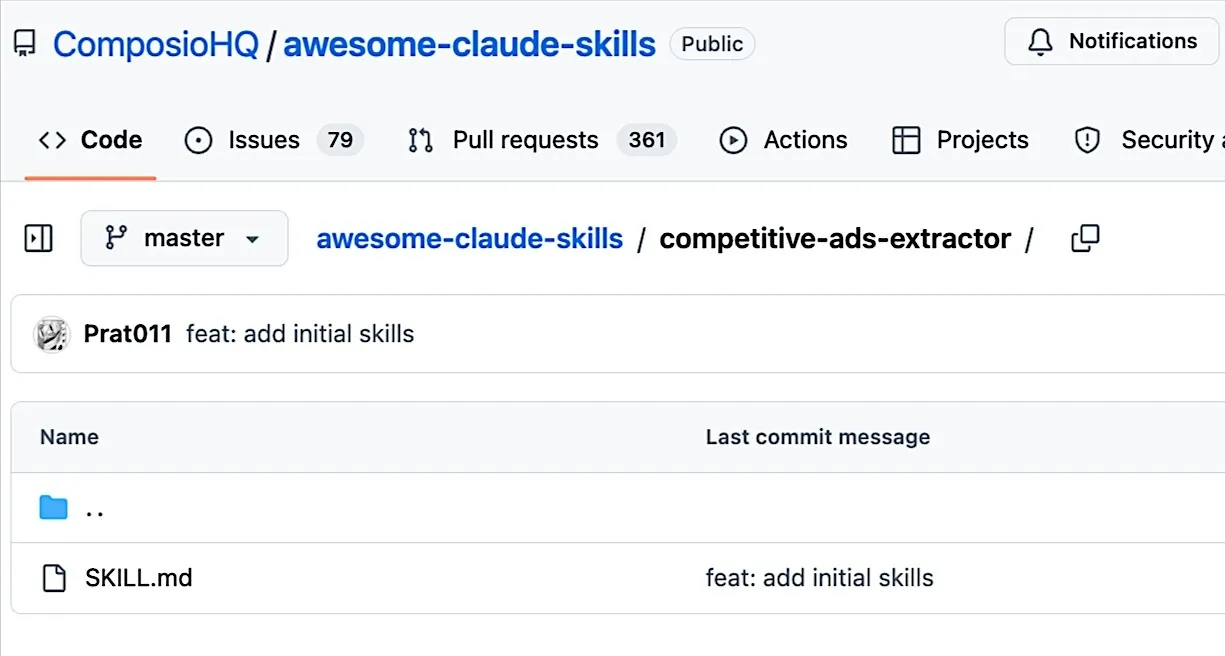
What it is:
The Composio community is a group of developers and users building and sharing AI agent tool integrations using the Composio platform. This community-published Claude Skill that extracts competitors’ ads from ad libraries (like Facebook Ad Library and LinkedIn), captures creative assets, and analyzes messaging to identify patterns and positioning strategies.
Why it’s essential:
Understanding competitor messaging and creative tactics is critical for B2B marketing, product positioning, and go-to-market strategy. Rather than manually browsing ad libraries, this Skill automates extraction and analysis, surfacing the problems competitors emphasize and the formats that resonate.
Who it’s for:
Marketing analytics, competitive intelligence teams, product strategy groups, and growth leaders who need structured insights from competitor advertising without manual research.
Use Cases:
- Extract and categorize competitor ads across platforms
- Identify messaging themes that drive resonance
- Compare creative approaches across competitors
Example:
A growth team asks Claude to pull all active Facebook ads for a competitor and summarize the common messaging themes. competitive-ads-extractor extracts ad creative, groups patterns (e.g., pain points, calls to action), and returns a structured analysis rather than raw screenshots.
Anthropic Agent Skills Define the Logic, But Data Determines the Outcome
Anthropic Skills mark a structural shift away from one-off prompting and toward modular capabilities that persist, auto-invoke, and scale. Reusable Claude Skills, data integrations, and execution layers make agent behavior consistent under real-world conditions. The Skills covered here are powerful starting points, but their production value in practice also depends on the quality and freshness of the data they operate on. For Skills that interact with pricing, inventory, competitive signals, or live web content, structured real-time data is critical
Nimble's Web Search Agent Platform delivers live, structured data from public websites through resilient infrastructure built for AI teams. It includes native support for JavaScript rendering, anti-blocking, self-healing extraction, and analysis-ready outputs. Claude Skills help define how agents should behave, and Nimble ensures the web data those agents depend on is fresh, structured, and reliable at production scale. And to give Claude Agents direct access to Nimble's Web Search Agent Platform, leverage Nimble Skills.
Book a Nimble demo to discover how its Web Search Agent Platform can power your Claude agent workflows with live, structured web data.
FAQ
Answers to frequently asked questions
.webp)
.webp)

.webp)
.webp)

.webp)