









Top 14 AI Agent Tools for Company Research in 2026
How retrieval APIs, research agents, browser tools, and GTM and finance platforms handle company research.



Nimble's Expert
Top 14 AI Agent Tools for Company Research in 2026
How retrieval APIs, research agents, browser tools, and GTM and finance platforms handle company research.
Nimble's Expert


Most popular articles


Get structured, reliable data for your stack.
Abstract
AI agent tools for company research automate retrieval, browsing, extraction, or multi-step research across current business information.
The right choice depends on research depth, source access, structured outputs, traceability, persistent context, and workflow control.
AI agent tools can automate much of the work behind company research, from finding current company data to investigating competitors, preparing account briefs, and supporting due diligence.
Tools in this category handle different parts of the research process. Some retrieve search results or webpage content for another application to process. Others plan research, search multiple sources, browse and extract information, cross-check findings, and return a cited report or structured dataset.
Production workflows make these differences more consequential. The right tool depends on the depth of research you need, the sources it must reach, the output your application expects, and how much control you need over the research process.
McKinsey’s 2026 State of AI survey found that 40% of respondents from organizations with more than $1 billion in annual revenue were scaling AI agents in at least one business function, up from 27% the previous year. As more companies move AI agents into production, the quality of the web retrieval and research infrastructure behind them matters more.
Top Recommendations by Company Research Workflow
- Nimble Web Search Agents: Recommended for multi-step web research that needs task-specific retrieval, structured outputs, citations, source controls, and repeatable research workflows.
- Parallel Task API: Recommended for programmable deep-web research where developers want to define a research task and output schema.
- Exa Websets: Recommended for discovering and enriching collections of companies or other web entities from complex criteria.
- Clay Account Research Agents: Recommended for GTM teams that want company research tied to account context and sales workflows.
- AlphaSense Deep Research: Recommended for financial and market research that depends on premium business content alongside proprietary data.
Top 14 AI Agent Tools for Company Research
1. Nimble Web Search Agents: Recommended for repeatable, multi-source web research
Recommended for: AI teams building company research, competitive intelligence, due diligence, enrichment, and monitoring workflows.
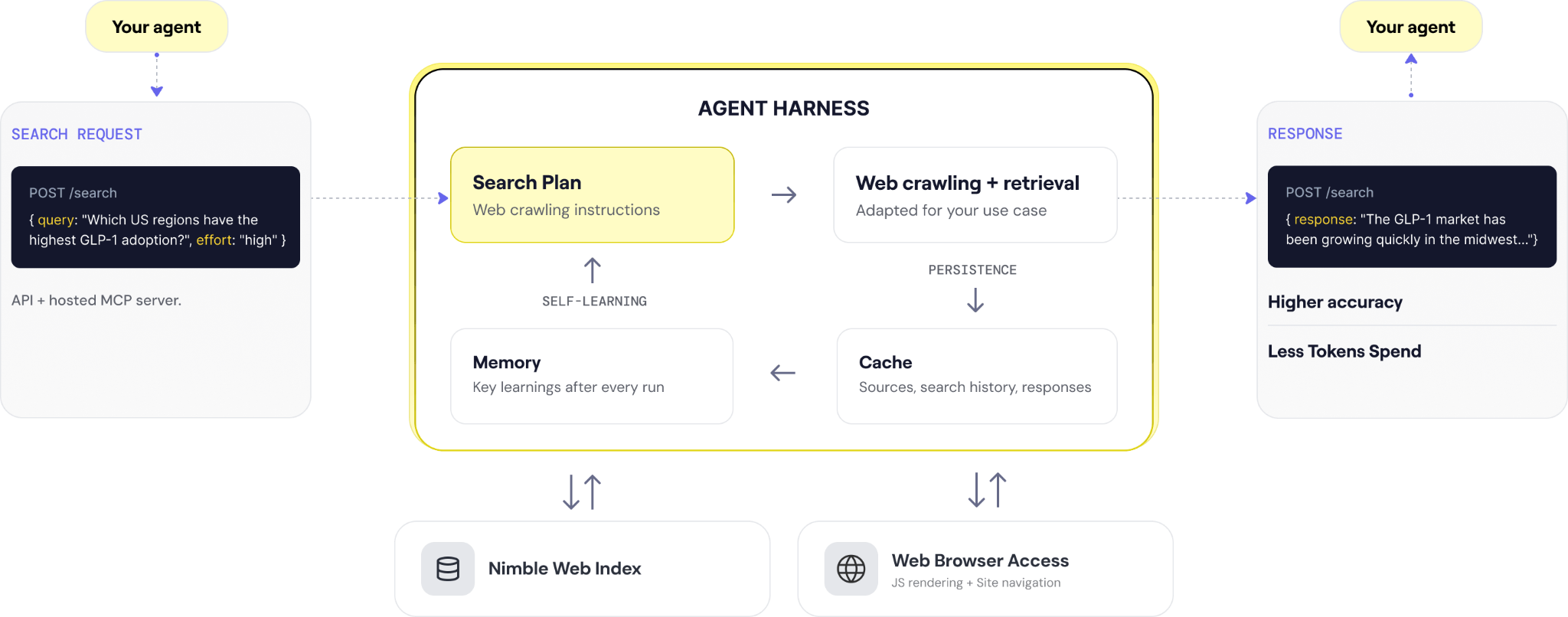
Nimble Web Search Agents handle multi-step research from planning through synthesis. Teams define the objective, sources, effort, and output requirements, while the agent can build a Search Plan, search and browse the web, crawl useful sources, cross-check findings, and return cited prose or schema-constrained output.
For repeat workflows, Nimble can specialize retrieval around the task, sources, vocabulary, success criteria, and output schema. Memory records effective retrieval paths, with storage for prior outputs, sources, and search history.
For simpler retrieval, teams can use Nimble's Search + Extract APIs and keep reasoning and orchestration in their own application.
Key capabilities
- Builds Search Plans for multi-step research tasks for auditability.
- Uses adaptive search and crawling to search broadly and go deeper into useful sources.
- Searches, browses, extracts, cross-checks, and reasons across web sources.
- Returns cited prose or schema-constrained structured outputs.
- Supports governed retrieval through source controls, confidence scoring, citations, and schema enforcement.
- Uses memory and a private index to retain useful retrieval paths, outputs, sources, and search history.
Pricing and availability: Pricing depends on effort levels and usage. See here for details.
2. Parallel Task API: Recommended for programmable multi-step web research
Recommended for: Developers turning complex research jobs into repeatable API workflows.
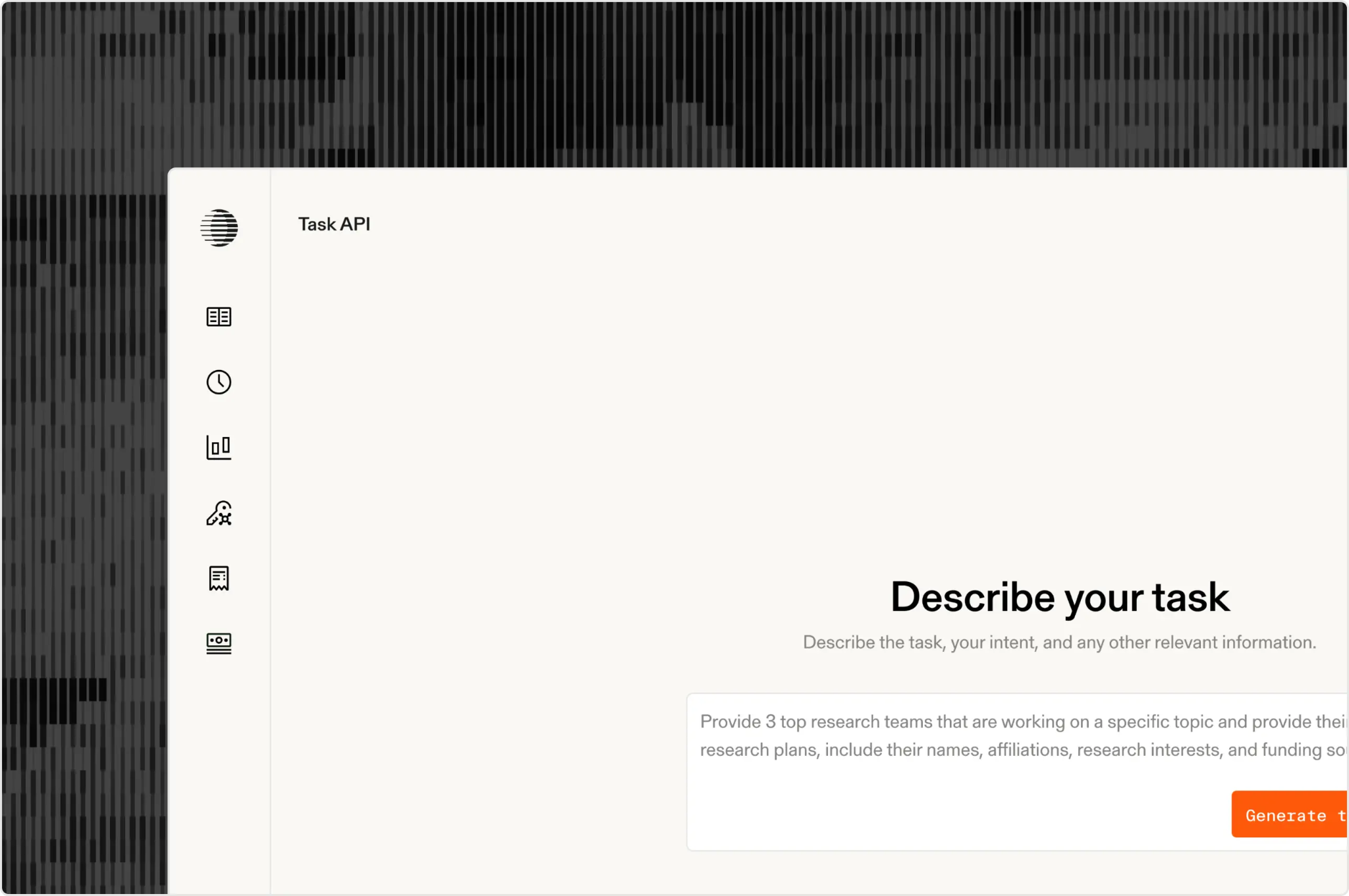
Parallel's Task API combines web search, crawling, and model inference. Developers can define tasks in natural language or JSON and specify structured output schemas for company enrichment, database building, product research, and other open-ended research jobs.
Key capabilities
- Combines web search, crawling, and AI inference.
- Accepts natural-language objectives or JSON-defined output schemas.
- Supports stateful follow-up research.
Pricing and availability: Public API pricing is usage-based and varies by processor and research depth. Enterprise plans are also available.
3. Exa Websets: Recommended for company discovery and list building
Recommended for: Teams finding sets of companies that match detailed criteria.
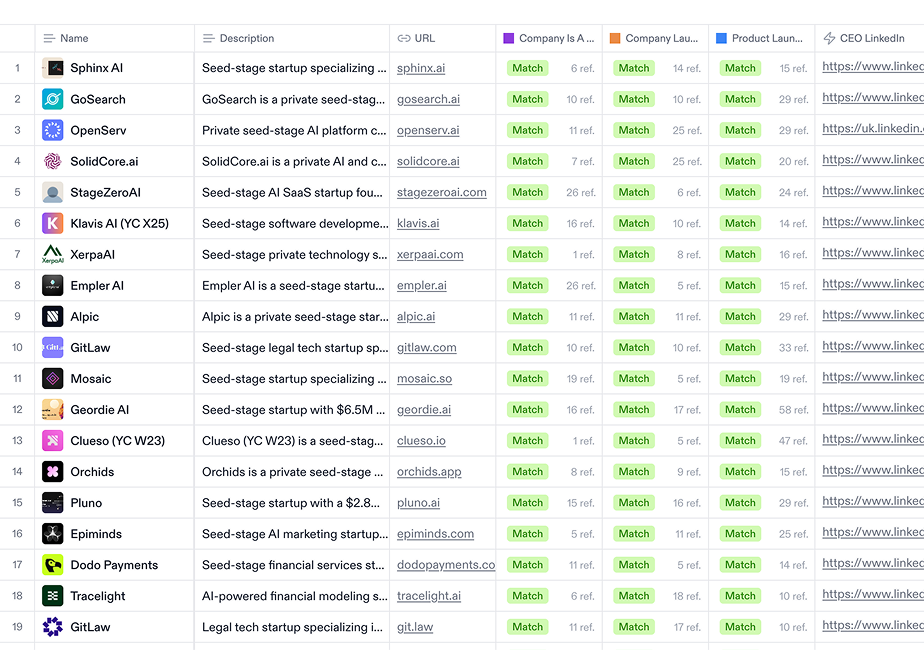
Exa Websets lets users describe the companies or other entities they want, then add AI-driven enrichment columns for further research. Company discovery is its strongest fit, including searches for startups by funding stage, technology profile, location, or recent activity.
Key capabilities
- Finds companies and other entities from natural-language criteria.
- Adds enrichment columns to discovered entities.
- Provides API access for downstream workflows.
4. Tavily Research API: Recommended for developer-oriented research workflows
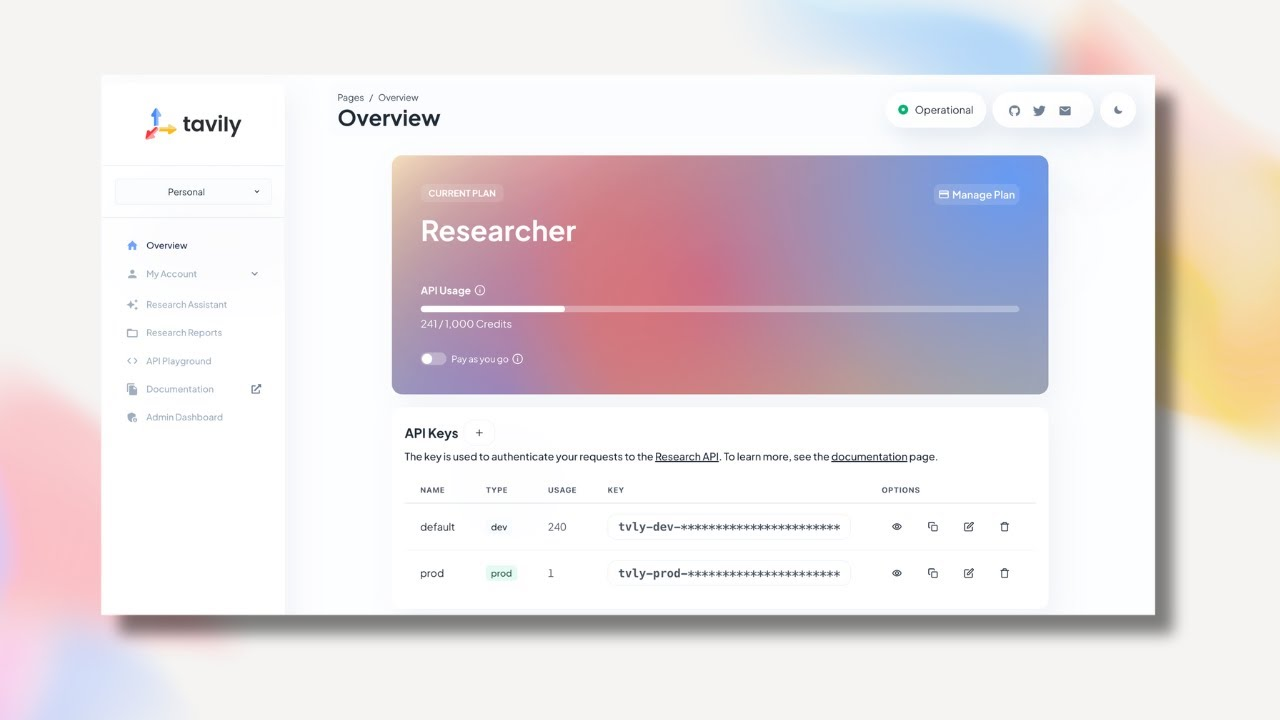
Recommended for: AI developers adding web research to applications through an API.
Tavily extends its web-search infrastructure into research-oriented workflows for applications that need more than a single search request. Its main appeal for company research is developer accessibility and the ability to use search and extraction capabilities within the same stack.
Key capabilities
- Supports deeper research-oriented API workflows.
- Uses an API-credit model for programmatic usage.
- Offers higher limits and enterprise options for production deployments.
Pricing and availability: A free tier and paid API plans are available. Usage is credit-based, with custom Enterprise options for higher-volume deployments.
5. Perplexity Agent API: Recommended for model-driven web research
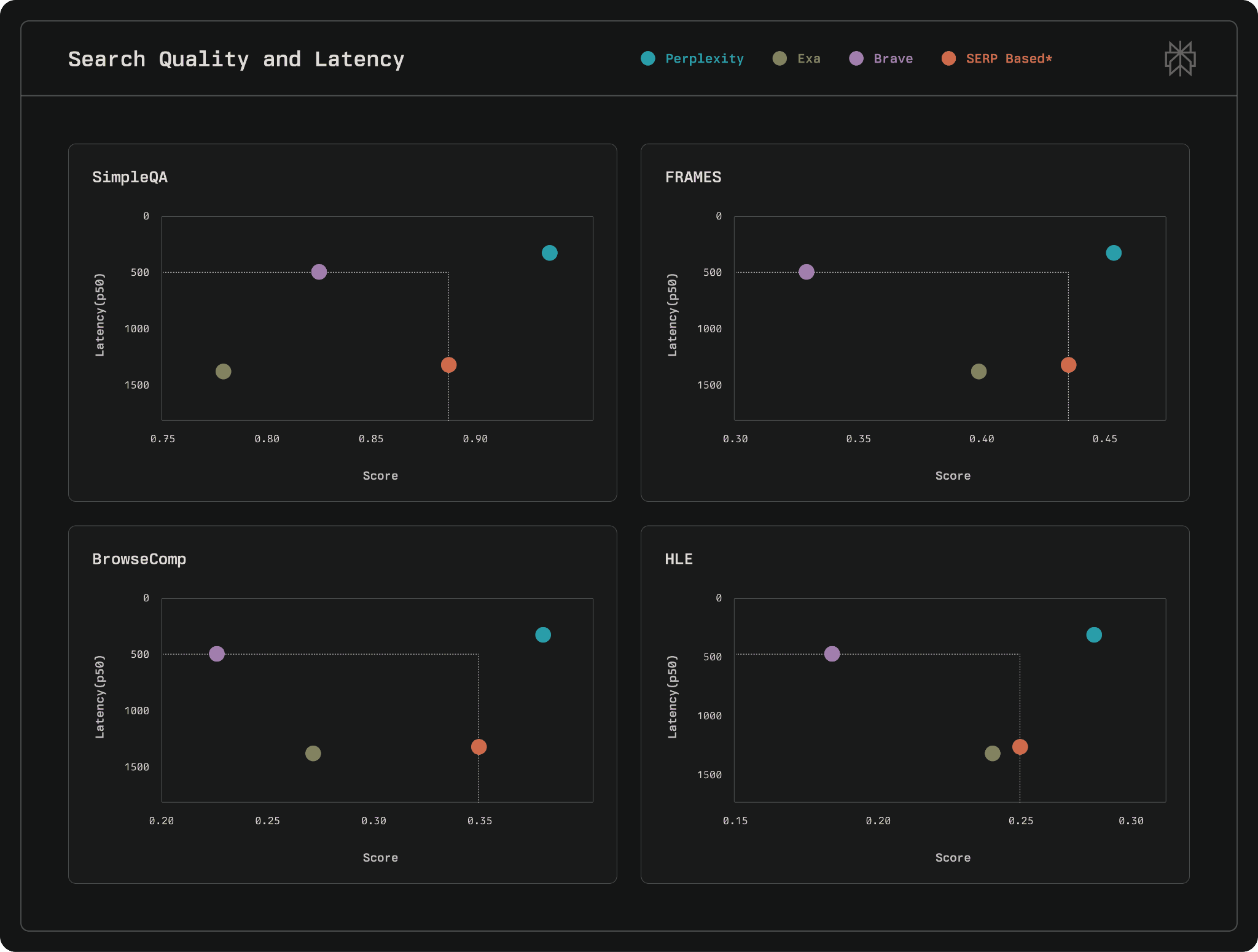
Recommended for: Developers who want web search, reasoning, filters, and structured workflows through one API.
Perplexity's current developer stack separates complex agentic workflows from lighter search-oriented use cases. Its Agent API supports model reasoning, tool use, structured outputs, and web-search controls, while Search and Sonar APIs cover simpler retrieval and answer-generation workflows.
Key capabilities
- Provides domain and recency controls for web research.
- Supports tool-driven agent workflows.
- Sits alongside lighter Search and Sonar APIs.
Pricing and availability: Public API access is available. Agent API costs depend on the selected model, tools, and usage.
6. Firecrawl Agent: Recommended for autonomous web data gathering
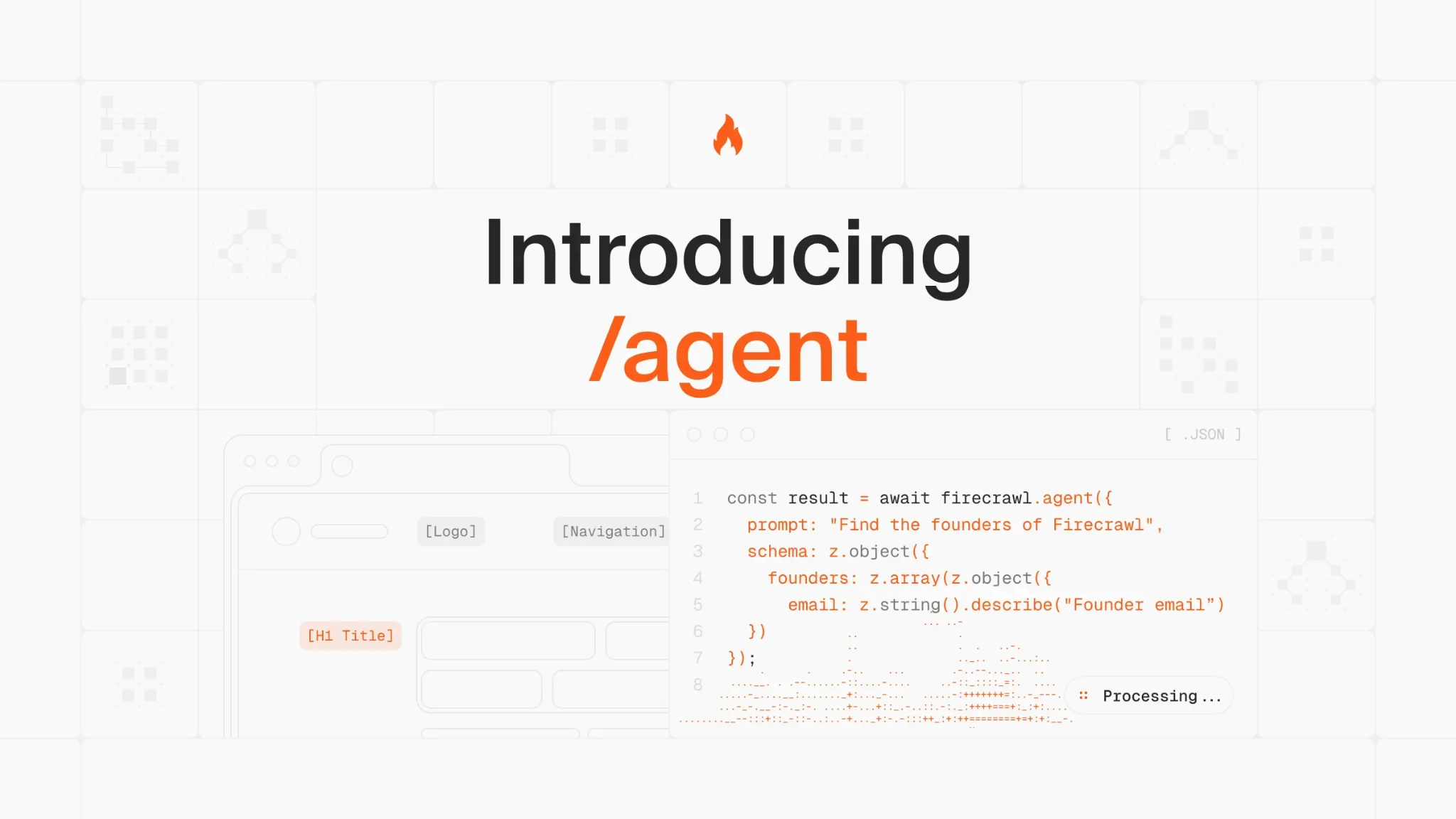
Recommended for: Developers that need a hosted agent to discover, navigate, and extract web data.
Firecrawl’s hosted /agent product accepts a research prompt, searches the web, navigates relevant sites, and returns structured information. It is useful when teams want an agent to find the necessary sources rather than supplying every URL in advance. Firecrawl describes the hosted /agent as being in research preview, so buyers should factor product maturity into production evaluations.
Key capabilities
- Hosted /agent searches the web, navigates relevant sites, handles dynamic content and pagination, and returns structured data
- Hosted /agent is currently described by Firecrawl as being in research preview
- The separate open-source firecrawl-agent framework lets developers choose their model, customize agent logic, and deploy the agent stack on their own infrastructure
Pricing and availability: Firecrawl’s hosted Agent is available through its API and SDKs.
7. Yutori Research API: Recommended for wide, one-shot web investigations
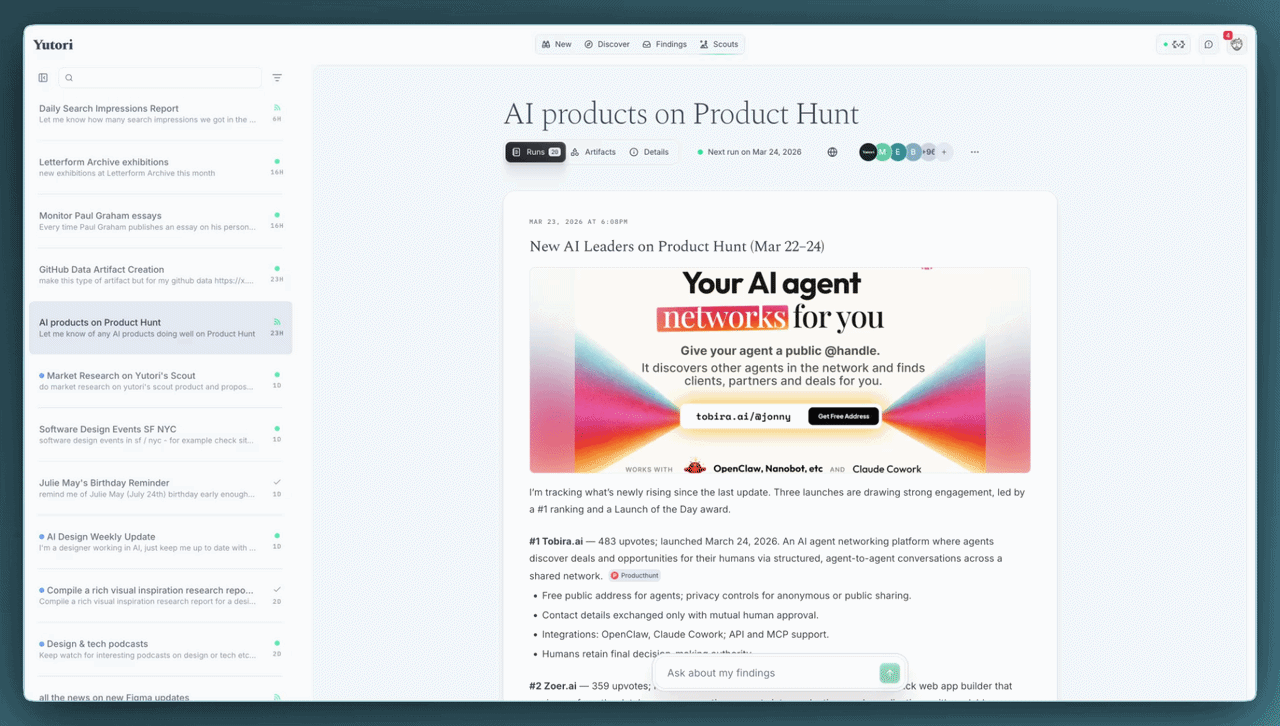
Recommended for: Applications that need a broad research task completed through an API.
Yutori's Research API runs wide, multi-source investigations from a single research objective. Developers can use it for market or company research without orchestrating each individual search step.
Key capabilities
- Runs wide and deep web research tasks.
- Uses a multi-agent research process.
- Cross-references sources.
Pricing and availability: Public API access is available on a usage basis, with enterprise options for larger deployments.
8. Browser Use: Recommended for browser-based company research automation
Recommended for: Developers whose research workflow requires direct interaction with websites.
Browser Use provides an open-source browser automation library alongside hosted cloud infrastructure. Its agents can execute natural-language tasks in a remote browser, which suits research that requires forms, clicks, authenticated sessions, or other direct website interaction.
Key capabilities
- Provides cloud browser infrastructure and an open-source library.
- Supports persistent browser profiles and proxies.
- Can interact with pages through clicks, forms, and other browser actions.
Pricing and availability: Browser Use Cloud uses pay-as-you-go pricing, while the open-source library can be self-hosted.
9. Gumloop AI Web Scraping Agent: Recommended for no-code research workflows
Recommended for: Operations and business teams that want web research connected to workflow automation.
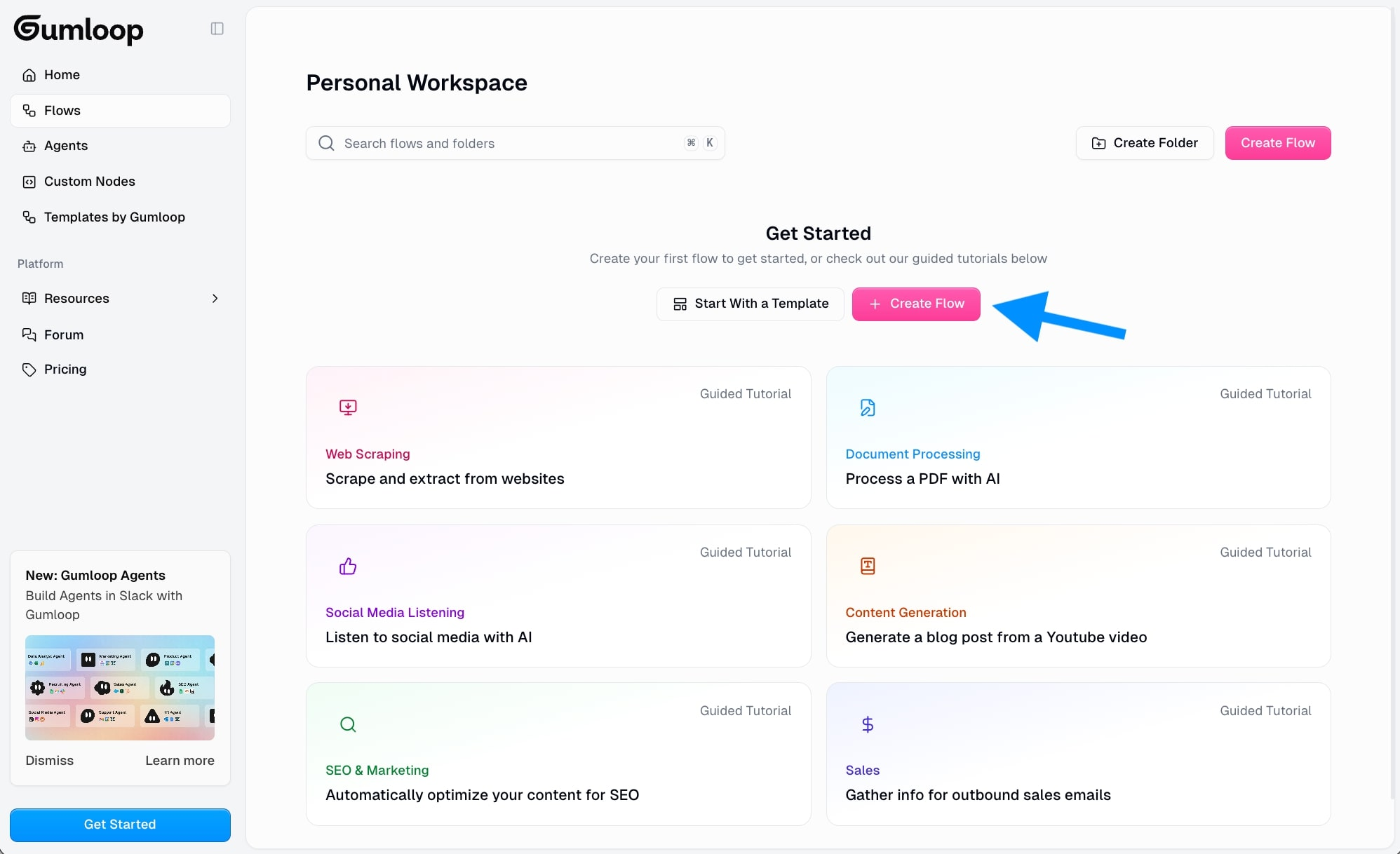
Gumloop's AI Web Scraping Agent can search, scrape, and cross-reference web sources before returning structured outputs. Its broader workflow platform makes it useful when company research needs to feed spreadsheets, internal systems, or automated business processes.
Key capabilities
- Searches and scrapes web sources within automated workflows.
- Can cross-reference information from multiple sources.
- Connects research tasks to broader no-code workflows.
Pricing and availability: Gumloop uses usage-based pricing tied to model and compute consumption, with additional enterprise options.
10. Clay Account Research Agents: Recommended for GTM account intelligence
Recommended for: Sales and RevOps teams researching target and existing accounts.
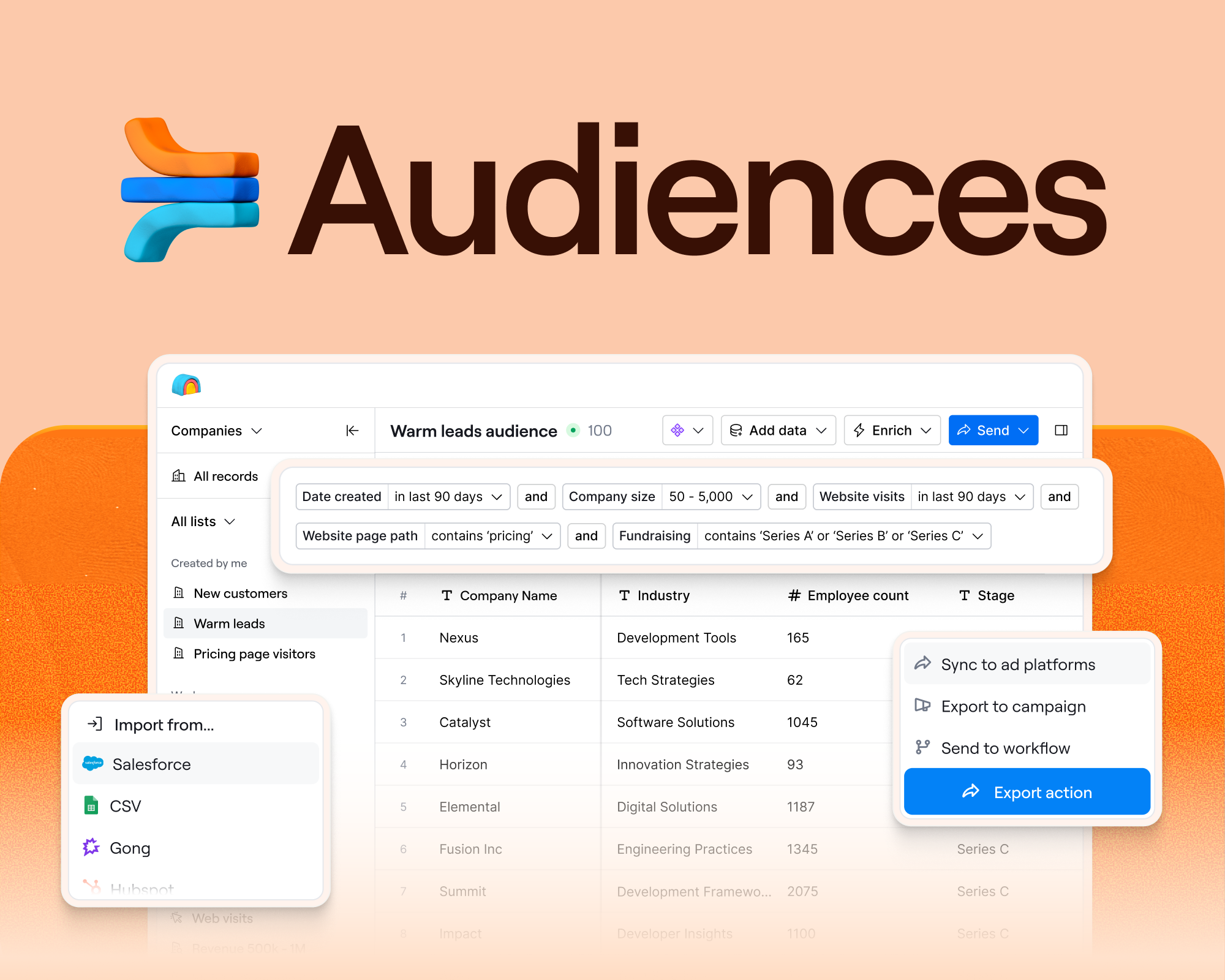
Clay Account Research Agents focus on building and maintaining account intelligence within GTM workflows. They combine external research with CRM and company context so teams can investigate accounts without treating research as a separate process.
Key capabilities
- Combines external research with CRM and account context.
- Uses AI web research for custom data points.
- Feeds findings into CRM and sales workflows.
Pricing and availability: Account Research Agents are in open beta and available on Launch, Growth, and Enterprise plans.
11. Relevance AI Sales Researcher: Recommended for pre-call company research
Recommended for: Sales teams that want configurable prospect and company briefs.
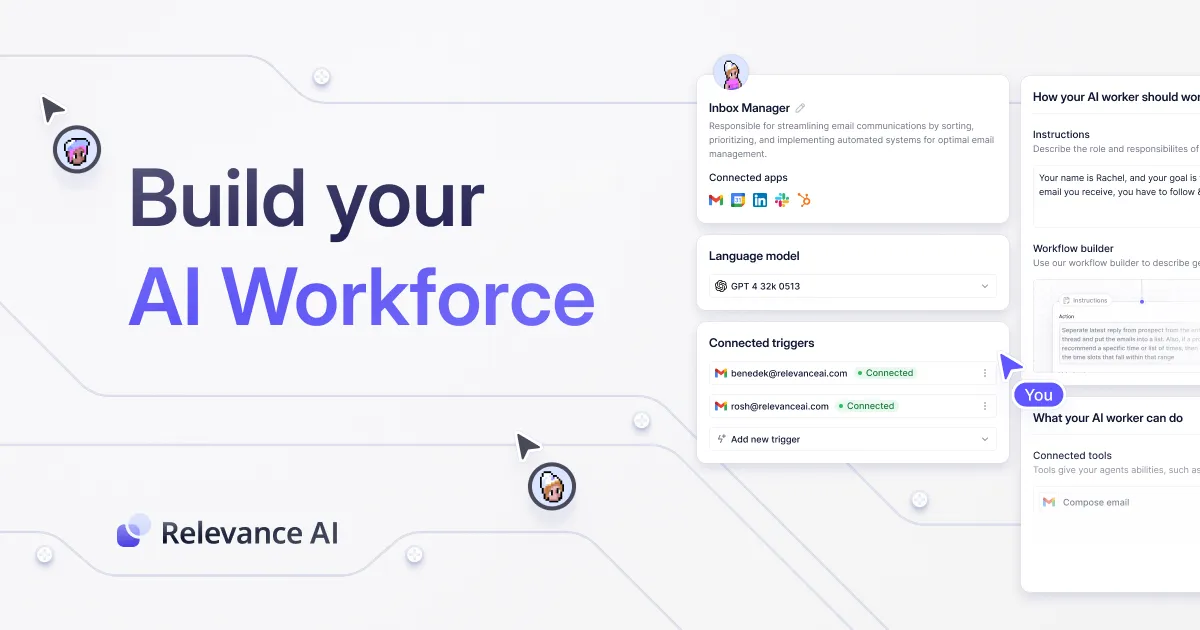
Relevance AI's Sales Researcher brings together web and company sources to produce prospect research. Teams can clone and customize the agent, adjust its research process, and connect it to Relevance AI's wider agent and workflow platform.
Key capabilities
- Researches prospects across web and company sources.
- Can use company websites, web search, professional profiles, and hiring information.
- Generates sourced prospect briefs.
Pricing and availability: Relevance AI offers a free plan plus paid Pro, Team, and Enterprise tiers.
12. Hebbia Matrix: Recommended for document-heavy financial research
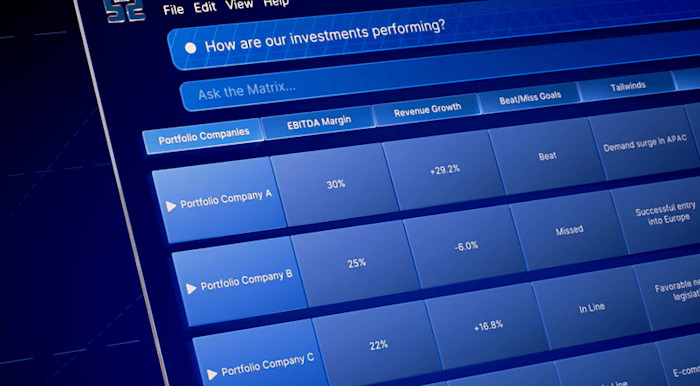
Recommended for: Finance, investment, legal, and consulting teams researching companies across large document collections.
Hebbia Matrix organizes research in a table-style workspace and is designed for analytical work involving large collections of documents, companies, filings, transcripts, and other source material.
Key capabilities
- Applies repeatable questions across many sources.
- Organizes findings in a matrix-style workflow.
- Preserves traceability back to source material.
Pricing and availability: Not publicly disclosed. Prospective customers need to contact Hebbia.
13. AlphaSense Deep Research: Recommended for market and financial intelligence
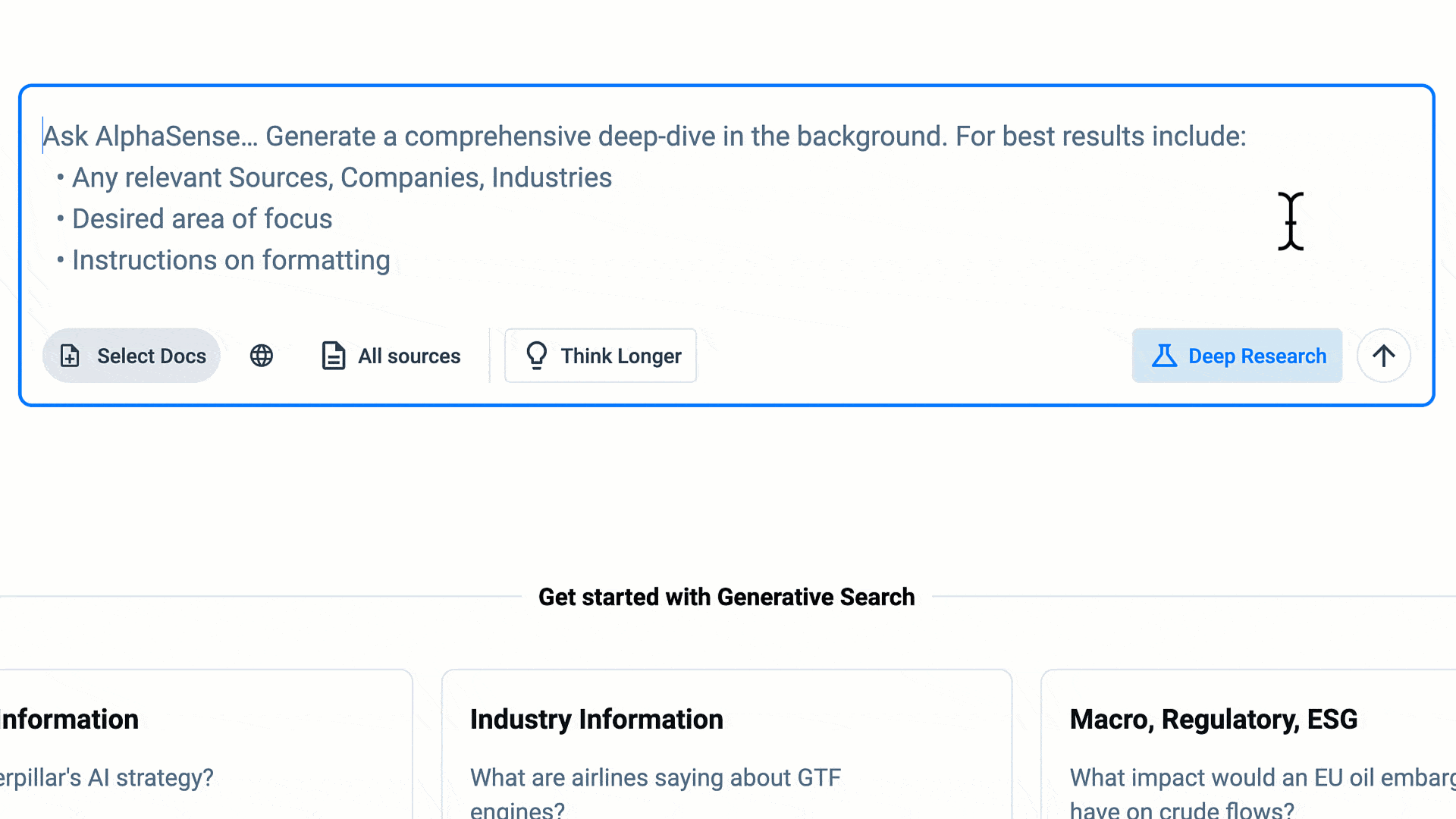
Recommended for: Investment, strategy, corporate development, and market-intelligence teams.
AlphaSense Deep Research builds a multi-step research plan, performs iterative searches, reasons over findings, and produces cited analysis. Can incorporate a firm's proprietary internal content through AlphaSense Enterprise Intelligence.
Key capabilities
- Builds multi-step research plans.
- Performs iterative searches across business and financial sources.
- Produces cited analysis.
Pricing and availability: Not publicly disclosed as a fixed self-serve price. AlphaSense sells annual subscriptions through its sales team.
14. Rogo: Recommended for finance-specific company research workflows
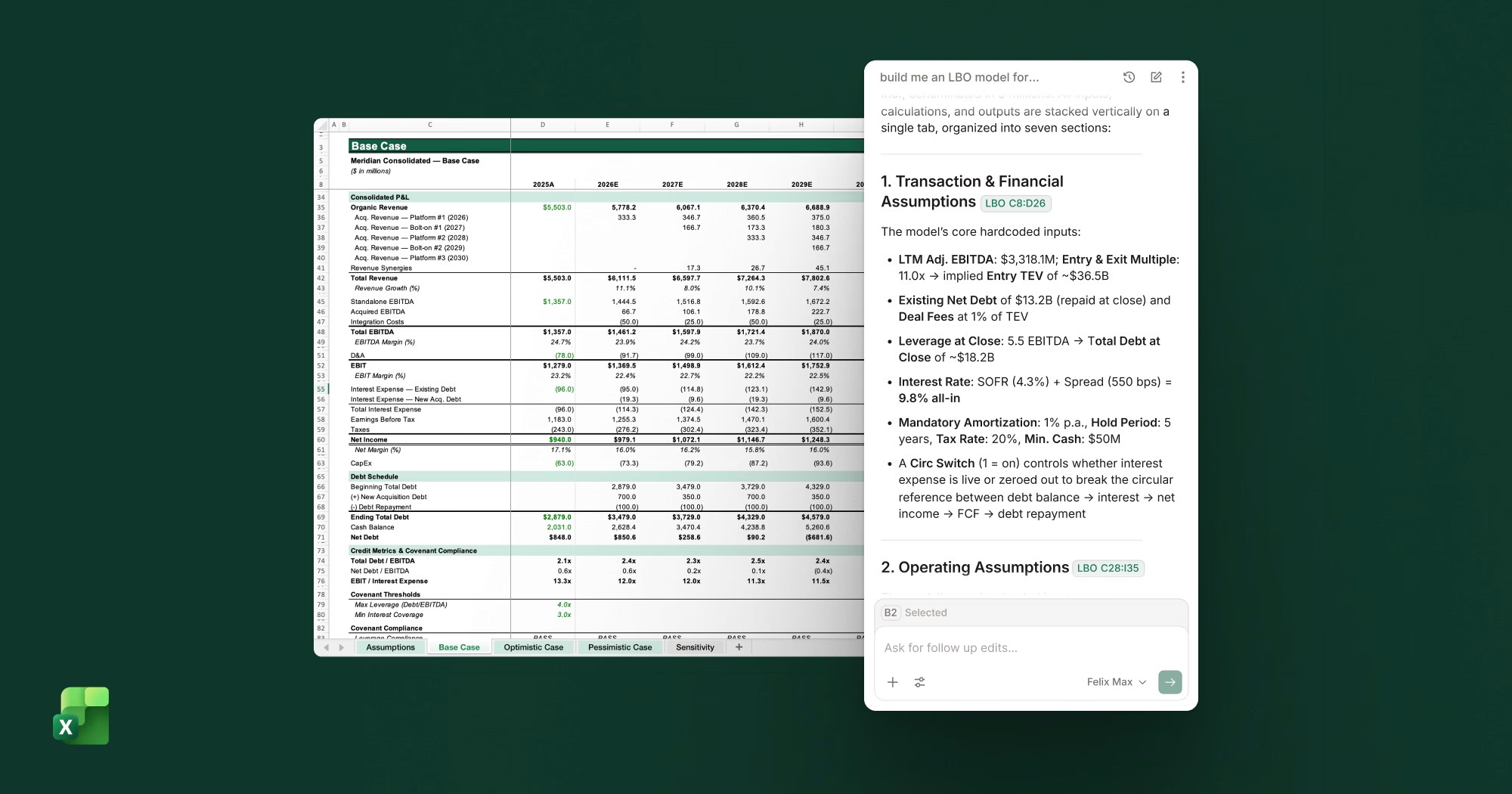
Recommended for: Investment banks, private equity firms, asset managers, and other financial institutions.
Rogo combines internal firm data, financial data providers, filings, transcripts, web sources, and news within finance-oriented AI workflows. Its platform supports company profiles, meeting preparation, research, models, presentations, and other deliverables that sit around financial company research.
Key capabilities
- Combines internal firm data with external financial and web sources.
- Supports company profiles and meeting preparation.
- Works with filings, transcripts, web sources, and news.
Pricing and availability: Not publicly disclosed. Rogo is sold to financial institutions through its sales process.
How We Selected and Compared These Tools
This comparison uses publicly available product information rather than a standardized hands-on benchmark. We reviewed vendor documentation, API materials, product pages, release information, and published pricing where available.
We evaluated each tool based on its fit for company research, including:
- Research depth and multi-step reasoning
- Live web access
- Search, browsing, crawling, and extraction capabilities
- Structured outputs
- Citations and source traceability
- Memory or persistent research context
- Workflow customization
- Governance and auditability
- Integrations and deployment model
- Scalability and pricing
A browser-automation framework should not be evaluated against the same criteria as a managed research agent, GTM platform, or financial-intelligence product.
How to Choose the Right AI Agent Tool for Company Research
- Start with the research job. Define whether you need standardized company fields, current web information, company discovery, competitive analysis, or ongoing monitoring.
- Retrieval and research execution solve different problems. Search and extraction APIs fit applications that already handle reasoning; research agents coordinate the investigation.
- Evaluate research depth. A single search may be enough for simple lookups. Due diligence, competitive intelligence, and market analysis often require multiple queries and evidence from several sources.
- Source coverage should match the task. Relevant information may sit across company sites, news, filings, hiring pages, financial databases, and dynamic web apps.
- Plan for downstream use. Structured schemas make results easier to pass into agents, CRMs, databases, and analytics systems.
- Require traceability where decisions depend on the output. Check citations, source controls, confidence signals, and research history.
Nimble: Web Retrieval and Research Infrastructure for AI Agents
Nimble provides web retrieval and research infrastructure for AI agents and applications that depend on current web data. Use Search + Extract APIs when your application owns the reasoning and orchestration. Web Search Agents take on multi-step research, including search, browsing, extraction, cross-checking, reasoning, and synthesis.
Capabilities:
- Search + Extract APIs: Discover relevant sources and web content, retrieve known pages, and return HTML, Markdown, screenshots, headers, or schema-based structured data for downstream processing.
- Web Search Agents: Build Search Plans, search and browse the web, crawl deeper into useful sources, extract and cross-check information, reason over findings, and return cited prose or structured outputs.
- Adaptive retrieval: Tailors search and crawling to the research objective, relevant sources, vocabulary, success criteria, and required output.
- Memory and private index: Record effective retrieval paths and store previous outputs, sources, and search history to support repeat research workflows.
- Governance and traceability: Use source controls, confidence scoring, citations, schema enforcement, and output controls to make research more inspectable in production.
Match Company Research Depth to the Right Infrastructure
Company research can range from retrieving a few firmographic fields to investigating an acquisition target, tracking competitors, or monitoring hundreds of companies for change.
Use Search + Extract APIs when your application already owns the reasoning and orchestration and needs reliable web data as input. Use Web Search Agents when the task requires multiple searches, browsing, extraction, cross-checking, reasoning, citations, and structured outputs.
For repeat research workflows, Nimble can specialize retrieval around the task, sources, vocabulary, success criteria, and output requirements. Memory and a private index preserve useful retrieval paths, sources, and prior outputs, while Search Plans, citations, confidence scoring, and schema enforcement give teams more visibility into how results are produced.
Explore Nimble Web Search Agents or book a demo to discuss your company-research workflow.
FAQ
Answers to frequently asked questions


.webp)

.webp)
.webp)
.webp)
.webp)
.webp)
.avif)