


8 Best Competitive Pricing Intelligence Software Solutions


Tom Shaked
.webp)
8 Best Competitive Pricing Intelligence Software Solutions
Tom Shaked


Most popular articles

Get structured, reliable data for your stack.
8 Best Competitive Pricing Intelligence Software Solutions
How fast can you adjust pricing? Chances are, the answer is “not fast enough”. The competition is adjusting promotions and prices continuously across channels. But your teams might unknowingly rely on partial or outdated competitive feeds. When your view of the market updates slower than the market itself, strategic pricing simply can’t keep up.
Competitive pricing intelligence software solves this latency by maintaining a continuous, current view of competitors’ moves and normalizing raw web signals into actionable data. It turns pricing from periodic adjustments to a continuous process that addresses competitive shifts before they lead to lost performance. This level of precision is critical for customer retention. Why? Because 87% of shoppers will pay more for a brand they trust, but 55% will immediately switch brands if they find a better price elsewhere.
As pricing becomes more automated, it becomes crucial for competitive pricing data to stay accurate across thousands of products, regions, and sellers, and to arrive in a form that fits directly into analytics and pricing workflows. The effectiveness of price intelligence tools increasingly depends on the quality of the data pipeline behind them.
Let’s review the leading competitive pricing intelligence software solutions and how to evaluate their contribution to your bottom line.
What is competitive pricing intelligence software?
Competitive pricing intelligence software automates the collection and normalization of competitor product prices, promotions, and stock availability.
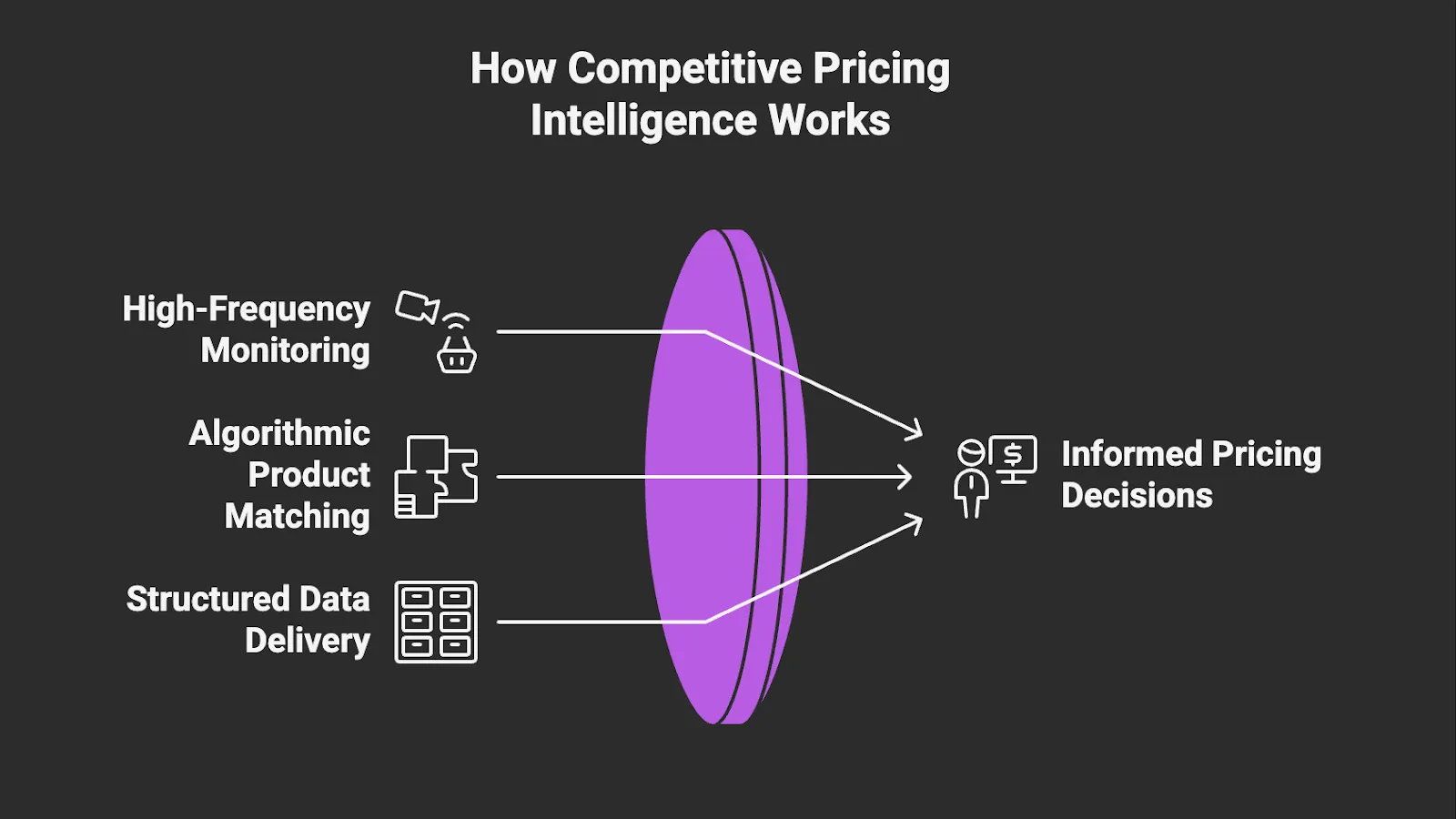
Typically, modern competitive pricing intelligence software accounts for variables such as taxes, shipping costs, regional variations, platform-specific discounts, and product bundles. These platforms work by combining several core capabilities:
- High-Frequency Monitoring: Continuous monitoring of marketplaces and DTC sites to detect market shifts in real-time.
- Algorithmic Product Matching: Identifying identical or equivalent SKUs across disparate catalogs using AI-driven matching engines to ensure data integrity.
- Structured Data Delivery: Pricing and promotion data is captured through data extraction, then normalized and delivered as API-ready feeds that flow directly into BI dashboards.
Competitive pricing intelligence software is typically used by pricing, revenue, and merchandising leaders, as well as analysts and data engineers who require reliable, structured market signals to power automated workflows.
Types of Competitive Pricing Intelligence Software
Competitive pricing intelligence software generally falls into several overlapping categories, each designed to support different pricing use cases and operating models, including:
- Price Tracking and Monitoring Tools automate detection by continuously monitoring competitor sites and marketplaces to identify relevant changes.
- Promotion and Discount Intelligence Tools capture in-cart discounts, coupon code impacts, and complex bundle mechanics to reveal the effective net price customers actually pay.
- Marketplace and Seller Intelligence Tools are built for marketplaces like Amazon, Walmart, and eBay. These platforms track Buy Box ownership and seller identities across shared listings to help brands monitor unauthorized discounting and MAP violations.
- Digital Shelf Analytics (DSA) Platforms are broader retail analytics suites that treat pricing as one component of digital shelf health. They correlate price moves with share-of-search performance, sales velocity, ratings, and content quality.
- Dynamic Pricing and Price Optimization Platforms consume competitive pricing intelligence as an input to algorithmic engines that automatically adjust product prices based on demand elasticity, inventory levels, seasonal demand, and competitor guardrails.
- API-First and Data-Feed Providers deliver structured and normalized data via high-speed APIs. They are the preferred choice for enterprises building proprietary BI dashboards and for AI companies training internal models on real-time market signals.
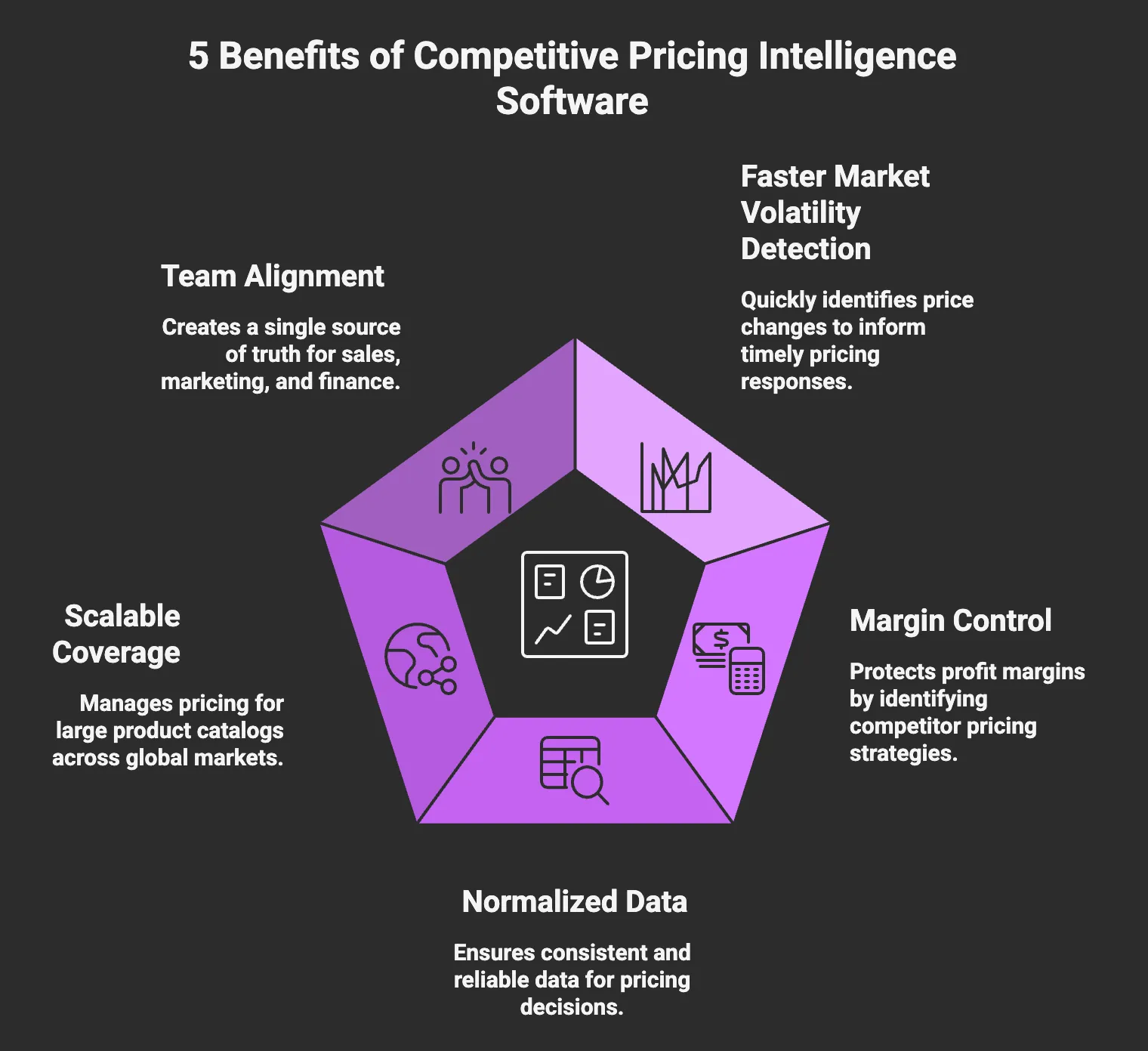
5 Benefits of Competitive Pricing Intelligence Software
Competitive pricing intelligence software offers many benefits, including:
1. Faster Detection of Market Volatility
Manual tracking is a recipe for lag. By the time you spot a competitor’s promotion, the most price-sensitive customers have already converted elsewhere. Price intelligence software provides high-frequency monitoring that detects price drops and flash sales quickly enough to inform timely pricing responses.
2. Margin Control Through Informed Competitiveness
By identifying when a competitor has raised their price or fallen out of stock, teams can selectively increase prices or avoid unnecessary discounts while protecting margin.
3. Decision Quality Driven by Normalized Data
Raw web data is often noisy and inconsistent. Enterprise-grade tools solve this by providing a normalization layer that converts disparate signals into valid comparisons. Whether adjusting for unit-normalized prices, such as price per ounce, or comparing equivalent products across disparate catalogs, this structured data helps ensure automated pricing engines operate on consistent inputs rather than fragmented signals.
4. Scalable Coverage Across Global Catalogs
Managing pricing for five hundred products is a chore. Managing it for 500,000 products across twenty regions becomes impractical without automation. Intelligence platforms maintain 24/7 coverage of entire marketplaces and DTC sites globally, allowing lean category teams to reallocate hours from manual data collection to high-value strategic testing.
5. Improved Alignment Across Teams
Fragmented data sources often lead to misalignment between sales, marketing, and finance teams. Pricing intelligence creates a single source of truth. When every department operates from the same market reality, it provides sales teams with trustworthy price corridors and guardrails, ensuring that every quote issued in the field is competitive and aligned with broader corporate goals.
Key Features to Look for in Competitive Pricing Intelligence Software
When choosing price intelligence software for your organization, consider these essential features:
- Data Coverage: Choose a price intelligence software solution that scales across marketplaces (Amazon, Walmart, etc.) as well as niche DTC sites. Look for data collection capabilities that maintain coverage even when sites use blocking or anti-bot measures.
- Freshness: Top-tier solutions offer refresh frequencies that are aligned with how quickly pricing decisions need to respond to market changes.
- Product Matching: Catalog structures vary wildly between retailers. Reliable tools use matching systems designed to identify equivalent products even when titles and SKUs do not align.
- Sophisticated Price Normalization: Look for software that can automatically adjust for different currencies, units of measure, regional taxes, and shipping costs.
- Promotion and Bundle Detection: Real pricing may be affected by bundle deals, discounts applied at checkout, volume-based pricing, or conditional offers. Your tool of choice should surface the effective price, not just the visible shelf price.
- Data Reliability: For enterprise AI and BI, data quality is non-negotiable, so ensure the platform provides transparent data sourcing. Have a plan for validation and quality checks to prevent inconsistent data from affecting dashboards and models.
- API-First Delivery: Prioritize platforms that provide stable, well-documented APIs for delivering structured pricing data directly into downstream systems.
8 Best Competitive Pricing Intelligence Software
1. Nimble – Best Real-time Web Data Infrastructure for Pricing Intelligence
While it’s not a traditional pricing tool, Nimble provides the data collection and delivery infrastructure that pricing intelligence platforms and in-house pricing systems depend on. The platform provides the high-performance infrastructure required to collect competitor pricing and promotion data directly from the public web at a massive scale.
By utilizing AI-powered Web Search Agents and a premium residential proxy network, Nimble reduces common data accuracy and reliability issues caused by brittle scrapers and anti-bot blocks. With structured, analysis-ready data feeds delivered directly into BI tools or internal pricing systems, you can rest assured that your strategic decisions are based on fresh, high-frequency market signals.
Key Features:
- Web Search Agents designed to operate on dynamic, JavaScript-heavy retail and marketplace sites
- Reliable data collection at scale despite anti-bot measures and site-level blocking
- Fully managed data pipelines that remove the need to build and maintain custom scrapers
Review: “The service stands out as much better than those of other providers. It consistently stays ahead of competitors in terms of technology, offering high uptime and low response times.”
2. Prisync – Best for Price Tracking and Monitoring
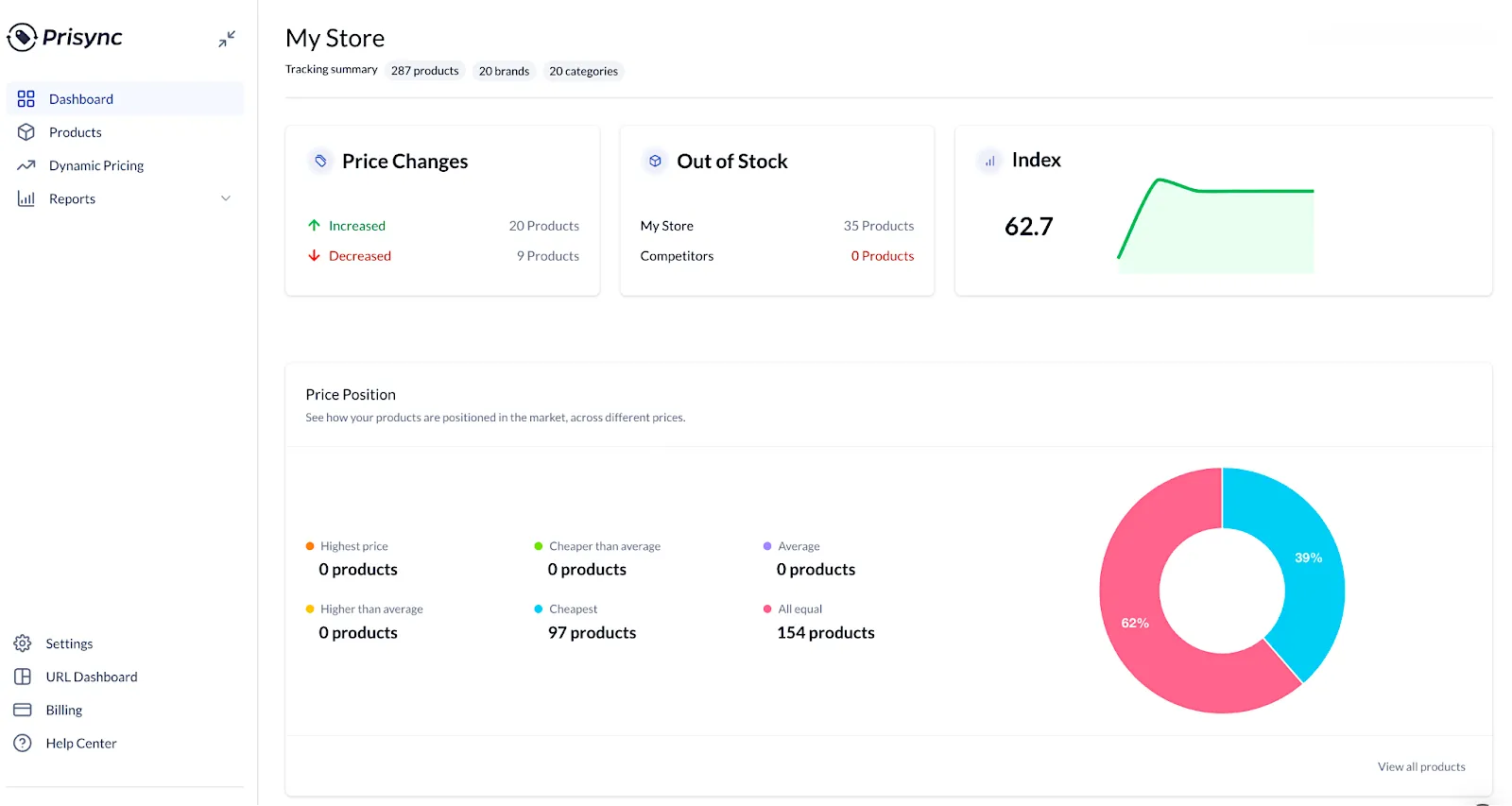
Prisync is a self-service platform for SMBs and mid-market retailers that automates competitor price tracking and dynamic repricing. It streamlines data ingestion for Shopify and Magento stores, refreshing price points three times daily to maintain market agility without a dedicated pricing department.
Key Features:
- Dynamic Pricing Engine: Automated rules to match or undercut rivals based on profit margins.
- Stock Monitoring: Real-time tracking of competitor inventory.
Review: “While the automation features are generally excellent, the need to manually address issues like missing URLs detracts from the overall efficiency of the system.”
3. Intelligence Node – Best for Enterprise-scale, High-frequency Price Monitoring
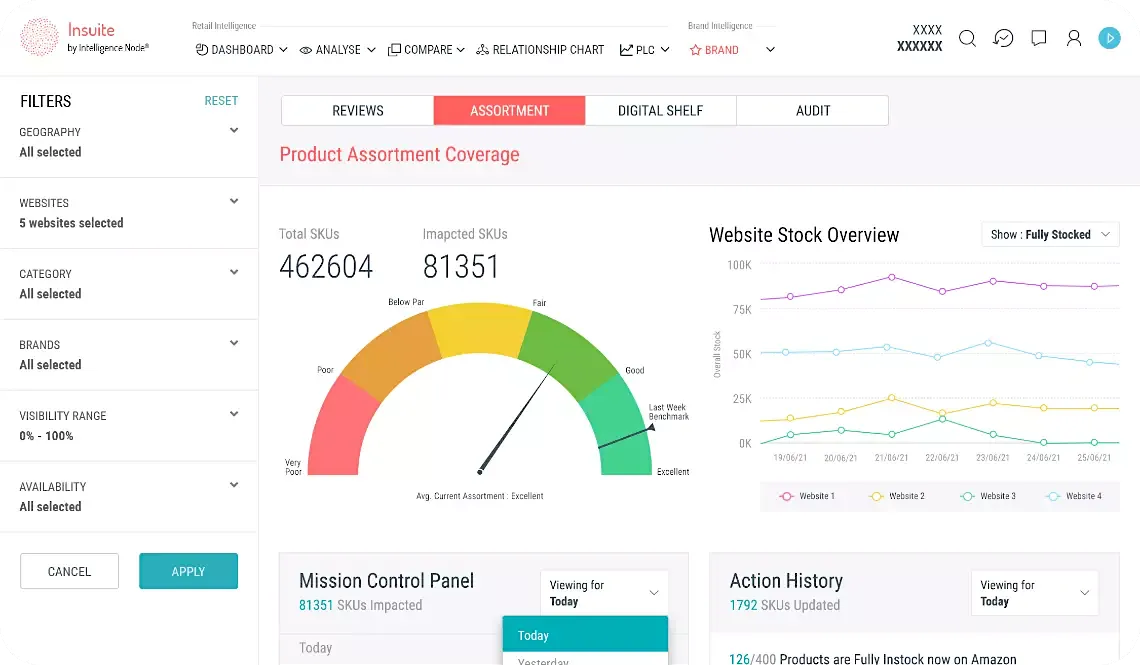
Intelligence Node prioritizes speed and responsiveness with a dataset of 1.2 billion products. It differentiates itself through a proprietary “Similarity Engine” that provides a 99% contractually guaranteed matching accuracy for both exact matches and complex private-label comparisons.
Key Features:
- High-Velocity Data Refresh: Offers polling frequencies as fast as every 10 seconds.
- Hyperlocal Tracking: Monitors regional price variations at the ZIP-code level.
Review: “While the platform offers powerful data insights, there can be a learning curve when navigating its advanced features, especially for first-time users.”
4. Wiser – Best for Promotion and Discount Intelligence
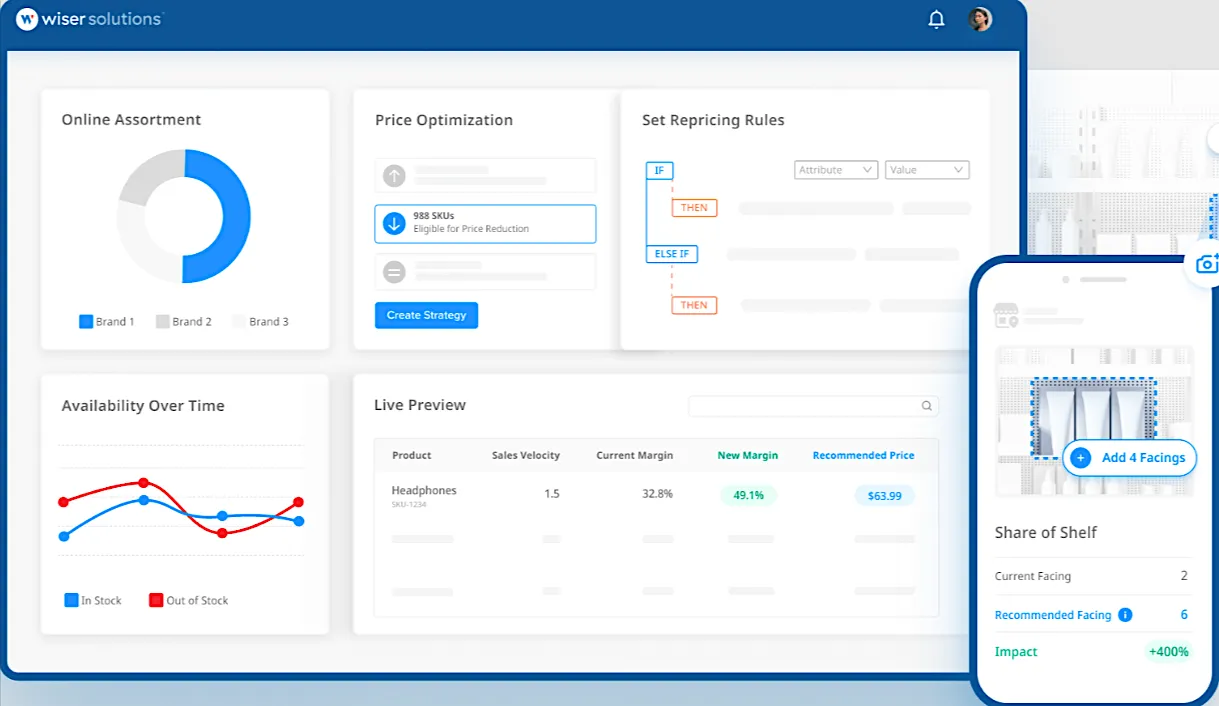
Wiser Solutions aims to bridge the gap between online pricing and physical retail execution. Unlike many tools focused solely on web data, Wiser integrates in-store audits with real-time digital shelf analytics, helping brands maintain price parity across marketplaces, webshops, and brick-and-mortar locations.
Key Features:
- Omnichannel Visibility: Connecting live web pricing with physical store data for a comprehensive market view.
- Strategy Simulation: A built-in Live Preview mode that allows teams to simulate the impact of new pricing rules before deploying them to production.
Review: “A great solution for overcoming the inertia of price control.”
5. Repricer – Best for Marketplace and Seller Intelligence
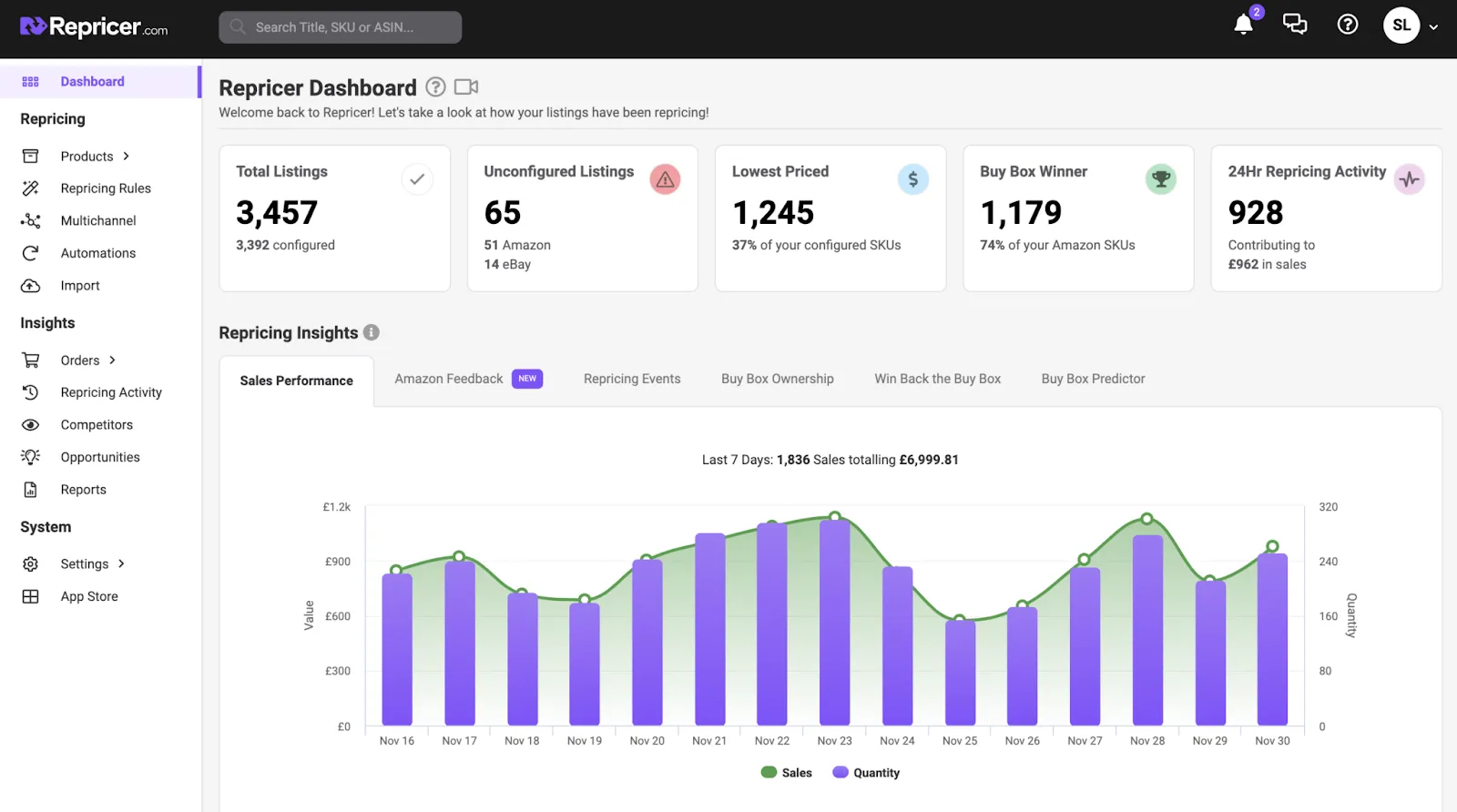
Repricer.com is an automated repricing solution designed for marketplace sellers who need to win the Amazon Buy Box and maintain sales velocity. Built on AWS, Repricer offers real-time pricing adjustments and instant replication across multiple international sales channels.
Key Features:
- AI Price Optimization: Advanced algorithms that go beyond simple rule-based tracking to optimize for maximum profit margin.
- Multichannel Sync: Automatically replicates Amazon price changes to eBay, Walmart, Shopify, and Magento to ensure global pricing consistency.
Review: “(Repricer is an) essential Amazon tool. It is a little expensive for a single tool.”
6. DataWeave – Best for Digital Shelf Analytics (DSA) with Pricing Module
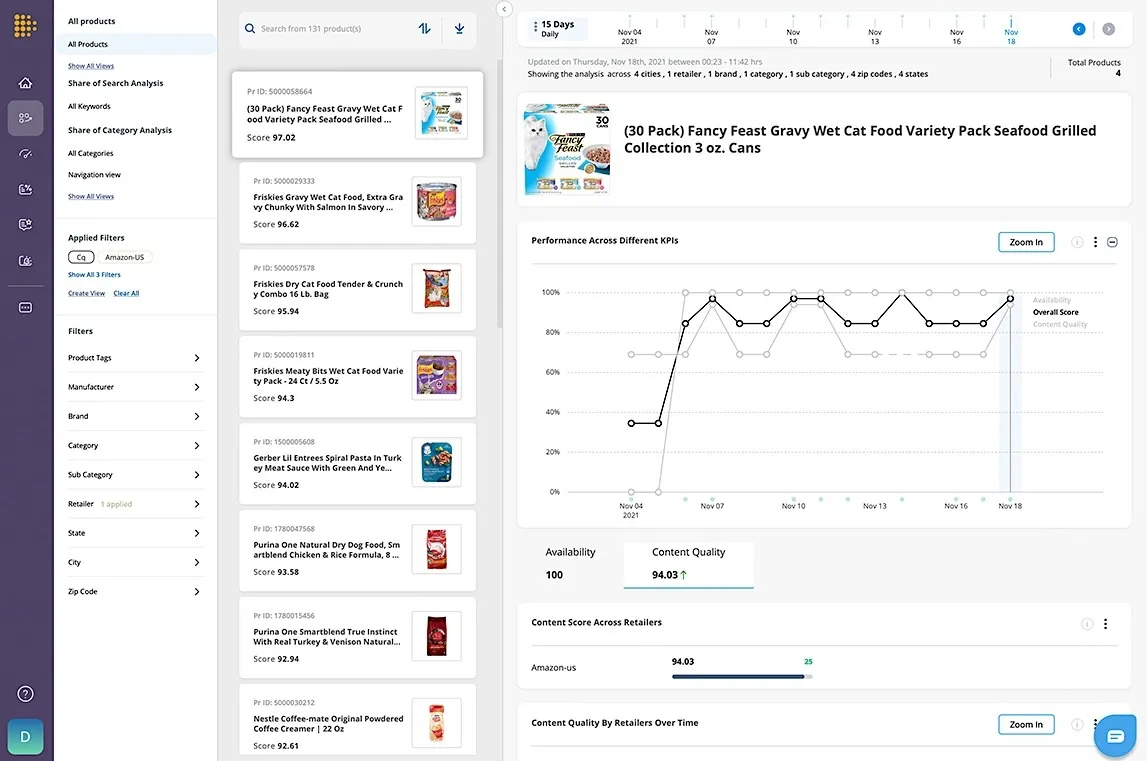
DataWeave specializes in AI-powered insights that aim to connect pricing to digital shelf performance. It enables teams to monitor things like content quality and stock status across hundreds of digital touchpoints, including mobile apps and marketplaces.
Key Features:
- Share of Search Tracking: Benchmarks your brand’s discoverability and keyword rankings against competitors.
- Location-Aware Insights: Provides granular, region-specific pricing and availability data down to the zip-code level.
Review: “The platform is very user-friendly, but the matching system needs some improvement.”
7. Pricefx – Best for Dynamic Pricing and Price Optimization
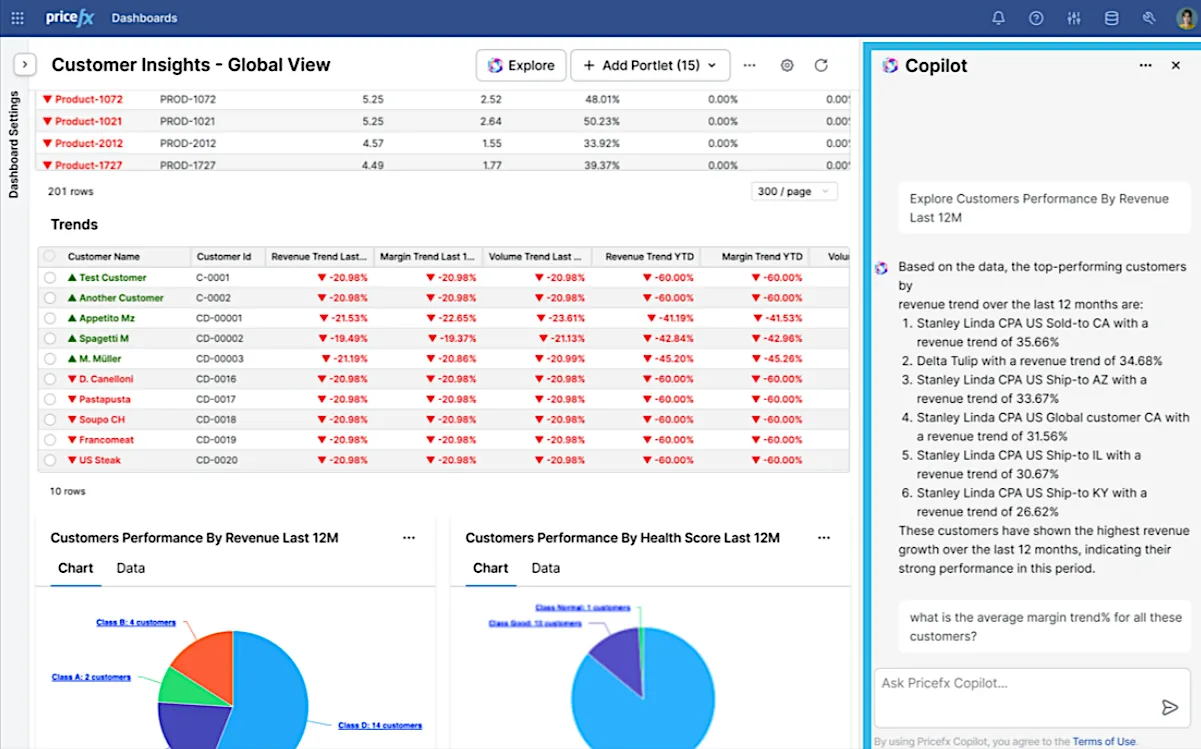
A cloud-native, AI-driven platform, Pricefx manages the entire pricing lifecycle, from analytics to rebate management. It enables enterprises to integrate custom algorithms alongside pre-built optimization models to handle millions of pricing updates in real-time.
Key Features:
- PricingAI Agents: Over 125 specialized AI agents that monitor transactions 24/7 to flag margin leakage and automate revenue recovery actions with agentic commerce workflows.
- Constraint-Based Optimization: A simulation engine that tests pricing strategies against business rules before deployment.
Review: “Flexible system with strong performance and versatile possibilities.”
8. Price API – Best for API-first / Data-feed Pricing Intelligence
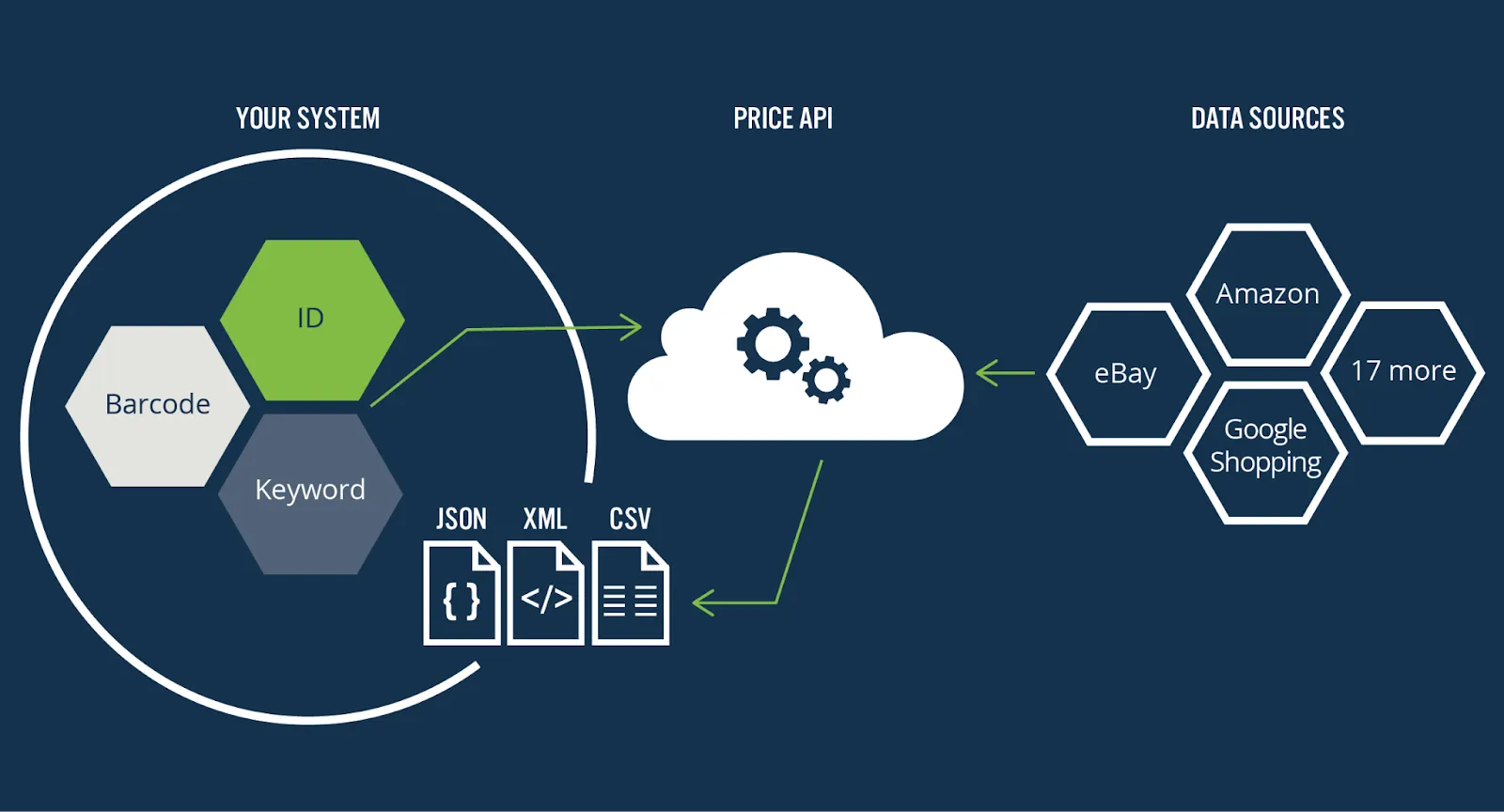
Price API by metoda focuses on providing a technical interface for engineering teams building bespoke pricing systems. It delivers real-time market data from global sources like Amazon and Google Shopping directly into internal stacks via API calls.
Key Features:
- Bulk Processing: Handles up to 1,000 parallel product requests per job with reliable status polling.
- Standardized Output: Returns data in JSON, XML, or CSV formats optimized for database ingestion.
Review: “The bigger one’s assortment, the higher the requirements for the tools you use. With metoda, we always keep our competitors in check and can optimize our assortment.”
Real-Time Web Data: The Key to Competitive Pricing Intelligence Software
Competitive pricing intelligence software spans a range of categories, each designed to support different pricing needs and operating models. The right solution depends on how organizations translate competitive signals into pricing decisions and action. But price intelligence software works best when it’s provided with accurate and current pricing data.
Competitive pricing decisions shouldn’t rely on stale feeds or brittle extraction tools. Nimble’s Web Search Agents browse the live web in real time, turning competitor pricing, promotions, and availability into structured, governed intelligence your team can act on immediately.
Start a trial to see how live web search agents power faster, more confident pricing decisions.
FAQ
Answers to frequently asked questions
.webp)
%20(2).webp)

.webp)
.avif)
.webp)
.webp)